Tag: skincare for beginners

  • 2 Skincare Tools for Acne-Prone Skin: Clean Towels & LED Light Therapy

    Skincare tools can sometimes make a routine more complicated than it needs to be.

    But some tools have a simple purpose.

    A disposable facial towel can change how you dry your face after cleansing, while an LED acne device is designed for targeted light therapy.

    These two products are very different, so they should not be treated as alternatives to each other.

    In this guide, we will look at:

    • CLEAN SKIN CLUB Clean Towels XL
    • Solawave Bye Acne
    • How each fits into a routine
    • What to consider before using them
    • How they compare
    • How they can fit alongside basic skincare

    Why Consider Skincare Tools for Acne-Prone Skin?

    The foundation of an acne-conscious routine is still basic skincare.

    That means cleansing, moisturizing, sunscreen, and appropriate acne treatment when needed.

    Tools are additional.

    A face towel is primarily related to the cleansing and drying part of your routine.

    LED light therapy is a targeted treatment device.

    Understanding this difference can help you avoid expecting one product to do everything.


    1. CLEAN SKIN CLUB Clean Towels XL

    CLEAN SKIN CLUB Clean Towels XL are single-use facial towels designed for drying the face after cleansing.

    According to the current Amazon listing supplied for this product, the Original version contains 50 towels and is described as fragrance-free, unscented, and suitable for all skin types.

    The product is designed to be used once rather than repeatedly returning to the same bathroom towel.

    Read our detailed review:

    CLEAN SKIN CLUB Clean Towels XL Review: What to Know Before Using Them


    What Are Clean Towels Used For?

    The basic use is simple:

    Cleanse → Rinse → Gently dry

    Instead of using a traditional reusable face towel, you use a fresh facial towel after cleansing.

    This does not make the towel an acne treatment.

    It is simply an alternative way to dry your face.


    How to Use a Single-Use Face Towel

    A simple approach is:

    1. Cleanse your face.
    2. Rinse thoroughly.
    3. Take one clean towel.
    4. Gently pat your skin dry.
    5. Dispose of the towel after use.

    Avoid aggressively rubbing your face.

    Gentle handling is particularly useful when your skin already feels irritated or uncomfortable.


    Why Gentle Drying Matters

    Drying your face is a small part of your routine, but it can affect how comfortable your skin feels.

    Repeated rubbing can be unnecessary.

    If you prefer disposable facial towels, Clean Towels may be one option to consider.

    However, a traditional clean, regularly washed towel can also be suitable depending on your preferences and routine.

    The important point is gentle handling and cleanliness.


    Are Clean Towels an Acne Treatment?

    No.

    A face towel does not treat acne in the same way that an acne medication or acne-focused treatment does.

    The reason someone might choose a single-use towel is related to their cleansing and drying habits.

    Keep expectations realistic.


    2. Solawave Bye Acne

    Solawave Bye Acne is an LED light therapy device designed for acne.

    According to Solawave’s current support information, the device combines:

    • 415 nm blue LED light
    • 630 nm red LED light

    Solawave describes the blue light as targeting existing acne and the red light as helping with redness and inflammation. The device is intended for mild-to-moderate acne. (Solawave Help Center)

    Read our full review:

    Solawave Bye Acne Pro Review: How Blue & Red LED Light Therapy Works


    How Does Blue and Red LED Light Work?

    The two light wavelengths have different intended roles.

    Blue Light — 415 nm

    Solawave describes the blue LED as targeting acne-causing bacteria associated with existing acne. (Solawave Help Center)

    Red Light — 630 nm

    Solawave describes the red LED as helping with redness and inflammation. (Solawave Help Center)

    LED therapy should not be presented as a guaranteed solution for every type of acne.


    How to Use Solawave Bye Acne

    Solawave’s current instructions recommend:

    1. Clean the skin.
    2. Make sure it is completely dry.
    3. Remove makeup and other topical products.
    4. Place the device on the treatment area.
    5. Use the treatment.
    6. The device automatically switches off after three minutes.
    7. Continue your normal skincare routine afterward.

    Solawave specifically advises using Bye Acne on clean, dry skin without makeup or other topicals before treatment. (Solawave Help Center)


    Clean Towels and LED Therapy: How Could They Fit Together?

    These products can appear in different parts of the same routine.

    For example:

    Cleanse → Clean towel → LED treatment → Hydrating skincare → Moisturizer

    The towel is used for drying.

    The LED device is used for light therapy.

    They are not doing the same job.


    Clean Towels vs. LED Light Therapy

    FeatureClean Towels XLSolawave Bye Acne
    Main purposeFacial dryingLED acne treatment
    Product typeDisposable towelLED device
    Used after cleansingYesYes
    Acne treatmentNoDesigned for acne
    Blue lightNo415 nm
    Red lightNo630 nm
    Requires electricityNoYes
    Treatment timeDrying only3 minutes per area
    Routine roleCleansing/dryingTargeted treatment

    Important Things to Know Before Using an LED Acne Device

    LED therapy is not suitable for everyone.

    Solawave’s current safety guidance lists contraindications including:

    • Under 18
    • Pregnancy, planning pregnancy, or breastfeeding
    • Photosensitivity disorders
    • Photosensitizing medications
    • Severe acne
    • Certain skin conditions
    • Certain medical conditions

    The manufacturer also says not to shine the LEDs directly into the eyes. (Solawave Help Center)

    If you have any concern about whether light therapy is appropriate for you, consult a healthcare professional before using the device.


    What About Sensitive Skin?

    Sensitive skin can require a more cautious approach.

    Do not assume that a product described as gentle or suitable for many skin types will work for everyone.

    For an LED device, follow the manufacturer’s sensitivity-testing instructions.

    Solawave recommends performing a light sensitivity test before the first use and monitoring the skin afterward for redness or irritation. (Solawave Help Center)


    Common Mistakes to Avoid

    Expecting a towel to treat acne

    A facial towel is not an acne medication.

    Using LED over makeup

    Solawave’s instructions say the skin should be clean, dry, and free from makeup and other topicals before treatment. (Solawave Help Center)

    Adding too many acne treatments

    More active products are not necessarily better.

    Ignoring contraindications

    Always check the manufacturer’s current safety instructions before using an LED device.

    Scrubbing your skin after cleansing

    Gentle drying is preferable to aggressive rubbing.


    A Simple Acne-Prone Routine

    Morning

    Cleanser → Hydrating product → Moisturizer → Sunscreen

    Evening

    Cleanser → Gently dry → LED treatment if appropriate → Hydrating product → Moisturizer

    If you want to learn more about the overall routine, read:

    How to Build a Simple Skincare Routine for Acne-Prone Skin


    Product 1: CLEAN SKIN CLUB Clean Towels XL

    CLEAN SKIN CLUB Clean Towels XL

    • Version: Original
    • Count: 50 towels
    • Use: Facial drying after cleansing
    • Skin type: All, according to the supplied listing
    • Fragrance: Unscented/fragrance-free, according to the supplied listing
    • Type: Single-use facial towel

    View on Amazon:
    https://www.amazon.com/dp/B07PBXXNCY?tag=gulbrother-20


    Product 2: Solawave Bye Acne Pro

    Solawave Bye Acne Pro

    • LED treatment
    • Blue light: 415 nm
    • Red light: 630 nm
    • Treatment: 3 minutes per area
    • Intended use: Mild-to-moderate acne
    • Use: Clean, dry skin before other topicals

    View on Amazon:

    Amazon availability can change, so check the current listing before purchasing.


    Which One Fits Your Routine?

    These products address different parts of a skincare routine.

    If you are mainly interested in changing how you dry your face after cleansing, a single-use facial towel may be relevant.

    If you are specifically considering an LED device for acne, Solawave Bye Acne is a different type of product that requires more attention to instructions and contraindications.

    Neither replaces appropriate acne treatment or professional medical advice.


    Final Thoughts

    Skincare tools can be useful when they have a clear purpose.

    CLEAN SKIN CLUB Clean Towels XL focuses on the simple step of drying your face after cleansing.

    Solawave Bye Acne is a targeted LED device designed for mild-to-moderate acne using blue and red light.

    They can fit into an acne-conscious routine, but they should be viewed as additions rather than replacements for basic skincare.

    Start with a simple routine and add tools only when they make sense for your needs.


    Save This for Later

    Save this guide on Pinterest if you are building a simple acne-conscious skincare routine.

    Follow Beauty Glow Guide:
    https://www.pinterest.com/beautyglowguide2/

    Related guide:
    How to Build a Simple Skincare Routine for Acne-Prone Skin

  • How to Exfoliate Your Skin Safely: A Simple Beginner’s Guide

    Exfoliation is often presented as an essential part of skincare, but using exfoliating products correctly matters more than simply adding them to your routine.

    When used appropriately, exfoliation can help remove dead skin cells from the surface of the skin and leave it feeling smoother. But exfoliating too frequently or using products that are too irritating can leave skin feeling dry, sensitive, or uncomfortable.

    For beginners, the goal is not to exfoliate as much as possible. It is to understand what exfoliation does, which type may suit your routine, how often to use it, and when to skip it.

    This guide explains the basics and shows how exfoliation can fit into a simple skincare routine.


    What Is Exfoliation?

    Exfoliation is the process of removing dead skin cells from the surface of the skin.

    There are two main types:

    • Physical exfoliation
    • Chemical exfoliation

    Physical exfoliation uses something that manually removes surface cells, such as a scrub or exfoliating tool.

    Chemical exfoliation uses ingredients that help loosen or remove dead skin cells.

    Both approaches can be useful, but neither needs to be aggressive.


    Why Do People Exfoliate?

    People may exfoliate because their skin feels:

    • Rough
    • Dull-looking
    • Uneven in texture
    • Congested
    • Flaky

    However, exfoliation is not automatically necessary for everyone.

    If your skin already feels comfortable and your routine is working well, you may not need to add an exfoliating product simply because it is popular.

    Your basic routine should come first.

    For a refresher, see:

    How to Choose Skincare Products for Your Skin Type: A Simple Beginner’s Guide


    Physical vs. Chemical Exfoliation

    Understanding the difference is important before choosing a product.

    Physical Exfoliation

    Physical exfoliation involves manually removing surface cells.

    Examples include:

    • Face scrubs
    • Exfoliating cloths
    • Brushes
    • Other textured tools

    The amount of pressure you use matters.

    Scrubbing harder does not necessarily produce better results.

    If a product leaves your skin feeling raw, burning, or unusually uncomfortable, it is not a sign that the exfoliation is working better.


    Chemical Exfoliation

    Chemical exfoliation uses specific ingredients rather than physical scrubbing.

    Common categories include:

    • AHAs
    • BHAs
    • PHAs

    The right choice depends on the product, your skin, and what you are trying to address.

    AHAs

    Alpha hydroxy acids are commonly used in products designed to exfoliate the skin’s surface.

    Examples include ingredients such as glycolic acid and lactic acid.

    BHAs

    Beta hydroxy acids are commonly used in products designed for exfoliation and are particularly familiar in products aimed at oily or congested-looking skin.

    Salicylic acid is the best-known example.

    PHAs

    Polyhydroxy acids are another category of exfoliating ingredients.

    They are often discussed as an option for people looking for a gentler exfoliating approach, although the experience still depends on the individual product and skin.


    How Often Should You Exfoliate?

    There is no single number of times per week that works for everyone.

    The appropriate frequency depends on:

    • The exfoliating ingredient
    • Product strength
    • Your skin
    • Other products in your routine
    • How your skin responds

    A beginner should generally avoid starting with frequent exfoliation.

    Instead, follow the product’s directions and give your skin time to show you how it responds.

    If your skin becomes persistently irritated, reduce or stop the exfoliating product.


    Start Slowly

    If you have never used an exfoliating product before, avoid introducing it alongside several other new products.

    For example, don’t start a new:

    • Exfoliating acid
    • Retinoid
    • Strong treatment serum
    • Scrub
    • Mask

    all at the same time.

    If irritation develops, you will have difficulty identifying which product caused it.

    Introducing one new product at a time makes your routine easier to understand.


    Where Does Exfoliation Go in Your Routine?

    Exfoliation is generally performed after cleansing and before the rest of your leave-on skincare, depending on the product instructions.

    A simple evening routine might look like:

    Cleanser → Exfoliating Product → Moisturizer

    If you use a leave-on chemical exfoliant, follow the manufacturer’s instructions carefully.

    You do not need to add multiple exfoliating products together.

    For a broader explanation of product order, see:

    How to Layer Skincare Products: A Simple Beginner’s Guide


    Should You Exfoliate Every Day?

    For many people, daily exfoliation is unnecessary.

    Exfoliating more often does not automatically produce better-looking skin.

    If your skin becomes:

    • Dry
    • Tight
    • Red
    • Burning
    • Stinging
    • Unusually sensitive

    your routine may be too aggressive.

    This is a good reason to step back rather than adding another product to solve the problem.


    Exfoliation and the Skin Barrier

    Your skin barrier is important when thinking about exfoliation.

    The outer layer of your skin helps protect it and contributes to maintaining moisture.

    Using too many potentially irritating products can make skin feel uncomfortable.

    Learn more:

    What Is the Skin Barrier? A Beginner’s Guide to Healthy-Looking Skin

    A barrier-conscious routine should focus on balance rather than trying to remove as much from the skin as possible.


    What Should You Use After Exfoliating?

    After exfoliation, keep the rest of your routine simple.

    A basic approach is:

    Exfoliate → Moisturize

    If your skin tolerates your normal hydrating serum, you may continue using it according to the product directions.

    Hydrating ingredients you may already use include:

    • Hyaluronic acid
    • Glycerin
    • Panthenol

    Learn more:

    What Is Hyaluronic Acid? A Beginner’s Guide to Hydrated-Looking Skin

    What Is Glycerin? A Beginner’s Guide to This Hydrating Skincare Ingredient

    What Is Panthenol? A Beginner’s Guide


    What About Ceramides?

    Ceramides are commonly found in moisturizers and barrier-focused products.

    If your skin feels dry after using an exfoliating product, a straightforward moisturizer may be more useful than adding another active ingredient.

    Read:

    What Are Ceramides? A Beginner’s Guide to Skin Barrier Care

    A simple post-exfoliation routine can therefore be:

    Cleanser → Exfoliant → Ceramide-containing Moisturizer


    Do You Need a Hydrating Serum?

    Not necessarily.

    A hydrating serum can be useful if you already enjoy using one, but it is not a mandatory exfoliation step.

    For example, a simple hydration-focused routine might be:

    Cleanser → Hydrating Serum → Moisturizer

    On an exfoliation night, the routine might become:

    Cleanser → Exfoliant → Hydrating Serum → Moisturizer

    But only continue with the serum if your skin tolerates the combination and the product directions allow it.

    For more information:

    How to Build a Simple Hydrating Skincare Routine


    Can You Use Niacinamide With Exfoliants?

    Niacinamide and exfoliating acids can appear in the same overall skincare routine, but whether you should layer specific products together depends on the individual formulas and your skin’s tolerance.

    If you are new to exfoliation, keeping the routine simple can make things easier.

    You can use niacinamide on non-exfoliation days if you prefer.

    Read:

    What Is Niacinamide? A Beginner’s Guide to Vitamin B3 for Skin


    What About Retinoids?

    Retinoids are different from exfoliating acids, even though they are both often discussed as active skincare ingredients.

    If you already use a retinoid, be careful about adding frequent exfoliation to the same routine.

    Using several potentially irritating products together can increase the chance of discomfort.

    If you are using a prescription retinoid or another prescribed treatment, follow your healthcare professional’s instructions.


    Should You Exfoliate Dry Skin?

    If your skin is visibly dry, flaky, irritated, or uncomfortable, exfoliation may not be the first thing to reach for.

    Instead, consider simplifying your routine and focusing on gentle cleansing and moisturizing.

    Dry-looking skin may benefit more from improving hydration and reducing irritation than from aggressively removing surface cells.

    For hydration-focused skincare:

    How to Choose the Best Hydrating Serum for Dry-Looking Skin


    Should You Exfoliate Oily Skin?

    Oily skin does not automatically mean you need frequent exfoliation.

    If your skin is oily or prone to congestion, an exfoliating product may be part of your routine, but the product and frequency still matter.

    Start gradually and monitor how your skin responds.

    You can learn more about choosing products according to skin type here:

    How to Choose Skincare Products for Your Skin Type: A Simple Beginner’s Guide


    Exfoliation and Sunscreen

    Sunscreen is especially important as part of a daytime skincare routine when you are using exfoliating products.

    Finish your morning routine with broad-spectrum sunscreen with SPF 30 or higher.

    A basic daytime routine is:

    Cleanser → Hydrating/Treatment Product → Moisturizer → Sunscreen

    If you exfoliate at night, sunscreen remains part of your morning routine.


    Common Exfoliation Mistakes

    1. Exfoliating too frequently

    More frequent use does not necessarily mean better results.

    2. Scrubbing aggressively

    Pressure is not a substitute for an appropriate exfoliating product.

    3. Using multiple exfoliants together

    Combining several exfoliating products can make your routine unnecessarily irritating.

    4. Adding an exfoliant to an already complicated routine

    Simplify before adding more.

    5. Exfoliating irritated skin

    If your skin is already uncomfortable, adding another active product may not be helpful.

    6. Forgetting moisturizer

    Moisturizing can help keep your routine comfortable.

    7. Forgetting daytime sunscreen

    Sunscreen should remain part of your morning routine.


    Signs You May Be Over-Exfoliating

    Your skin may be telling you that your routine is too aggressive if you notice:

    • Persistent dryness
    • Burning
    • Stinging
    • Increased sensitivity
    • Redness
    • Tightness
    • Flaking
    • General discomfort

    These symptoms are not something you need to push through.

    If your skin becomes irritated, stop or reduce the suspected product and return to a simpler routine.

    If symptoms are severe, persistent, or concerning, seek advice from a healthcare professional.


    A Simple Beginner Exfoliation Routine

    If you want to introduce exfoliation, keep the rest of your routine uncomplicated.

    Exfoliation Night

    1. Cleanser

    Gently cleanse your skin.

    2. Exfoliating product

    Use the product according to its directions.

    3. Moisturizer

    Finish with a comfortable moisturizer.

    The Next Morning

    1. Cleanser

    2. Moisturizer

    3. Sunscreen

    You can add your normal hydrating serum if your skin tolerates it.


    A Simple Weekly Approach

    Instead of creating a complicated calendar, think in terms of regular routine days and exfoliation days.

    Regular night

    Cleanser → Hydrating/Treatment Serum → Moisturizer

    Exfoliation night

    Cleanser → Exfoliant → Moisturizer

    This gives you a simple framework without assuming that everyone needs the same exfoliation frequency.


    What If You Already Use Several Active Ingredients?

    Take a look at your entire routine.

    You may already be using:

    • Niacinamide
    • Vitamin C
    • Retinoid
    • Exfoliating acid
    • Acne treatment
    • Other active products

    Adding another exfoliant without considering the complete routine can make it harder to manage irritation.

    The better question is:

    Does my routine actually need another active product?

    If the answer is unclear, keeping your routine simple is reasonable.


    Physical Scrub vs. Chemical Exfoliant

    FeaturePhysical exfoliationChemical exfoliation
    How it worksManual removalExfoliating ingredients
    Common examplesScrubs, toolsAHA, BHA, PHA products
    Main considerationPressure/frictionProduct strength and frequency
    Beginner approachUse gentlyFollow product directions
    Common mistakeScrubbing too hardUsing too frequently

    Neither category is automatically right for everyone.

    Your skin, product, and routine all matter.


    Quick Exfoliation Checklist

    Before using an exfoliating product, ask:

    ✓ Do I actually need exfoliation?

    ✓ What type of exfoliant am I using?

    ✓ What are the product directions?

    ✓ Am I already using other active products?

    ✓ Have I introduced too many products recently?

    ✓ Is my skin currently comfortable?

    ✓ Do I have a simple moisturizer ready?

    ✓ Am I using sunscreen during the day?

    If several answers raise concerns, simplify your routine before adding another active.


    Final Thoughts

    Exfoliation can be a useful part of skincare, but it does not need to dominate your routine.

    Start slowly.

    Choose one exfoliating approach.

    Follow the product directions.

    Avoid aggressive scrubbing.

    Pay attention to how your skin responds.

    And remember that hydration, moisturizing, barrier care, and sunscreen remain important parts of a balanced skincare routine.

    A simple routine is often easier to understand than one filled with multiple active ingredients.

    For more beginner-friendly skincare guidance, explore the Skincare & K-Beauty category.


    Save This for Later

    Save this guide as a quick reference before adding an exfoliating product to your routine.

    Cleanse → Exfoliate → Moisturize

    And during the day:

    Moisturize → Sunscreen


    Affiliate Disclosure

    #ad Affiliate link — I may earn a commission from qualifying purchases. As an Amazon Associate I earn from qualifying purchases. Product availability, price and details may change on Amazon. Product sizes, ingredients, packaging, availability, sellers, and delivery information can change. Check current Amazon listing before purchasing.


  • How to Choose Skincare Products for Your Skin Type: A Simple Beginner’s Guide

    Choosing skincare products can feel overwhelming when every bottle seems to promise something different.

    One product says it is made for dry skin. Another is designed for oily skin. Others focus on hydration, the skin barrier, redness, pores, or signs of aging.

    The easiest way to simplify your choices is to start with your skin type, your main skin concern, and the role of each product in your routine.

    You do not need a shelf full of products to build a useful skincare routine. A few well-chosen products can be enough.

    This guide explains how to understand your skin type, what to look for in skincare products, and how ingredients such as hyaluronic acid, glycerin, niacinamide, panthenol, ceramides, peptides, and centella fit into a simple routine.


    Why Your Skin Type Matters

    Your skin type can help you choose suitable product textures and decide what to prioritize.

    The common categories are:

    • Dry skin
    • Oily skin
    • Combination skin
    • Normal skin
    • Sensitive or easily irritated skin

    Skin can also change with weather, age, hormones, products, and other factors.

    That means your skin type is not necessarily a permanent label.

    For example, someone may experience more dryness during colder weather and more oiliness during hot or humid weather.

    Instead of trying to find a perfect category, pay attention to how your skin behaves.


    How to Identify Your Skin Type

    Start with clean skin.

    After cleansing, leave your skin without skincare for a short period and observe how it feels.

    Skin that feels tight or dry

    Your skin may lean toward dry.

    You may notice that your skin feels uncomfortable after cleansing or looks dry or flaky.

    Skin that becomes noticeably shiny

    Your skin may lean toward oily.

    Oiliness can be especially noticeable around the forehead, nose, and cheeks.

    An oily T-zone with drier cheeks

    Your skin may be combination.

    The forehead and nose may become oily while other areas feel more comfortable or dry.

    Skin that feels fairly balanced

    Your skin may be closer to normal.

    However, even normal skin can become dry, oily, or irritated depending on circumstances.

    Skin that reacts easily

    If your skin frequently feels uncomfortable, stings, burns, or becomes irritated by products, you may need a particularly simple routine.

    In that situation, introducing fewer products at a time can make it easier to identify what your skin tolerates.


    Dry Skin: What Should You Look For?

    If your skin tends to feel dry or tight, focus on gentle cleansing, hydration, and moisturizing.

    Look for products described as:

    • Hydrating
    • Moisturizing
    • Gentle
    • Fragrance-free, if fragrance is a concern for you
    • Cream or lotion textures, depending on preference

    Ingredients commonly found in hydration-focused products include:

    • Hyaluronic acid
    • Glycerin
    • Panthenol
    • Ceramides

    You can learn more about hydration ingredients in:

    What Is Hyaluronic Acid? A Beginner’s Guide to Hydrated-Looking Skin

    You can also read:

    What Is Glycerin? A Beginner’s Guide to This Hydrating Skincare Ingredient

    And:

    What Is Panthenol? A Beginner’s Guide


    Oily Skin: What Should You Look For?

    If your skin becomes oily easily, you may prefer lightweight products.

    Look for textures such as:

    • Gel
    • Lightweight lotion
    • Lightweight serum
    • Non-greasy formulas

    However, oily skin still needs hydration.

    Avoid assuming that oily skin means you should remove every moisturizing step from your routine.

    A simple routine can still include:

    Cleanser → Lightweight serum → Moisturizer → Sunscreen

    The important thing is finding textures that feel comfortable on your skin.


    Combination Skin: Keep Things Balanced

    Combination skin can require a little more flexibility.

    You may find that one product feels comfortable on your cheeks but too heavy around your T-zone.

    Instead of creating completely separate routines, start with a simple routine and adjust textures when necessary.

    For example:

    Morning

    Cleanser → Lightweight hydrating serum → Moisturizer → Sunscreen

    If some areas need more moisture, you can apply a richer moisturizer to those areas rather than automatically using a heavy product everywhere.


    Sensitive or Easily Irritated Skin

    If your skin is easily irritated, simplicity can be helpful.

    Start with:

    1. Gentle cleanser
    2. Simple moisturizer
    3. Sunscreen during the day

    Once your basic routine feels comfortable, you can consider adding one additional product at a time.

    This approach makes it easier to identify which product may be causing a reaction.

    Avoid introducing several new active ingredients simultaneously.

    If you experience persistent burning, significant irritation, swelling, or another concerning reaction, stop the suspected product and consider speaking with a healthcare professional.


    The Skin Barrier Matters for Every Skin Type

    Your skin type is only one part of choosing skincare.

    The condition of your skin barrier also matters.

    The skin barrier helps protect the outer layer of the skin and helps maintain its moisture balance.

    A routine that is too aggressive can leave skin feeling uncomfortable.

    Learn more here:

    What Is the Skin Barrier? A Beginner’s Guide to Healthy-Looking Skin


    What Are Ceramides and Why Are They Used?

    Ceramides are lipids naturally found in the skin.

    They are commonly included in moisturizers and products designed around barrier care.

    If you are looking for a moisturizer for dry-looking or barrier-focused skincare, ceramides may be an ingredient worth recognizing on a product label.

    Read:

    What Are Ceramides? A Beginner’s Guide to Skin Barrier Care


    What Should You Look for in a Hydrating Serum?

    If hydration is your main concern, you do not necessarily need an expensive or complicated serum.

    Look for ingredients commonly used in hydration-focused formulas, such as:

    Hyaluronic Acid

    Hyaluronic acid is widely used in hydrating skincare products.

    Glycerin

    Glycerin is another common moisturizing ingredient found in many skincare formulas.

    Panthenol

    Panthenol is commonly used in products designed around hydration and skin comfort.

    Snail Mucin

    Snail mucin is commonly found in K-beauty essences and serums.

    You can read:

    COSRX Snail Mucin: What It Is, How to Use It & Where It Fits in Your Routine


    How to Choose a Serum Without Overcomplicating Your Routine

    Before buying a serum, ask three simple questions:

    1. What am I trying to address?

    Is your main priority:

    • Hydration?
    • Oiliness?
    • Uneven-looking skin?
    • Skin comfort?
    • A particular treatment recommended by a professional?

    2. What ingredients does the product contain?

    Look beyond the front label and check the ingredient list.

    3. Where will it fit into my routine?

    A serum is generally used after cleansing and before moisturizer.

    For a complete explanation:

    How to Layer Skincare Products: A Simple Beginner’s Guide


    What About Niacinamide?

    Niacinamide, also known as vitamin B3, is a common skincare ingredient.

    It appears in many different products, including serums and moisturizers.

    Rather than choosing a product simply because it contains niacinamide, consider the complete formula and whether it fits your routine.

    Learn more:

    What Is Niacinamide? A Beginner’s Guide to Vitamin B3 for Skin


    What About Peptides?

    Peptides are another ingredient commonly found in skincare products.

    You may see them in:

    • Serums
    • Moisturizers
    • Eye products
    • Anti-aging-focused formulas

    If you are considering a peptide product, look at the complete formula rather than treating the word “peptide” as a guarantee of a particular result.

    Read:

    What Are Peptides in Skincare? A Beginner’s Guide to Peptide Serums


    What About Centella Asiatica?

    Centella asiatica, also known as cica, appears in many K-beauty products.

    Depending on the formula, it may be found in:

    • Toners
    • Essences
    • Serums
    • Creams
    • Moisturizers

    The product format determines where it belongs in your routine.

    Read:

    What Is Centella Asiatica? A Beginner’s Skincare Guide


    How to Choose a Moisturizer

    Moisturizer is one of the easiest products to choose based on texture.

    Dry-looking skin

    You may prefer a richer cream or lotion.

    Oily-looking skin

    A lightweight gel or lotion may feel more comfortable.

    Combination skin

    You may prefer a medium-weight moisturizer or adjust the amount used in different areas.

    Easily irritated skin

    A simple formula with fewer unnecessary extras may be easier to tolerate.

    Remember that the same texture does not work equally well for everyone.


    How to Choose Sunscreen

    For daytime skincare, sunscreen is an important final step.

    When choosing sunscreen, consider:

    • Broad-spectrum protection
    • SPF level
    • Texture
    • Your skin’s comfort
    • Whether it works well under makeup
    • Whether you will realistically use enough of it

    The American Academy of Dermatology recommends broad-spectrum sunscreen with SPF 30 or higher for sun protection.

    Your sunscreen should be the final skincare step before makeup.


    Don’t Choose Products Only Because They Are Trending

    A popular product is not automatically appropriate for your skin.

    Before buying a trending product, ask:

    Does it address something I actually want to address?

    Will it fit into my current routine?

    Do I already own a product that performs a similar role?

    Can my skin tolerate the ingredients?

    This approach can help prevent a routine from becoming unnecessarily complicated.


    Don’t Buy Five New Products at Once

    If you want to improve your skincare routine, changing everything simultaneously can make the process difficult.

    Suppose you introduce:

    • A new cleanser
    • A new toner
    • A new serum
    • A new moisturizer
    • A new exfoliant

    and your skin becomes irritated.

    It can be difficult to know which product caused the problem.

    Instead, introducing products gradually gives you more information about how your skin responds.


    A Simple Beginner Shopping List

    If you are starting from scratch, you can keep your shopping list short.

    1. Gentle cleanser

    Choose something appropriate for your skin and comfortable enough for regular use.

    2. Moisturizer

    Choose a texture that suits your skin.

    3. Sunscreen

    Choose broad-spectrum SPF 30 or higher for daytime use.

    4. Optional hydrating serum

    Consider this if you want an additional hydration step.

    5. Optional treatment

    Add a treatment only when you have a clear reason for using it.

    You do not need all five immediately.


    A Simple Routine for Dry-Looking Skin

    Morning

    1. Gentle cleanser
    2. Hydrating serum
    3. Moisturizer
    4. Sunscreen

    Night

    1. Gentle cleanser
    2. Hydrating serum
    3. Moisturizer

    Possible hydration-focused ingredients include hyaluronic acid, glycerin, panthenol, and ceramides.

    For more ideas, read:

    How to Build a Simple Hydrating Skincare Routine

    And:

    How to Choose the Best Hydrating Serum for Dry-Looking Skin


    A Simple Routine for Oily-Looking Skin

    Morning

    1. Gentle cleanser
    2. Lightweight serum, if desired
    3. Lightweight moisturizer
    4. Sunscreen

    Night

    1. Cleanser
    2. Treatment or serum
    3. Lightweight moisturizer

    The goal is not to eliminate moisture from the routine.

    Instead, choose products that feel comfortable and avoid unnecessary layers.


    A Simple Routine for Combination Skin

    Morning

    Cleanser → Lightweight hydrating serum → Moisturizer → Sunscreen

    Night

    Cleanser → Serum or treatment → Moisturizer

    You can adjust the amount or texture of moisturizer depending on different areas of your face.


    A Simple Routine for Beginners

    If you are still unsure where to start, use this basic routine:

    Morning

    Cleanser → Moisturizer → Sunscreen

    Night

    Cleanser → Moisturizer

    After your skin is comfortable with these basics, you can consider adding a hydrating serum or another targeted product.

    This keeps the routine easy to understand.


    How to Choose Between Similar Products

    Sometimes you will find several products that appear to do the same thing.

    For example, you may see:

    • A hyaluronic acid serum
    • A multi-ingredient hydrating serum
    • A snail mucin essence
    • A peptide serum
    • A PDRN serum

    Instead of asking which ingredient is universally “best,” ask:

    What does the complete formula offer, how does it feel on my skin, and where does it fit into my routine?

    For example, Vichy Minéral 89 is a complete branded hydrating formula rather than simply a bottle of one isolated ingredient.

    Read:

    Vichy Minéral 89 vs. Hyaluronic Acid Serums: What’s the Difference?


    Skincare Product Checklist Before Buying

    Before adding a product to your cart, check:

    ✓ What is my main skincare goal?

    ✓ What skin type is the product designed for?

    ✓ What is the product’s texture?

    ✓ What are the main ingredients?

    ✓ Where does it fit in my routine?

    ✓ Am I already using something similar?

    ✓ Am I introducing too many new products at once?

    ✓ Can I realistically use it consistently?

    ✓ Have I checked the current product directions and ingredient list?

    Product formulas, packaging, availability, and instructions can change, so check the current product information before purchasing.


    Final Thoughts

    Choosing skincare products becomes much easier when you stop trying to build the perfect routine and focus on what your skin actually needs.

    Start with the basics:

    Cleanser → Moisturizer → Sunscreen

    Then add products based on a specific purpose.

    If hydration is your priority, explore ingredients such as hyaluronic acid, glycerin, panthenol, and ceramides.

    If you are interested in K-beauty, ingredients such as snail mucin and centella asiatica can be explored as part of a simple routine.

    And if you are considering treatment-focused products, introduce them gradually and follow their directions.

    A thoughtful skincare routine does not have to be complicated. The best starting point is a routine you understand and can use consistently.


    Save This for Later

    Save this guide as a quick reference when you are shopping for skincare products.

    Know your skin → Choose your goal → Check the ingredients → Consider the texture → Build a simple routine.

    For more practical skincare guides, visit the Skincare & K-Beauty category.


    Affiliate Disclosure

    #ad Affiliate link — I may earn a commission from qualifying purchases. As an Amazon Associate I earn from qualifying purchases. Product availability, price and details may change on Amazon. Product sizes, ingredients, packaging, availability, sellers, and delivery information can change. Check current Amazon listing before purchasing.


  • How to Layer Skincare Products: A Simple Beginner’s Guide

    Skincare can become confusing when you have several products on your shelf. Should you apply hyaluronic acid before niacinamide? Does moisturizer go before sunscreen? Where does snail mucin fit?

    The good news is that you usually do not need a complicated routine. A simple approach is to cleanse first, apply treatments and serums, moisturize, and finish your morning routine with sunscreen. The American Academy of Dermatology recommends cleansing first, followed by medication or treatment, then moisturizer and/or sunscreen, with makeup applied afterward if desired. (American Academy of Dermatology)

    This guide explains how to layer common skincare products and where some of the ingredients already covered on Beauty Glow Guide fit into a beginner-friendly routine.

    What Does Skincare Layering Mean?

    Skincare layering simply means applying your products in an order that makes sense for your routine.

    A useful basic framework is:

    Cleanse → Treat/Hydrate → Moisturize → Protect

    You can add or remove steps depending on your skin, the products you use, and whether you are following a treatment recommended by a healthcare professional.

    More products are not automatically better. The AAD notes that using too many products can irritate the skin, particularly when several potentially irritating treatments are introduced together. (American Academy of Dermatology)

    For beginners, starting with fewer products can make it easier to understand what your skin tolerates.


    The Basic Skincare Layering Order

    A simple morning routine can look like this:

    1. Cleanser
    2. Toner or essence, if you use one
    3. Hydrating or treatment serum
    4. Moisturizer
    5. Sunscreen
    6. Makeup, if desired

    At night, the basic order is similar, but sunscreen is removed from the routine:

    1. Cleanser
    2. Toner or essence, if used
    3. Treatment or serum
    4. Moisturizer

    The exact order can change when you are using a prescription treatment or a product with specific application instructions. Dermatologists generally recommend following the instructions for the particular treatment. (American Academy of Dermatology)


    Step 1: Start With Cleanser

    Cleanser goes first because you want to remove makeup, sunscreen, excess oil, sweat, and everyday buildup before applying leave-on products.

    The American Academy of Dermatology recommends using a gentle, non-abrasive cleanser, applying it with your fingertips, rinsing with lukewarm water, and gently patting the skin dry. (American Academy of Dermatology)

    You can read more about creating a basic morning routine in:

    Simple Morning Skincare Routine for Beginners: 5 Easy Steps

    A simple rule

    Clean skin first, leave-on products afterward.

    You do not need to scrub aggressively to prepare your skin for the next step. Scrubbing can irritate the skin. (American Academy of Dermatology)


    Step 2: Toner or Essence, If You Use One

    Toner or essence is optional.

    Some people like these products because they add hydration or provide another lightweight step before serums. Others prefer to keep their routine shorter.

    If you use one, apply it after cleansing and before your leave-on treatments.

    You do not need a toner simply because skincare routines online often include one.

    The goal is to build a routine that you can use consistently without unnecessarily adding products.


    Step 3: Apply Your Hydrating or Treatment Serum

    This is where many of your skincare ingredients can fit.

    Depending on the product, this step may include ingredients such as:

    • Hyaluronic acid
    • Glycerin
    • Panthenol
    • Niacinamide
    • Peptides
    • Centella asiatica
    • Snail mucin
    • Other targeted treatments

    For example, hyaluronic acid is commonly used in hydration-focused routines.

    You can also learn about glycerin and panthenol, which are both relevant to hydration-focused skincare.

    What about niacinamide?

    Niacinamide can be used as a treatment or serum step depending on the particular product.

    Read more:

    What Is Niacinamide? A Beginner’s Guide to Vitamin B3 for Skin

    What about peptides?

    Peptide products generally fit into the serum or treatment portion of a routine.

    What Are Peptides in Skincare? A Beginner’s Guide to Peptide Serums


    Step 4: Where Does Snail Mucin Go?

    If you use a product such as COSRX Advanced Snail 96 Mucin Power Essence, it can fit after cleansing and before moisturizer.

    For example:

    Cleanser → Snail Mucin → Moisturizer

    If you use other serums, the exact order can depend on the products’ instructions and textures.

    You can read the complete guide here:

    COSRX Snail Mucin: What It Is, How to Use It & Where It Fits in Your Routine


    Step 5: Apply Moisturizer

    Moisturizer comes after your serum or treatment steps in a simple routine.

    Its job is to help moisturize the skin and reduce water loss. Moisturizers come in different forms, including lotions, gels, creams, and ointments, so the best texture depends partly on your skin and preferences. (American Academy of Dermatology)

    For dry-looking skin, applying moisturizer while the skin is still slightly damp can help trap water. (American Academy of Dermatology)

    If you’re building a hydration-focused routine, see:

    How to Build a Simple Hydrating Skincare Routine

    You can also learn more about choosing a hydrating serum:

    How to Choose the Best Hydrating Serum for Dry-Looking Skin


    Step 6: Finish Your Morning Routine With Sunscreen

    Sunscreen should be the final skincare step in your morning routine, before makeup.

    The AAD recommends a broad-spectrum sunscreen with SPF 30 or higher and says sunscreen should be applied after other skincare products and before makeup. (American Academy of Dermatology)

    A simple morning routine therefore becomes:

    Cleanser → Hydrating/Treatment Serum → Moisturizer → Sunscreen → Makeup

    You can simplify this further if your products combine certain functions.


    Where Do Ceramides Fit?

    Ceramides are commonly found in moisturizers and barrier-focused skincare products.

    They do not necessarily need to be a separate step.

    For example:

    Cleanser → Hydrating Serum → Ceramide Moisturizer → Sunscreen

    Learn more:

    What Are Ceramides? A Beginner’s Guide to Skin Barrier Care


    Where Does Centella Fit?

    Centella asiatica, often called cica, can appear in toners, essences, serums, creams, and other skincare products.

    So its position depends on the type of product, not simply the ingredient name.

    For example:

    • Centella toner → toner step
    • Centella essence → essence step
    • Centella serum → serum step
    • Centella moisturizer → moisturizer step

    Read more:

    What Is Centella Asiatica? A Beginner’s Skincare Guide


    What About PDRN?

    PDRN is another example where the product format matters.

    A PDRN serum or facial spray generally belongs in the leave-on treatment/hydration portion of a routine, according to the product’s directions.

    For a practical explanation of topical PDRN, see:

    What Is PDRN in Skincare? A Beginner’s Guide

    And for a comparison with hyaluronic acid:

    PDRN vs. Hyaluronic Acid: What’s the Difference?


    Where Does Vichy Minéral 89 Fit?

    Vichy Minéral 89 is a serum, so it fits into the serum/treatment portion of a routine.

    A simple example is:

    Cleanser → Vichy Minéral 89 → Moisturizer → Sunscreen

    For the product-specific guide:

    Vichy Minéral 89 Hydrating & Plumping Daily Booster: A Practical Guide

    You can also compare it with simpler hyaluronic-acid-focused products here:

    Vichy Minéral 89 vs. Hyaluronic Acid Serums: What’s the Difference?


    Morning vs. Night Skincare Order

    The biggest difference between morning and nighttime layering is sunscreen.

    Morning

    Cleanser → Toner/Essence → Serum/Treatment → Moisturizer → Sunscreen → Makeup

    Night

    Cleanser → Toner/Essence → Serum/Treatment → Moisturizer

    If you use a specific medication or active treatment, follow its directions rather than relying only on a generic layering chart. The AAD recommends applying medications or treatments after cleansing and before moisturizer and/or sunscreen. (American Academy of Dermatology)


    What About Retinol?

    Retinol is a treatment ingredient rather than a universal skincare step.

    If you use a retinol product, follow the product’s directions and introduce it carefully rather than adding several new active products at once.

    The AAD recommends introducing one new anti-aging product at a time because using several potentially irritating products together can lead to irritation. (American Academy of Dermatology)

    If your skin becomes irritated, burning or persistent stinging is a reason to stop and reassess the product rather than simply adding more skincare.


    Do You Need to Wait Between Skincare Products?

    There is no universal rule that every skincare product requires a fixed waiting period.

    Instead, allow each product to spread comfortably and follow the product’s directions.

    If your routine starts to pill, feels excessively heavy, or becomes difficult to apply, you may be using too many layers or incompatible textures.

    A shorter routine can often be easier to maintain.


    Common Skincare Layering Mistakes

    1. Using too many products

    Adding more products does not automatically create a better routine.

    The AAD specifically notes that too many products can irritate the skin. (American Academy of Dermatology)

    2. Forgetting sunscreen

    If it is daytime and you are going outside, sunscreen should be part of your routine.

    3. Applying moisturizer before your serum

    In a basic routine, leave-on serums and treatments generally come before moisturizer.

    4. Treating every ingredient as a separate step

    An ingredient such as ceramides may already be inside your moisturizer. You don’t necessarily need another separate ceramide product.

    5. Introducing several new products at once

    If your skin reacts, it becomes difficult to identify which product caused the problem.

    Introducing products gradually can make your routine easier to evaluate. (American Academy of Dermatology)

    6. Exfoliating irritated skin

    If your skin is already dry, irritated, or uncomfortable, adding more exfoliation may make the situation worse. AAD guidance for dry skin emphasizes gentle cleansing and moisturizing rather than aggressive exfoliation. (American Academy of Dermatology)


    A Simple 4-Step Beginner Routine

    If you’re completely new to skincare, start here.

    Morning

    1. Cleanser
    Gently cleanse.

    2. Hydrating serum
    Use one simple hydrating product if you want an additional step.

    3. Moisturizer
    Choose a texture that suits your skin.

    4. Sunscreen
    Finish with broad-spectrum SPF 30 or higher. (American Academy of Dermatology)

    Night

    1. Cleanser

    2. Serum or treatment

    3. Moisturizer

    That’s enough to establish a basic routine.


    A Simple 6-Step Routine

    If you prefer a slightly more complete routine:

    Morning

    1. Cleanser
    2. Toner or essence
    3. Hydrating/treatment serum
    4. Moisturizer
    5. Sunscreen
    6. Makeup, if desired

    Night

    1. Cleanser
    2. Toner or essence
    3. Treatment serum
    4. Moisturizer

    You can adjust this depending on your products and skin needs.


    Quick Skincare Layering Checklist

    Before applying your products, remember:

    ✓ Cleanse first

    ✓ Apply treatments and serums after cleansing

    ✓ Use moisturizer after your serum/treatment steps

    ✓ Finish daytime skincare with sunscreen

    ✓ Apply makeup after skincare

    ✓ Follow specific product directions

    ✓ Introduce new products gradually

    ✓ Don’t add unnecessary steps simply because they are trending

    ✓ Keep your routine comfortable and consistent


    How Your Existing Beauty Glow Guide Ingredients Fit Together

    Ingredient/ProductTypical routine position
    Hyaluronic acidHydrating serum/essence
    GlycerinOften included in hydrating products
    PanthenolSerum, essence, or moisturizer
    NiacinamideSerum or treatment
    PeptidesSerum or treatment
    CentellaToner, essence, serum, or moisturizer
    Snail mucinEssence/serum step
    PDRNDepends on product format
    CeramidesOften moisturizer/barrier-care step
    Vichy Minéral 89Serum step

    The important point is that the ingredient alone doesn’t determine the order. The product’s format, instructions, and purpose also matter.


    Final Thoughts

    Skincare layering does not have to mean following a long 10-step routine.

    For most beginners, a simple framework is enough:

    Cleanse → Treat/Hydrate → Moisturize → Protect

    During the day, finish with sunscreen. At night, you can keep the routine simpler.

    Your routine can then grow gradually as you understand your skin and the products you are using. Consistency is generally more useful than constantly adding new products, and introducing one new product at a time can make it easier to identify irritation. (American Academy of Dermatology)

    For more beginner-friendly skincare guidance, explore the Skincare & K-Beauty category.


    Save This for Later

    Save this guide to Pinterest if you want a simple reference for remembering your skincare order.

    Cleanse → Hydrate/Treat → Moisturize → Sunscreen


    Affiliate Disclosure

    #ad Affiliate link — I may earn a commission from qualifying purchases. As an Amazon Associate I earn from qualifying purchases. Product availability, price and details may change on Amazon. Product sizes, ingredients, packaging, availability, sellers, and delivery information can change. Check current Amazon listing before purchasing.

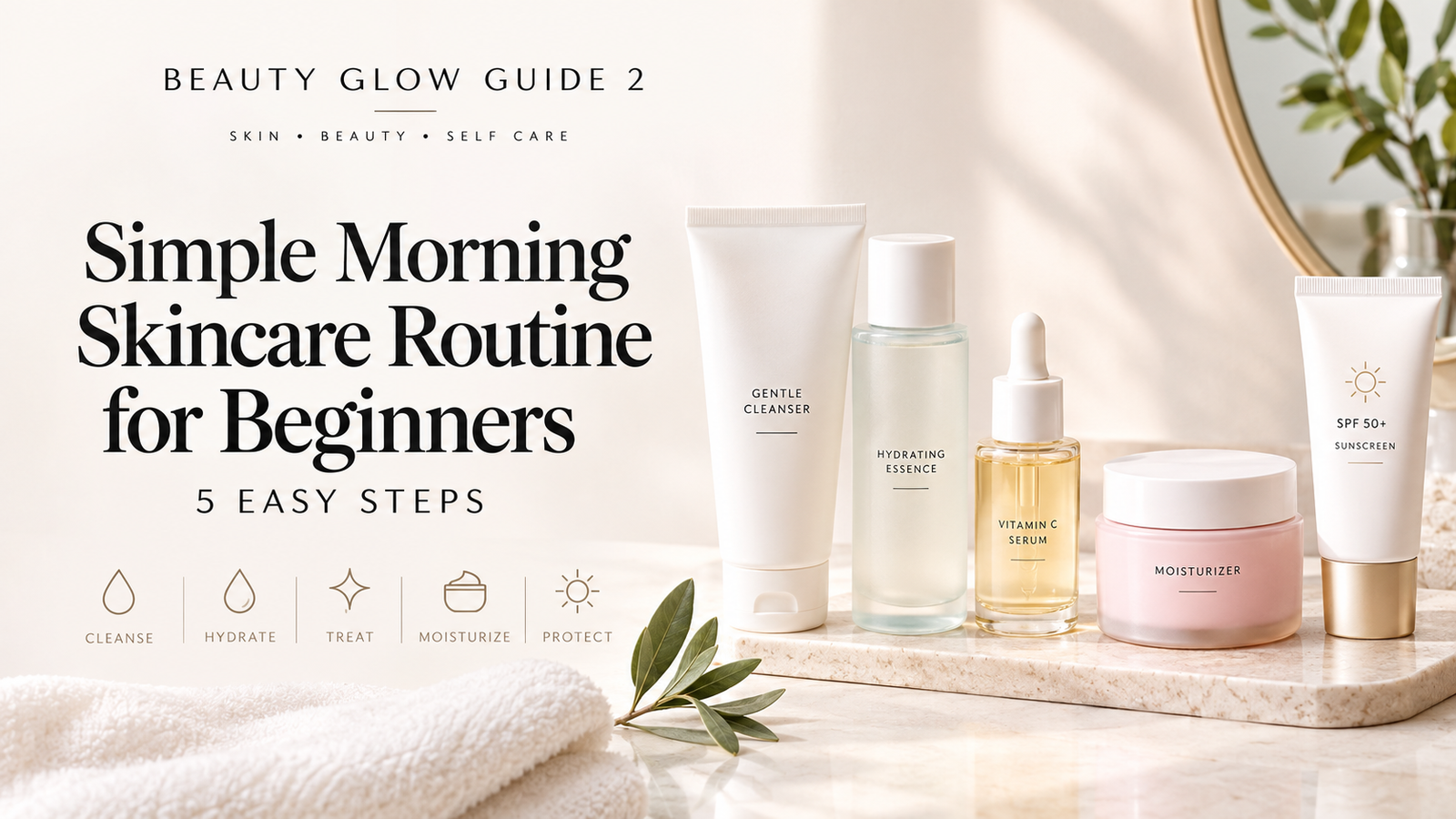
  • Simple Morning Skincare Routine for Beginners: 5 Easy Steps

    Simple Morning Skincare Routine for Beginners: 5 Easy Steps

    A good morning skincare routine does not need to include a long list of products. For most beginners, a simple routine built around cleansing, hydration, moisturizing, and daytime sun protection is easier to follow consistently.

    The key is understanding what goes first, what you actually need, and where optional treatments fit into the routine.

    Quick Take

    A simple morning skincare routine can follow this order:

    1. Cleanser
    2. Hydrating product
    3. Treatment serum, if needed
    4. Moisturizer
    5. Sunscreen

    You do not necessarily need all five steps every morning. Your routine can be adjusted depending on your skin type, products, and personal skincare goals.

    1. Start With a Gentle Cleanser

    Cleansing is usually the first step of a morning skincare routine.

    A gentle cleanser can help remove overnight oil, sweat, and leftover skincare products without making the routine unnecessarily complicated.

    If your skin feels dry or tight after cleansing, you may want to consider a gentler cleanser or a less frequent morning cleanse, depending on what works for your skin.

    What to look for

    For a beginner-friendly routine, look for a cleanser that:

    • Feels comfortable after rinsing
    • Does not leave your skin feeling excessively tight
    • Fits your skin type
    • Works well with the rest of your routine

    The goal is simply to prepare your skin for the products that follow.

    2. Add Hydration

    After cleansing, you can add a hydrating product if your skin needs extra moisture or feels dehydrated.

    This could be a hydrating essence, toner, serum, or another lightweight product designed for your routine.

    Hydration is especially useful when your skin feels uncomfortable, tight, or lacking softness.

    However, more layers are not automatically better. If your moisturizer already provides enough hydration, you may not need an additional hydrating step.

    3. Use a Treatment Serum If You Need One

    A treatment serum is an optional step rather than something every beginner must use.

    Depending on your skincare goals, this step might include an ingredient such as vitamin C or another targeted skincare product.

    The important part is to introduce treatments thoughtfully rather than adding several active products at once.

    If you are new to skincare, starting with a simple routine can make it easier to understand how your skin responds to individual products.

    4. Apply Moisturizer

    Moisturizer helps support the skin’s moisture level and can make your routine feel more comfortable.

    Choose a moisturizer based on your skin’s needs and the other products you are using.

    A lightweight moisturizer may feel more comfortable for some people during the day, while a richer formula may be preferred by people with drier skin.

    You do not need to use a complicated moisturizer routine. The goal is to find a product that fits comfortably into your everyday skincare habits.

    5. Finish With Sunscreen

    Sunscreen is the final step of a typical morning skincare routine.

    It is important to follow the directions on your sunscreen and apply it as recommended on the product packaging.

    If you are spending time outdoors, sunscreen becomes particularly important as part of your daytime routine.

    Think of sunscreen as the finishing step rather than something to mix into the rest of your skincare products.

    What Order Should Your Morning Skincare Routine Follow?

    A simple order is:

    Cleanser → Hydrating product → Treatment → Moisturizer → Sunscreen

    This order keeps the routine easy to understand.

    If you do not use a treatment serum or separate hydrating product, simply skip those steps.

    For example:

    Cleanser → Moisturizer → Sunscreen

    can be a perfectly simple starting point.

    Simple Morning Routine for Beginners

    If you are completely new to skincare, start with the basics.

    Step 1: Cleanse

    Use a gentle cleanser suitable for your skin.

    Step 2: Moisturize

    Apply a moisturizer that feels comfortable and suits your skin’s needs.

    Step 3: Protect

    Finish with sunscreen according to the product’s directions.

    Once this routine feels comfortable and consistent, you can consider adding a hydrating serum or treatment product if you have a specific reason to do so.

    Where Does Vitamin C Fit?

    If vitamin C is part of your routine, it is commonly placed after cleansing and before moisturizer and sunscreen.

    A simple example is:

    Cleanser → Vitamin C serum → Moisturizer → Sunscreen

    However, not every person needs a vitamin C product. If you are introducing one, follow the product’s directions and avoid changing several parts of your routine at the same time.

    This makes it easier to identify how your skin responds to a new product.

    Where Does a Hydrating Serum Fit?

    A hydrating serum generally goes after cleansing and before moisturizer.

    A basic routine could look like:

    Cleanser → Hydrating serum → Moisturizer → Sunscreen

    If you use both a hydrating serum and a treatment serum, follow the directions for your specific products and keep the overall routine manageable.

    What Can You Combine in a Morning Routine?

    Many skincare routines can remain simple while still including more than the basic three steps.

    For example:

    Cleanser → Hydrating serum → Moisturizer → Sunscreen

    Or, when a treatment is appropriate:

    Cleanser → Treatment serum → Moisturizer → Sunscreen

    The best approach is to avoid adding products simply because they are popular.

    Instead, ask what each product is supposed to do and whether it has a clear place in your routine.

    What Should You Be Careful About?

    A beginner routine can become complicated quickly when too many products are introduced at once.

    Keep these points in mind:

    • Do not assume that more products will produce better results.
    • Introduce new products thoughtfully.
    • Follow product-specific directions.
    • Be cautious when combining multiple active ingredients.
    • Patch testing can be useful when introducing a new product.
    • Stop using a product if it causes a concerning reaction and seek appropriate professional advice when needed.
    • Give your routine time to become a consistent habit.

    Skincare is personal, so a routine that works for one person may not be the right routine for someone else.

    Who May Like This Routine?

    This simple morning skincare structure may be useful for:

    • Skincare beginners
    • People who want a shorter morning routine
    • Anyone trying to understand skincare order
    • People who prefer practical, uncomplicated routines
    • Anyone rebuilding a basic skincare routine

    If your skin has specific concerns or you are using prescription skincare, your routine may need to be adjusted accordingly.

    A Minimal 3-Step Version

    If five steps feel like too much, start with three.

    1. Cleanser

    Cleanse according to your skin’s needs.

    2. Moisturizer

    Apply a suitable moisturizer.

    3. Sunscreen

    Finish with sunscreen during the daytime.

    Once these basics become consistent, you can decide whether an additional hydrating or treatment product is actually useful for you.

    Common Morning Skincare Mistakes

    Using Too Many Products

    A crowded routine can make it difficult to understand which products are actually useful.

    Changing Everything at Once

    Introducing several new products simultaneously makes it harder to identify which product may be responsible for irritation or other changes.

    Ignoring Product Directions

    Different products can have different instructions. Always check the label or manufacturer’s guidance.

    Forgetting Sunscreen

    If sunscreen is part of your daytime routine, make it the final skincare step and follow the product’s application directions.

    Copying Someone Else’s Routine Exactly

    Your skin, environment, preferences, and product choices may differ from someone else’s.

    Use other routines as ideas rather than assuming they need to be copied exactly.

    Frequently Asked Questions

    What is the correct morning skincare routine order?

    A simple order is cleanser, hydrating product, treatment serum if needed, moisturizer, and sunscreen.

    Do beginners need five skincare steps?

    No. A beginner can start with a much simpler routine, such as cleanser, moisturizer, and sunscreen.

    Should moisturizer go before sunscreen?

    Yes. In a typical morning skincare routine, moisturizer comes before sunscreen.

    Can I skip a serum?

    Yes. Serums are optional and should have a clear purpose in your routine.

    How many skincare products should I use in the morning?

    There is no single number that works for everyone. Start with the products you actually need and add other steps only when they serve a specific purpose.

    Related Beauty Glow Guide 2 Articles

    Continue exploring practical skincare guides from Beauty Glow Guide 2:

    Final Thoughts

    A morning skincare routine does not need to be complicated to be useful.

    Start with the basics: cleanse when appropriate, moisturize, and protect your skin during the day with sunscreen. If you need additional hydration or a treatment product, add it with a clear purpose rather than simply adding more steps.

    The most useful routine is one that you understand, can maintain consistently, and can adjust according to your skin’s needs.

    Save This for Later

    Save this guide as a simple reference whenever you need to reset your morning skincare routine.

    Cleanse → Hydrate → Treat → Moisturize → Protect

    Keep the routine simple, introduce products thoughtfully, and focus on consistency.