Reading a skincare label can feel like trying to understand another language.
You may see ingredients such as hyaluronic acid, niacinamide, glycerin, ceramides, panthenol, peptides, centella asiatica, and snail mucin — but knowing their names does not always tell you what they actually do or where they belong in your routine.
The good news is that you do not need to memorize every ingredient on a product label.
A better approach is to understand a few commonly used skincare ingredients, what role they can play in a routine, and what type of product they are usually found in.
This beginner-friendly guide covers some of the ingredients already discussed on Beauty Glow Guide and explains how they can fit into a simple skincare routine.
Why Skincare Ingredients Matter
The ingredient list tells you what is inside a skincare product.
But one ingredient rarely tells the whole story.
Two products can contain the same ingredient while having very different textures, concentrations, supporting ingredients, and intended uses.
That is why it is useful to look at:
- The complete formula
- The product type
- Your skin’s needs
- How often the product is intended to be used
- Whether the product fits your existing routine
Instead of asking which ingredient is universally “best,” think about which ingredients make sense for your particular routine.
The Main Types of Skincare Ingredients
For a beginner, it helps to group ingredients according to their general role.
Hydrating ingredients
These are commonly included in products designed to increase or support skin hydration.
Examples include:
- Hyaluronic acid
- Glycerin
- Panthenol
Barrier-supporting ingredients
These are commonly found in products designed around skin barrier care.
Examples include:
- Ceramides
- Panthenol
Skin-conditioning and soothing-focused ingredients
Examples include:
- Centella asiatica
- Panthenol
Treatment-focused ingredients
Depending on the product and formulation, ingredients such as niacinamide and retinoids may be used in treatment-focused routines.
Skin-conditioning ingredients
Peptides and snail mucin are examples of ingredients frequently used in modern skincare formulas for conditioning, hydration, and other cosmetic purposes.
The exact role depends on the complete product formula.
1. Hyaluronic Acid
Hyaluronic acid is one of the most recognizable ingredients in hydration-focused skincare.
It is commonly found in:
- Serums
- Essences
- Moisturizers
- Masks
If your routine focuses on hydration, you will likely encounter it frequently.
Read the complete beginner’s guide:
What Is Hyaluronic Acid? A Beginner’s Guide to Hydrated-Looking Skin
Where does it fit?
If you are using a hyaluronic acid serum, it generally fits into the serum step:
Cleanser → Hyaluronic Acid Serum → Moisturizer → Sunscreen
The exact application instructions depend on the product.
2. Glycerin
Glycerin is another common ingredient in moisturizing skincare products.
You may find it in:
- Cleansers
- Serums
- Moisturizers
- Creams
- Lotions
One reason glycerin is so common is that it can be incorporated into many different types of formulas.
You can learn more here:
What Is Glycerin? A Beginner’s Guide to This Hydrating Skincare Ingredient
Where does it fit?
There is no separate “glycerin step.”
Instead, glycerin is often already part of another product.
For example:
Cleanser → Glycerin-containing Serum → Moisturizer → Sunscreen
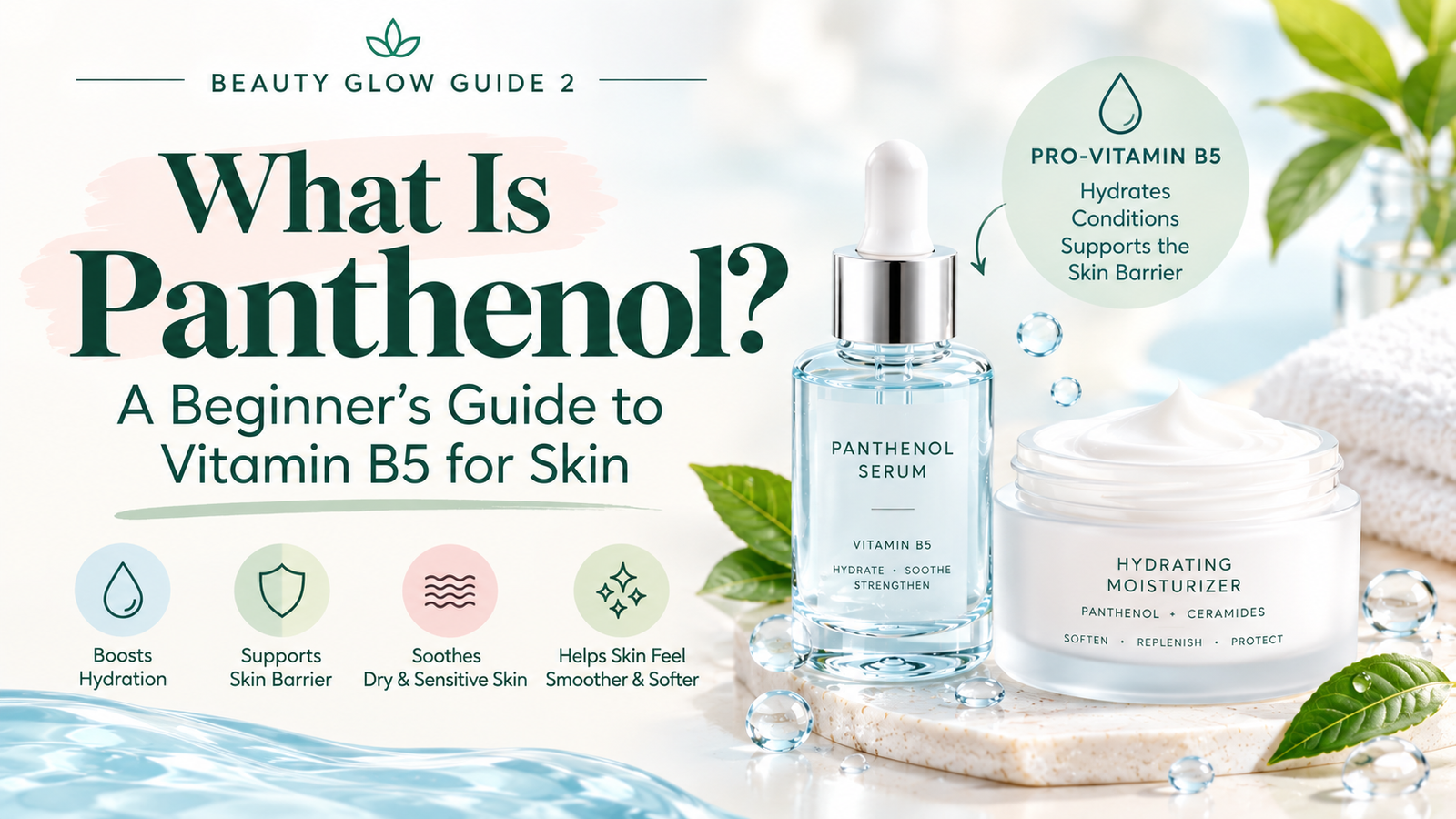
3. Panthenol
Panthenol is another ingredient you may see in hydration and skin-comfort-focused products.
It can appear in:
- Serums
- Essences
- Creams
- Moisturizers
- Other leave-on skincare products
Read:
What Is Panthenol? A Beginner’s Guide
Where does panthenol fit?
Like glycerin, panthenol does not require its own separate routine step.
Its position depends on the product containing it.
A panthenol serum could be used during the serum step, while a panthenol moisturizer would be used during the moisturizing step.
4. Ceramides
Ceramides are naturally occurring lipids found in the skin.
They are frequently used in products focused on moisturizing and supporting the skin barrier.
You may find them in:
- Moisturizers
- Creams
- Lotions
- Cleansers
- Barrier-care products
Learn more:
What Are Ceramides? A Beginner’s Guide to Skin Barrier Care
Where do ceramides fit?
Ceramides are often found in moisturizers.
A simple routine could therefore look like:
Cleanser → Hydrating Serum → Ceramide Moisturizer → Sunscreen
You do not necessarily need a separate ceramide serum if your moisturizer already contains ceramides.
5. Niacinamide
Niacinamide is a form of vitamin B3 commonly used in skincare.
It can be found in:
- Serums
- Moisturizers
- Toners
- Other skincare formulas
Rather than focusing only on the ingredient name, consider the concentration, complete formula, product instructions, and how the product fits into your routine.
Read the full guide:
What Is Niacinamide? A Beginner’s Guide to Vitamin B3 for Skin
Where does niacinamide fit?
If you use a niacinamide serum:
Cleanser → Niacinamide Serum → Moisturizer → Sunscreen
If it is already included in your moisturizer, there is no reason to add another separate niacinamide step simply because the ingredient is popular.
6. Peptides
Peptides are another group of ingredients frequently found in skincare products.
They can appear in:
- Serums
- Moisturizers
- Eye products
- Other treatment-oriented formulas
Read:
What Are Peptides in Skincare? A Beginner’s Guide to Peptide Serums
Where do peptides fit?
A peptide serum generally fits into the serum or treatment step.
For example:
Cleanser → Peptide Serum → Moisturizer → Sunscreen
The product’s directions should take priority over a generic routine chart.
7. Centella Asiatica
Centella asiatica is often called cica in skincare.
It is particularly common in K-beauty products and can appear in many different product types.
You may see centella in:
- Toners
- Essences
- Serums
- Creams
- Moisturizers
Read:
What Is Centella Asiatica? A Beginner’s Skincare Guide
Where does centella fit?
The answer depends on the product.
A centella toner goes after cleansing.
A centella serum goes during the serum step.
A centella moisturizer goes after your serum or treatment.
The ingredient itself does not determine the routine position.
8. Snail Mucin
Snail mucin has become a familiar ingredient in K-beauty skincare.
It is commonly found in:
- Essences
- Serums
- Creams
One of the better-known examples is COSRX Advanced Snail 96 Mucin Power Essence.
Read:
COSRX Snail Mucin: What It Is, How to Use It & Where It Fits in Your Routine
Where does snail mucin fit?
If you are using a snail mucin essence, a simple routine may look like:
Cleanser → Snail Mucin Essence → Moisturizer → Sunscreen
If you use other serums, the exact order can depend on the products and their textures.
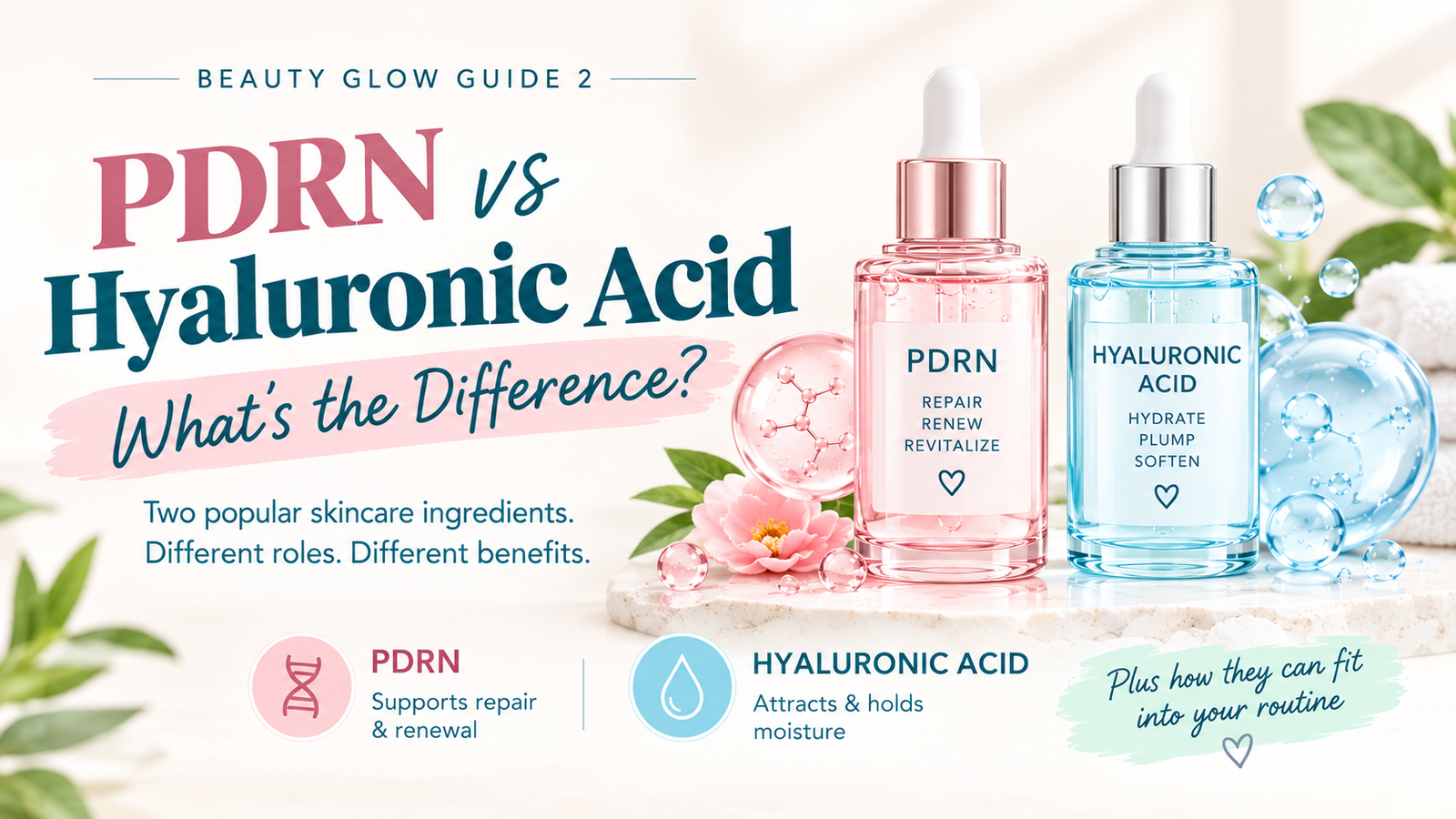
9. PDRN
PDRN is another ingredient you may encounter in newer skincare products.
It is particularly common in products marketed around hydration, skin conditioning, and skin-recovery-focused routines.
However, PDRN products can vary significantly in formulation and product type.
Read:
What Is PDRN in Skincare? A Beginner’s Guide
You can also compare it with another well-known hydration ingredient:
PDRN vs. Hyaluronic Acid: What’s the Difference?
Where does PDRN fit?
There is no universal PDRN step.
A PDRN serum would generally be used during the serum/treatment portion of a routine.
A PDRN cream would be used later, during the moisturizing step.
Always check the instructions for the specific product.
10. What About Vichy Minéral 89?
Vichy Minéral 89 is an example of why looking at the complete formula can be more useful than focusing on one ingredient.
The product is a hydrating serum rather than simply a single-ingredient hyaluronic acid product.
Read:
Vichy Minéral 89 vs. Hyaluronic Acid Serums: What’s the Difference?
You can also read:
Vichy Minéral 89 Hydrating & Plumping Daily Booster: A Practical Guide
If you use it as your hydrating serum:
Cleanser → Vichy Minéral 89 → Moisturizer → Sunscreen
Ingredients vs. Products: An Important Difference
This is one of the most useful things for beginners to understand.
An ingredient is not the same thing as a product.
For example:
Hyaluronic acid = ingredient
Hyaluronic acid serum = product containing that ingredient
Ceramides = ingredients
Ceramide moisturizer = product containing those ingredients
Centella asiatica = ingredient
Centella essence = product containing that ingredient
This distinction helps you avoid creating unnecessary routine steps.
You Don’t Need One Product for Every Ingredient
Imagine your routine contains:
- Hyaluronic acid serum
- Glycerin serum
- Panthenol serum
- Ceramide serum
- Niacinamide serum
- Peptide serum
- Centella essence
- Snail mucin essence
You could technically have many products, but that does not mean you need all of them.
In fact, layering too many products can make your routine unnecessarily complicated.
A simpler approach is to look at the overall formula and decide whether the product serves a purpose you actually need.
For example, one hydrating serum may already contain several hydration-supporting ingredients.
A Simple Ingredient-Focused Routine
You can build a routine without turning every ingredient into a separate step.
Morning
Cleanser
↓
Hydrating serum
↓
Moisturizer
↓
Sunscreen
Night
Cleanser
↓
Treatment or hydrating serum
↓
Moisturizer
This is enough for many beginners to start understanding how products fit together.
For a more detailed explanation, read:
How to Layer Skincare Products: A Simple Beginner’s Guide
How Ingredients Fit Into a Hydrating Routine
If hydration is your main focus, you may come across several complementary ingredients.
A simple example is:
Cleanser → Hydrating Serum → Moisturizer → Sunscreen
Your hydrating serum might contain ingredients such as:
- Hyaluronic acid
- Glycerin
- Panthenol
Your moisturizer might contain:
- Ceramides
- Glycerin
- Other moisturizing ingredients
This means you can address several parts of a hydration-focused routine without buying a separate product for every ingredient.
For more guidance:
How to Build a Simple Hydrating Skincare Routine
And:
How to Choose the Best Hydrating Serum for Dry-Looking Skin
How Ingredients Relate to Your Skin Barrier
A healthy-looking skincare routine is not only about adding ingredients.
It is also about avoiding unnecessary irritation.
Your skin barrier is part of the outermost layer of your skin and plays an important role in keeping skin protected and hydrated.
Read:
What Is the Skin Barrier? A Beginner’s Guide to Healthy-Looking Skin
When building your routine, consider both what you want to add and what you may need to reduce.
How to Read a Skincare Product Label
You do not have to understand every ingredient listed on the package.
Start with a few practical questions.
What is the product?
Is it a:
- Cleanser?
- Toner?
- Essence?
- Serum?
- Moisturizer?
- Sunscreen?
What is its main purpose?
Look at the product description and directions.
What ingredients are highlighted?
These can tell you what the product is designed around, but remember that the complete formula matters.
How do you use it?
Follow the manufacturer’s directions.
Does it duplicate something you already own?
If you already have a hydrating serum, buying another product with a very similar purpose may not be necessary.
Don’t Choose an Ingredient Based Only on a Trend
Skincare trends can introduce useful ingredients to a wider audience, but popularity alone does not mean you need a particular product.
Before buying a trending ingredient, ask:
What am I hoping this product will add to my routine?
If you cannot answer that question, you may not need it yet.
A simple routine that you understand is often easier to manage than a collection of products chosen because they are currently popular.
Common Beginner Mistakes With Skincare Ingredients
1. Treating every ingredient as a separate step
You don’t need a separate serum for every ingredient.
2. Buying products before identifying your goal
Start with what you want your routine to accomplish.
3. Introducing several new products simultaneously
If irritation occurs, it becomes harder to identify the cause.
4. Ignoring product texture
Two products with similar ingredients can feel very different on the skin.
5. Forgetting sunscreen
A good morning routine should finish with sun protection.
6. Assuming stronger means better
A more complicated or concentrated formula is not automatically more appropriate for your skin.
7. Replacing your entire routine whenever a new ingredient becomes popular
Give your existing routine a chance to work before constantly changing it.
A Beginner’s Ingredient Cheat Sheet
| Ingredient | Common role | Common product types |
|---|---|---|
| Hyaluronic acid | Hydration-focused | Serums, essences, moisturizers |
| Glycerin | Moisturizing/hydration | Cleansers, serums, creams |
| Panthenol | Hydration and skin comfort | Serums, essences, moisturizers |
| Ceramides | Barrier-focused moisturizing | Creams, lotions, moisturizers |
| Niacinamide | Multifunctional skincare ingredient | Serums, toners, moisturizers |
| Peptides | Skin-conditioning/treatment-focused | Serums, creams |
| Centella asiatica | Skin-comfort-focused | Toners, essences, serums, creams |
| Snail mucin | Hydration/skin-conditioning | Essences, serums, creams |
| PDRN | Product-dependent skincare ingredient | Serums, creams, other leave-on products |
The table is a starting point, not a complete description of everything each ingredient can do. The complete formula and product instructions matter.
A Simple Way to Build Your Routine
Instead of starting with ingredients, start with steps.
Step 1: Cleanse
Choose a cleanser that feels comfortable and suits your skin.
Step 2: Hydrate or Treat
Choose one serum or essence based on your main goal.
Step 3: Moisturize
Use a moisturizer appropriate for your skin and preferred texture.
Step 4: Protect
Use sunscreen during the day.
Then, if needed, add additional products gradually.
This approach prevents your routine from becoming an ingredient checklist.
Final Thoughts
Skincare ingredients can look complicated, but you don’t need to become an expert in every ingredient to build a useful routine.
Start with the basics.
Understand your skin.
Choose products according to a clear purpose.
Look at the complete formula rather than one ingredient alone.
And remember that ingredients such as hyaluronic acid, glycerin, panthenol, ceramides, niacinamide, peptides, centella asiatica, snail mucin, and PDRN can appear in very different product types.
The most useful question is not simply:
“What is the best skincare ingredient?”
Instead, ask:
“What does my routine need, and which product can fill that role?”
That simple change can make skincare shopping much easier.
Save This for Later
Save this guide as a quick reference when you’re reading skincare labels or shopping for new products.
Ingredient → Purpose → Product type → Routine step
For more practical skincare education, explore the Skincare & K-Beauty category.
Affiliate Disclosure
#ad Affiliate link — I may earn a commission from qualifying purchases. As an Amazon Associate I earn from qualifying purchases. Product availability, price and details may change on Amazon. Product sizes, ingredients, packaging, availability, sellers, and delivery information can change. Check current Amazon listing before purchasing.