Tag: moisturizer

  • What Is Centella Asiatica? A Beginner’s Guide to Cica Skincare

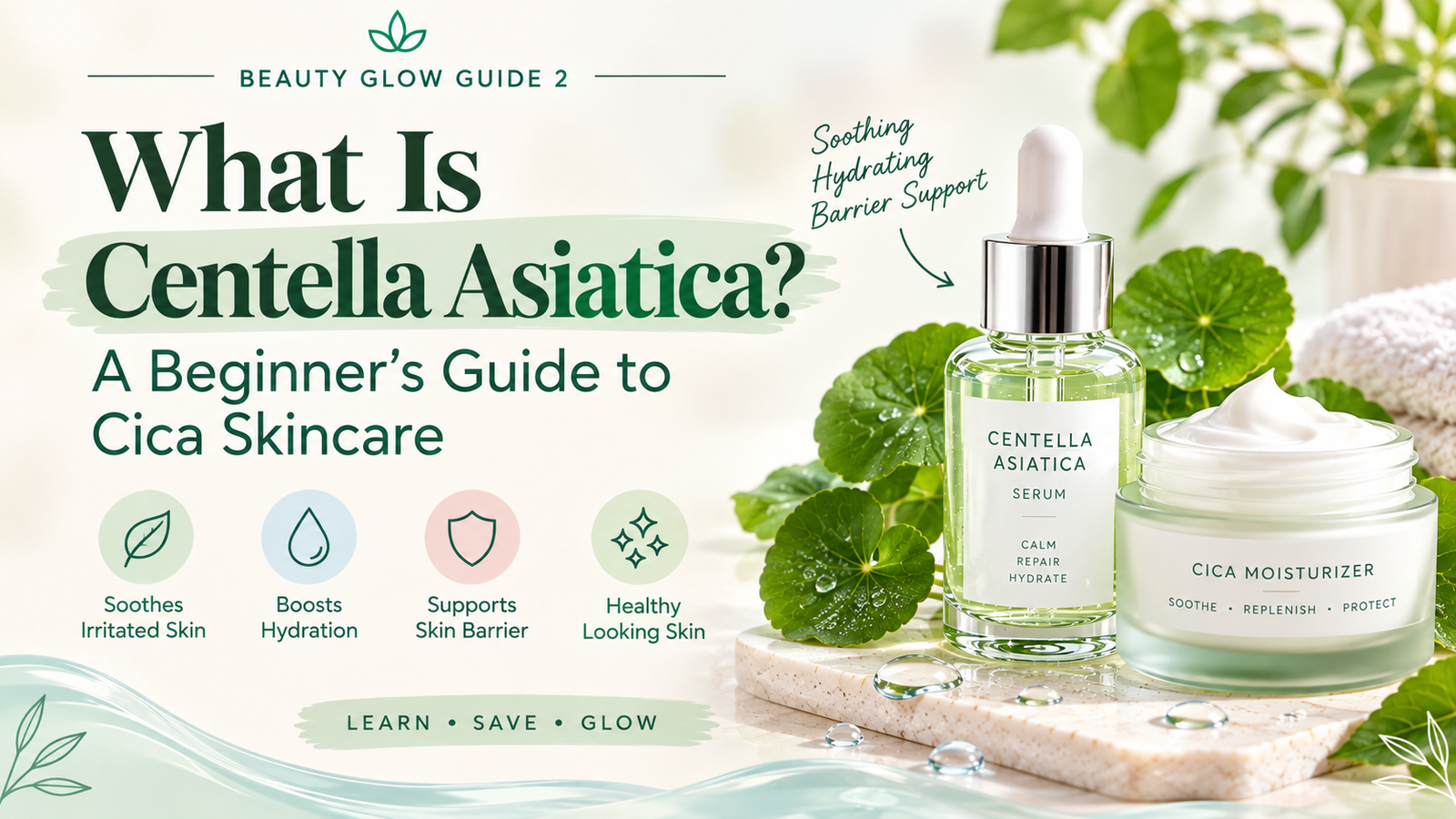
    What Is Centella Asiatica? A Beginner’s Guide to Cica Skincare

    If you’ve spent time looking at Korean skincare products, you’ve probably seen the words Centella asiatica, Cica, or Gotu Kola on product labels.

    Centella asiatica is a plant-derived skincare ingredient that has been studied for its potential effects on skin health. Its best-known compounds include asiaticoside, madecassoside, asiatic acid, and madecassic acid.

    In modern skincare, Centella is commonly associated with soothing, hydration, skin conditioning, and barrier-focused routines.

    But it is important to look beyond marketing claims. Centella products can contain different extracts, concentrations, and combinations of ingredients, so one Cica product is not automatically equivalent to another.

    This beginner’s guide explains what Centella asiatica is, what Cica means, how it fits into skincare, and how to use it without making your routine unnecessarily complicated.


    Quick Take: What Is Centella Asiatica?

    Centella asiatica is a botanical ingredient used in skincare products for skin conditioning and other potential skin-supporting properties.

    It is also known as:

    • Centella
    • Centella asiatica
    • Cica
    • Gotu Kola
    • Tiger Grass

    Centella-derived ingredients are used in products such as:

    • Serums
    • Moisturizers
    • Creams
    • Toners
    • Cleansers
    • Masks
    • Barrier-focused skincare products

    Scientific reviews have examined Centella and its triterpenes for several dermatological applications, although the strength of evidence varies by preparation and use.


    What Is Centella Asiatica?

    Centella asiatica is a plant traditionally used in several Asian medical systems.

    For skincare purposes, the plant is interesting because it contains several compounds known as triterpenes.

    The most commonly discussed compounds include:

    • Asiaticoside
    • Madecassoside
    • Asiatic acid
    • Madecassic acid

    These compounds are among the components researchers have investigated when studying Centella’s effects on skin.

    However, a skincare product containing “Centella asiatica extract” does not necessarily contain identical amounts of every compound.

    The extraction method and formulation can influence the final product.


    What Does Cica Mean in Skincare?

    Cica is simply a commonly used skincare name for Centella asiatica.

    You may therefore see:

    Centella asiatica = Cica

    on different skincare products.

    The term “Cica” became particularly popular in modern Asian skincare and is now widely used internationally.

    A Cica serum and a Centella serum may therefore refer to products based on the same botanical ingredient.

    However, always check the ingredient list because the rest of the formula can be very different.


    What Are the Potential Benefits of Centella Asiatica?

    Centella has been studied for a variety of skin-related effects.

    In cosmetic skincare, it is commonly associated with:

    • Skin conditioning
    • Soothing-focused skincare
    • Supporting a healthy-looking skin barrier
    • Hydration-focused routines
    • Supporting comfortable-feeling skin
    • Antioxidant properties of some Centella compounds

    Scientific reviews have reported anti-inflammatory and antioxidant activity associated with Centella compounds, while also noting that more controlled clinical research is needed for many specific therapeutic claims.

    For everyday skincare, it is therefore more accurate to describe Cica as a supportive skincare ingredient rather than a cure for a particular skin condition.


    Centella Asiatica and the Skin Barrier

    The skin barrier is the outer protective layer of the skin.

    A healthy barrier helps the skin retain moisture and protects against external environmental exposure.

    This makes barrier care an important part of a simple skincare routine.

    Some research on Centella extracts and their components has investigated effects related to hydration, inflammation, and barrier function.

    This is one reason Cica is frequently included in products designed for dry-feeling, stressed-looking, or sensitive-feeling skin.

    For a deeper explanation of the barrier itself:

    [What Is the Skin Barrier? A Beginner’s Guide to Healthy-Looking Skin]


    Centella Asiatica for Sensitive Skin

    Centella is often used in skincare marketed toward sensitive skin.

    A 2025 prospective study examined a facial cream containing Centella asiatica leaf extract, ceramide NP, and panthenol in people with sensitive skin. The study reported improvements in several measures of sensitivity, hydration, and barrier function over four weeks, although it evaluated a specific multi-ingredient cream, not Centella alone.

    That distinction is important.

    If a product containing Cica works well for someone, the result cannot automatically be attributed entirely to Centella.

    The complete formula matters.

    For sensitive-feeling skin, a simple routine can be more useful than continuously adding new products.


    Does Centella Asiatica Hydrate Skin?

    Centella is not primarily a humectant in the same way as glycerin or hyaluronic acid.

    However, Centella-containing formulations have been studied for effects on skin hydration and barrier-related measures.

    If hydration is your main goal, ingredients such as:

    • Glycerin
    • Hyaluronic acid
    • Panthenol
    • Ceramides

    may also be relevant.

    Cica can complement these ingredients rather than replacing them.

    Learn more:

    [What Is Glycerin? A Beginner’s Guide to This Hydrating Skincare Ingredient]

    [What Is Hyaluronic Acid? A Beginner’s Guide to Hydrated-Looking Skin]

    [What Is Panthenol? A Beginner’s Guide to Pro-Vitamin B5 for Skin]


    Centella Asiatica and Panthenol

    Centella and panthenol are frequently used together in barrier-focused skincare.

    They have different roles.

    Centella is a botanical ingredient associated with skin conditioning and soothing-focused formulations.

    Panthenol is a pro-vitamin B5 ingredient with humectant and moisturizing properties.

    Combining them can make sense in a hydration- and barrier-focused formula.

    For more about panthenol:

    [What Is Panthenol? A Beginner’s Guide to Pro-Vitamin B5 for Skin]


    Centella Asiatica and Ceramides

    Ceramides and Centella are also commonly found together.

    Ceramides are lipids associated with the skin barrier.

    Centella is a botanical extract used for skin conditioning and other cosmetic purposes.

    A moisturizer could therefore contain both ingredients while serving multiple aspects of a barrier-focused routine.

    For a deeper explanation of ceramides:

    [What Are Ceramides? A Beginner’s Guide to Skin Barrier Care]


    Centella Asiatica and Niacinamide

    Niacinamide and Centella can also appear in the same skincare formula.

    Niacinamide is vitamin B3 and is used for several cosmetic purposes, including supporting the appearance of even-looking skin and a healthy skin barrier.

    Centella is often included in products focused on soothing and skin conditioning.

    Because they have different functions, they do not necessarily need to be treated as competing ingredients.

    Read:

    [What Is Niacinamide? A Beginner’s Guide to Vitamin B3 for Skin]


    Centella Asiatica and Hyaluronic Acid

    Hyaluronic acid is primarily associated with hydration.

    Centella is a botanical skincare ingredient with different properties.

    Using the two together can therefore create a routine that addresses both hydration and skin conditioning.

    For example:

    Hydrating serum → Cica serum → Moisturizer

    But if your Cica product already contains hyaluronic acid, you may not need two separate serums.

    Always check the complete ingredient list.


    Centella Asiatica and Peptides

    Centella can also be combined with peptide skincare.

    Peptides are short chains of amino acids used in cosmetic formulations for different purposes.

    Centella and peptides therefore represent two different categories of ingredients.

    If you’re interested in learning more about peptides:

    [What Are Peptides in Skincare? A Beginner’s Guide to Peptide Serums]


    Centella Asiatica vs. Cica: What’s the Difference?

    There is essentially no ingredient-category distinction between the two names.

    Centella asiatica is the botanical name.

    Cica is a common skincare name used for Centella-based ingredients and products.

    Gotu Kola is another common name for the plant.

    The more important question is what form of Centella is actually in the product.

    For example, an ingredient list may specify:

    • Centella asiatica leaf extract
    • Centella asiatica extract
    • Centella asiatica leaf water
    • Centella-derived compounds

    These are not necessarily identical formulations.


    What Are Madecassoside and Asiaticoside?

    If you’ve looked closely at Cica skincare labels, you may have noticed names such as madecassoside or asiaticoside.

    These are naturally occurring compounds associated with Centella asiatica.

    Other commonly discussed compounds include:

    • Asiatic acid
    • Madecassic acid

    Researchers have investigated these compounds individually and as components of Centella extracts.

    However, seeing one of these names on a label does not by itself tell you how effective the finished product will be.

    The complete formulation still matters.


    Can You Use Centella Every Day?

    Many Centella-containing cosmetic products are designed for regular use.

    However, the correct frequency depends on the individual product.

    If you’re using a Cica serum or moisturizer, follow the manufacturer’s instructions.

    You also don’t need to introduce a Centella product every time your skin feels uncomfortable.

    Sometimes the simplest approach is better:

    Gentle cleanser → Moisturizer → Sunscreen

    Then add a Cica product if it fits your routine.


    How to Use Centella Asiatica in Your Routine

    The position of Centella depends on the product type.

    If You Use a Cica Serum

    A simple routine could be:

    1. Cleanse
    2. Apply hydrating serum if needed
    3. Apply Cica serum
    4. Apply moisturizer
    5. Apply sunscreen in the morning

    If You Use a Cica Moisturizer

    Your routine may be:

    1. Cleanse
    2. Apply serum
    3. Apply Cica moisturizer
    4. Apply sunscreen in the morning

    If You Use a Cica Toner

    It can generally be used after cleansing and before thicker treatment or moisturizing steps, according to the product directions.


    Where Does Cica Go in Skincare Layering?

    A useful beginner rule is:

    Thin products first → thicker products later.

    For example:

    Cleanser → Toner → Serum → Moisturizer → Sunscreen

    If your Cica product is a serum, it generally belongs around the serum step.

    If it is a moisturizer, it belongs later in the routine.

    The exact order should always follow the texture and instructions of the individual products.


    Can Centella Replace a Moisturizer?

    No.

    A Cica serum and a moisturizer are not automatically interchangeable.

    A serum may provide targeted ingredients, while a moisturizer is formulated to hydrate and condition the skin more broadly.

    If your skin needs more moisture, don’t assume that adding another Cica serum will solve the problem.

    A moisturizer remains an important part of a basic routine.


    Can Centella Replace Sunscreen?

    No.

    Centella is not a substitute for sunscreen.

    If you’re using Cica in the morning, finish your routine with a broad-spectrum sunscreen.

    This is particularly important if your broader goal is maintaining healthy-looking skin and minimizing visible effects of environmental exposure.


    Is Centella Good for Dry Skin?

    Centella can fit comfortably into a routine for dry-feeling skin, particularly when it is combined with moisturizing ingredients.

    However, dry skin often benefits from a complete moisturizing system.

    Look for formulas that may combine:

    • Humectants
    • Emollients
    • Occlusives
    • Ceramides
    • Panthenol
    • Other conditioning ingredients

    Cica can then be one supportive component.


    Is Centella Good for Oily Skin?

    Centella can also fit into an oily-skin routine.

    The key is the product texture, rather than assuming that every Cica product will feel the same.

    For oily or combination skin, you might prefer:

    • Lightweight Cica serum
    • Gel moisturizer
    • Lightweight lotion
    • Non-heavy hydrating formula

    You don’t need to avoid hydration simply because your skin becomes oily.


    Centella Asiatica and Glass Skin

    Cica can fit into a glass-skin-inspired routine, particularly if your goal is a calm, hydrated, healthy-looking complexion.

    But Centella itself does not create glass skin.

    A more realistic routine focuses on:

    1. Gentle cleansing
    2. Hydration
    3. Moisturizing
    4. Barrier support
    5. Daily sunscreen

    Cica can be one ingredient within that routine.

    For the complete approach:

    [Best Glass Skin Routine: A Simple 4-Step Guide for Healthy, Hydrated Skin]


    Common Mistakes When Using Cica Skincare

    Mistake 1: Assuming Every Cica Product Is the Same

    Different products use different Centella extracts, concentrations, and supporting ingredients.

    Always look at the complete formula.

    Mistake 2: Treating Cica as a Cure

    Centella has been studied for several dermatological applications, but cosmetic skincare should not be presented as a treatment for a medical condition.

    Research reviews also note the need for additional well-controlled clinical studies for many applications.

    Mistake 3: Adding Too Many Soothing Products

    If your routine already contains several barrier-focused products, adding another serum may not provide much additional value.

    Mistake 4: Ignoring Irritation From the Whole Formula

    Centella itself may not be the source of irritation.

    Other ingredients in the product can also cause problems for individual users.

    Mistake 5: Expecting Overnight Results

    A consistent routine is more useful than constantly switching products.


    Is Centella Asiatica Safe in Skincare?

    A Cosmetic Ingredient Review assessment examined nine Centella asiatica-derived cosmetic ingredients and concluded that they were safe under the assessed conditions of use and concentration when formulated to be non-sensitizing.

    That does not mean every person will tolerate every Cica product.

    Individual sensitivity varies, and the complete formula matters.

    If a product causes persistent irritation, itching, swelling, or another concerning reaction, stop using it and seek appropriate medical advice.


    A Simple Cica Skincare Routine for Beginners

    You don’t need a complicated K-beauty routine to use Centella.

    Morning

    Step 1 — Cleanse

    Use a gentle cleanser.

    Step 2 — Hydrate

    Optional: use a hydrating serum containing ingredients such as glycerin or hyaluronic acid.

    Step 3 — Cica Serum

    Apply your Centella product according to its directions.

    Step 4 — Moisturize

    Use a moisturizer suited to your skin.

    Step 5 — Sunscreen

    Finish with broad-spectrum sunscreen.

    Evening

    Step 1 — Cleanse

    Step 2 — Cica Serum

    If you’re using one.

    Step 3 — Moisturizer

    Keep the routine comfortable and uncomplicated.


    Cica in a Barrier-First Routine

    Centella fits particularly well with the barrier-first approach used throughout Beauty Glow Guide.

    Think about your routine as a system:

    Cleanse → Hydrate → Condition → Moisturize → Protect

    Cica can sit within the conditioning or treatment portion of that routine.

    Other ingredients can handle different jobs:

    • Glycerin: hydration
    • Hyaluronic acid: hydration
    • Panthenol: hydration and conditioning
    • Ceramides: barrier-focused moisturizing
    • Niacinamide: multiple skincare functions
    • Peptides: targeted cosmetic skincare
    • Cica: botanical skin-conditioning support

    You don’t need all of them.

    Choose products based on what your routine actually needs.


    Frequently Asked Questions

    What is Centella asiatica in skincare?

    Centella asiatica is a botanical ingredient used in skincare products for skin conditioning and other potential skin-supporting properties.

    Is Cica the same as Centella asiatica?

    Yes. Cica is a common skincare name for Centella asiatica.

    Is Centella good for sensitive skin?

    Centella is commonly included in products formulated for sensitive-feeling skin, and some research has examined Centella-containing formulations in sensitive-skin participants. However, the complete formula matters.

    Can I use Centella every day?

    Many Centella products are designed for regular use. Follow the directions for the specific product.

    Can I use Centella with niacinamide?

    Yes. They can appear together in skincare formulations and can be part of the same routine.

    Can I use Centella with hyaluronic acid?

    Yes. They have different roles and can complement a hydration-focused routine.

    Can Centella repair the skin barrier?

    Centella and its compounds have been studied for effects related to skin-barrier function, hydration, inflammation, and wound healing. However, it is more accurate to say that Centella-containing skincare may support barrier function rather than promise that it will repair a damaged barrier.

    Is Centella a hydrating ingredient?

    Centella is not primarily a humectant like glycerin or hyaluronic acid, but Centella-containing formulations have been studied for effects on skin hydration and barrier-related measures.


    Related Beauty Glow Guide Articles

    Continue exploring the Beauty Glow Guide skincare ingredient series:

    • [What Is the Skin Barrier? A Beginner’s Guide to Healthy-Looking Skin]
    • [What Is Hyaluronic Acid? A Beginner’s Guide to Hydrated-Looking Skin]
    • [What Is Niacinamide? A Beginner’s Guide to Vitamin B3 for Skin]
    • [What Are Ceramides? A Beginner’s Guide to Skin Barrier Care]
    • [What Is Glycerin? A Beginner’s Guide to This Hydrating Skincare Ingredient]
    • [What Are Peptides in Skincare? A Beginner’s Guide to Peptide Serums]
    • [What Is Panthenol? A Beginner’s Guide to Pro-Vitamin B5 for Skin]
    • [Simple Morning Skincare Routine for Beginners: 5 Easy Steps]
    • [Best Glass Skin Routine: A Simple 4-Step Guide for Healthy, Hydrated Skin]

    Final Thoughts

    Centella asiatica, commonly called Cica, is a versatile botanical ingredient that fits naturally into hydration- and barrier-focused skincare routines.

    Research has explored Centella and its compounds for skin conditioning, antioxidant and anti-inflammatory activity, wound healing, and other dermatological applications, although evidence varies depending on the preparation and intended use.

    For everyday skincare, you don’t need to build an elaborate routine around Cica.

    A simple combination of gentle cleansing, hydration, moisturizing, barrier support, and daily sunscreen can provide the foundation, with Centella added as an optional supportive ingredient.

    The most important thing is to look at the whole product formula, not just the word “Cica” on the label.


    Save This for Later

    Centella, Cica, and Gotu Kola can look confusing on skincare labels. Save this guide so you can quickly check what this popular K-beauty ingredient actually does.


    Editorial Source Note

    This article is based on peer-reviewed reviews and safety literature concerning Centella asiatica and Centella-derived cosmetic ingredients. Evidence differs between whole-plant extracts, isolated compounds, cosmetic formulations, and therapeutic applications, so individual skincare products should not be assumed to reproduce results from clinical or laboratory research.

  • What Is Panthenol? A Beginner’s Guide to Pro-Vitamin B5 for Skin

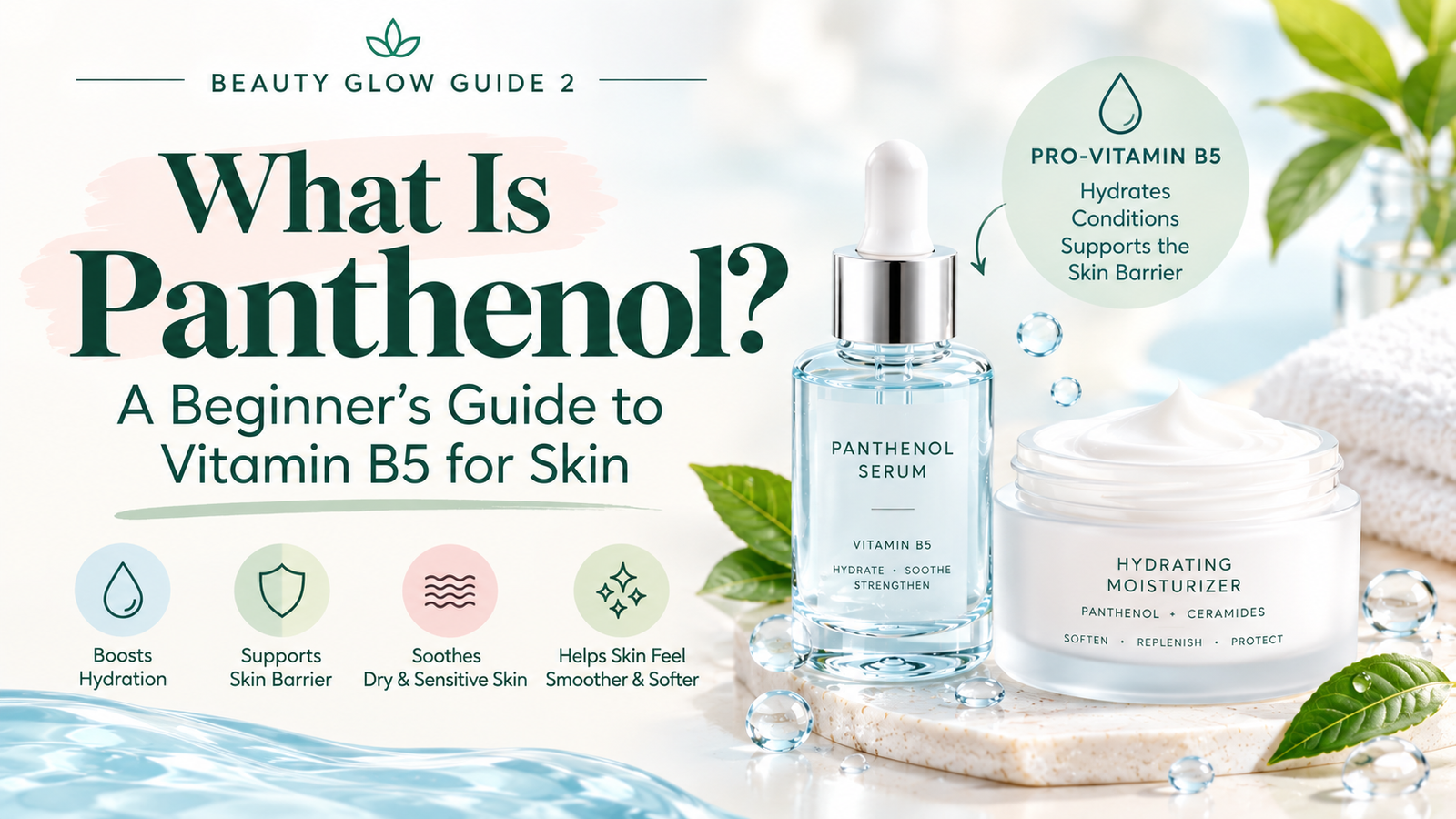
    What Is Panthenol? A Beginner’s Guide to Pro-Vitamin B5 for Skin

    Panthenol is a common ingredient in skincare products designed to moisturize, condition, and support the skin barrier.

    You may find it in serums, moisturizers, creams, lotions, cleansers, and products designed for dry or easily irritated skin.

    Panthenol is commonly described as a pro-vitamin B5 ingredient. When applied to skin, it can be converted to pantothenic acid, a form of vitamin B5. Research on topical dexpanthenol has found moisturizing and skin-barrier-supporting effects.

    If you’re building a simple hydration-focused routine, panthenol is an ingredient worth understanding.

    Quick Take: What Is Panthenol?

    Panthenol is a provitamin form of vitamin B5 used in skincare as a moisturizing and skin-conditioning ingredient.

    It is particularly interesting because research has associated topical dexpanthenol with improved hydration in the outer skin layer and reduced transepidermal water loss in certain formulations.

    In everyday skincare terms, panthenol is mainly associated with:

    • Hydration
    • Moisture retention
    • Skin conditioning
    • Barrier support
    • Comfort for dry-feeling skin
    • Supporting a gentle skincare routine

    It is not a replacement for every other skincare ingredient, but it can complement a simple routine.

    What Is Panthenol Made From?

    Panthenol is related to pantothenic acid, or vitamin B5.

    The form commonly discussed in topical skincare is dexpanthenol, the biologically active form of panthenol.

    Dexpanthenol can be converted in the skin to pantothenic acid and is used in topical formulations because of its moisturizing and skin-conditioning properties.

    This is why you may see terms such as:

    • Panthenol
    • D-panthenol
    • Dexpanthenol
    • Pro-vitamin B5
    • Vitamin B5

    on skincare packaging or ingredient lists.

    What Does Panthenol Do for Skin?

    Panthenol has several properties that make it useful in skincare formulations.

    1. Helps Support Skin Hydration

    Panthenol has moisturizing and humectant properties.

    This means it can help support the water content of the outer skin layer and improve the feel of dry skin.

    Studies of topical dexpanthenol-containing formulations have reported improvements in skin hydration.

    2. Supports the Skin Barrier

    The outer layer of skin helps regulate water loss and protects against environmental exposure.

    Research has found that topical dexpanthenol can improve measures associated with skin-barrier function, including transepidermal water loss and hydration in the outer skin layer.

    For a deeper explanation of the barrier itself, read What Is the Skin Barrier? A Beginner’s Guide to Healthy-Looking Skin .

    3. Helps Condition the Skin

    Panthenol is also used as a skin-conditioning ingredient.

    In practical terms, products containing panthenol may help leave skin feeling softer and more comfortable.

    4. Fits Hydration-Focused Routines

    Panthenol can be combined with other familiar hydration ingredients.

    For example, a routine could contain panthenol alongside:

    • Glycerin
    • Hyaluronic acid
    • Ceramides
    • Niacinamide
    • Peptides

    The exact combination depends on the individual product formula.

    Is Panthenol a Humectant?

    Yes. Panthenol has humectant properties, meaning it can help attract and retain water.

    This makes it particularly relevant to hydration-focused skincare.

    However, panthenol is not simply another name for glycerin or hyaluronic acid. Different humectants have different chemical structures and properties.

    For another common humectant, read What Is Glycerin? A Beginner’s Guide to This Hydrating Skincare Ingredient .

    Panthenol and the Skin Barrier

    The skin barrier helps limit excessive water loss from the skin and provides protection between the body and the external environment.

    When the barrier is functioning well, skin can generally retain moisture more effectively.

    Topical dexpanthenol has been studied for its ability to support barrier function and hydration. Research has reported improvements in measures such as outer-layer skin hydration and transepidermal water loss.

    This makes panthenol a natural fit within a barrier-first skincare approach.

    For another barrier-focused ingredient, see What Are Ceramides? A Beginner’s Guide to Skin Barrier Care .

    Panthenol for Dry Skin

    Panthenol can be useful in a routine designed for dry or dehydrated-feeling skin.

    A product containing panthenol may help provide moisture and improve the skin’s overall feel.

    However, dry skin often benefits from a combination of moisturizing approaches rather than relying on one ingredient.

    A moisturizer may contain:

    • Humectants
    • Emollients
    • Occlusives
    • Barrier-supporting lipids

    Using these ingredients together can create a more complete moisturizing approach.

    Panthenol for Sensitive Skin

    Panthenol is frequently included in products marketed toward sensitive or easily irritated skin.

    Research has investigated topical dexpanthenol in relation to skin-barrier function and tolerance.

    However, panthenol does not automatically make an entire skincare product suitable for every person with sensitive skin.

    The complete formula matters. Fragrance, preservatives, acids, retinoids, and other active ingredients can influence how a product feels on individual skin.

    If your skin is easily irritated, introduce new products gradually.

    Can Panthenol Help a Damaged Skin Barrier?

    Panthenol is often discussed in connection with barrier support, and topical dexpanthenol has demonstrated barrier-related benefits in clinical research.

    But it is better to say that panthenol supports skin-barrier function rather than claiming that it instantly “repairs” a damaged barrier.

    If your skin is irritated, simplifying your routine can be just as important as adding another ingredient.

    A simple approach might include:

    Gentle cleanser → Hydrating product → Moisturizer → Sunscreen in the morning

    You can learn more about barrier-friendly routines in Simple Morning Skincare Routine for Beginners: 5 Easy Steps .

    Panthenol vs. Glycerin

    Both panthenol and glycerin can support hydration, but they are different ingredients.

    IngredientMain skincare role
    PanthenolHumectant and skin-conditioning ingredient
    GlycerinHumectant that attracts and retains water
    Hyaluronic acidHydrating humectant
    CeramidesBarrier-supporting lipids

    You don’t necessarily need to choose between them.

    A moisturizer or serum may contain several of these ingredients in the same formula.

    Read the full guide: What Is Glycerin? A Beginner’s Guide to This Hydrating Skincare Ingredient .

    Panthenol vs. Hyaluronic Acid

    Panthenol and hyaluronic acid are both used in hydration-focused skincare, but they are not interchangeable.

    Hyaluronic acid is primarily used as a hydrating humectant.

    Panthenol provides humectant and skin-conditioning properties and has also been studied for skin-barrier support.

    Some skincare products contain both.

    For example, a routine using a hyaluronic acid serum, a panthenol-containing moisturizer, and sunscreen can provide several complementary steps without requiring a large number of products.

    For a complete guide to hyaluronic acid, read What Is Hyaluronic Acid? A Beginner’s Guide to Hydrated-Looking Skin .

    Panthenol and Ceramides

    Panthenol and ceramides can work well within the same barrier-focused routine because they have different roles.

    Panthenol is a humectant and skin-conditioning ingredient.

    Ceramides are lipids naturally associated with the skin barrier and are commonly used in barrier-supporting moisturizers.

    A simple combination could be:

    Panthenol serum → Ceramide moisturizer

    You can also find products that already contain both.

    Read What Are Ceramides? A Beginner’s Guide to Skin Barrier Care .

    Panthenol and Niacinamide

    Panthenol and niacinamide are both common skincare ingredients.

    Niacinamide, also known as vitamin B3, is used for several cosmetic purposes, including supporting the appearance of an even-looking complexion and healthy-looking skin.

    Panthenol is more closely associated with hydration, conditioning, and barrier support.

    They can therefore appear together in a single formula or be used in separate products.

    Learn more about niacinamide in What Is Niacinamide? A Beginner’s Guide to Vitamin B3 for Skin .

    Panthenol and Peptides

    Panthenol can also appear alongside peptides.

    Peptides are a broad group of amino-acid chains used in cosmetic formulations for different purposes.

    Panthenol contributes moisturizing and conditioning properties.

    This means a peptide serum containing panthenol may combine a targeted peptide ingredient with a hydration-supporting ingredient.

    For more information, read What Are Peptides in Skincare? A Beginner’s Guide to Peptide Serums .

    Can You Use Panthenol Every Day?

    Panthenol is commonly used in everyday skincare products.

    The appropriate frequency depends on the individual product and its complete formula.

    If a moisturizer or serum contains panthenol and is designed for daily use, you can generally follow the manufacturer’s directions.

    There is no need to use a separate panthenol product simply because panthenol can be beneficial.

    Check the ingredients of your existing moisturizer first. You may already be using it without realizing it.

    How to Use Panthenol in a Skincare Routine

    Panthenol can appear in several types of skincare products, so its position depends on the product format.

    If It Is a Serum

    A basic routine could be:

    1. Cleanser
    2. Panthenol serum
    3. Moisturizer
    4. Sunscreen in the morning

    If It Is in a Moisturizer

    Use it after your serum or hydrating step.

    Cleanser → Serum → Panthenol moisturizer → Sunscreen

    If It Is in a Cleanser

    Simply use the cleanser according to its directions.

    Because it is a rinse-off product, its role in your routine will differ from that of a leave-on serum or cream.

    Where Does Panthenol Go in Your Routine?

    There isn’t one universal position because panthenol can be included in different product types.

    For a leave-on serum, a common order is:

    Cleanser → Hydrating or treatment serum → Panthenol product → Moisturizer → SPF

    But if your moisturizer already contains panthenol, you don’t need a separate panthenol step.

    This is one reason to look at the whole formula, rather than trying to collect individual ingredients.

    Can You Use Panthenol With Other Skincare Ingredients?

    Panthenol is commonly incorporated into formulas alongside other skincare ingredients.

    A hydration-focused routine might include:

    • Panthenol
    • Glycerin
    • Hyaluronic acid
    • Ceramides
    • Niacinamide
    • Peptides

    However, more ingredients do not automatically mean a better routine.

    If your goal is healthy-looking, hydrated skin, a small number of well-chosen products can be enough.

    Panthenol and Glass Skin

    Panthenol can fit into a glass-skin-inspired routine because hydration and a smooth-looking skin surface are important parts of a healthy glow.

    But panthenol alone does not create glass skin.

    A more realistic approach is to focus on:

    1. Gentle cleansing
    2. Hydration
    3. Moisturizing
    4. Barrier support
    5. Daily sunscreen

    For the complete routine, read Best Glass Skin Routine: A Simple 4-Step Guide for Healthy, Hydrated Skin .

    Common Mistakes When Using Panthenol

    Mistake 1: Thinking Panthenol Is the Same as Vitamin B5

    Panthenol is a pro-vitamin form that can be converted to pantothenic acid.

    The terms are related but should not simply be treated as identical ingredients.

    Mistake 2: Assuming More Panthenol Is Always Better

    The concentration and complete formulation matter.

    A product does not automatically become better because it advertises a higher percentage of one ingredient.

    Mistake 3: Using Too Many Hydrating Products

    Layering multiple serums isn’t necessary for everyone.

    If your moisturizer already contains glycerin, panthenol, and ceramides, adding several additional hydrating serums may simply make your routine more complicated.

    Mistake 4: Ignoring the Complete Formula

    Panthenol may be well tolerated by many users, but the complete product contains other ingredients.

    Always consider the entire formula and your individual tolerance.

    Mistake 5: Expecting an Instant Barrier Fix

    Panthenol can support hydration and barrier function, but skincare is not an overnight process.

    A consistent, gentle routine is more important than adding one “hero” ingredient.

    Is Panthenol Safe in Skincare?

    Panthenol and related ingredients have a history of cosmetic use.

    The Cosmetic Ingredient Review Expert Panel has assessed panthenol, pantothenic acid, and several derivatives for use in cosmetics. Individual reactions are still possible, however, and no ingredient guarantees that a finished product will suit everyone.

    Allergic contact reactions to panthenol have been reported, although they appear to be uncommon.

    If a product causes persistent irritation, itching, swelling, or another concerning reaction, stop using it and seek appropriate medical advice.

    A Simple Panthenol Routine for Beginners

    You don’t need a complicated routine to use panthenol.

    Morning

    Step 1 — Cleanser

    Use a gentle cleanser appropriate for your skin.

    Step 2 — Hydrating Serum

    Optional.

    Step 3 — Panthenol Product

    Use a panthenol serum if your routine includes one.

    Step 4 — Moisturizer

    Choose a moisturizer suited to your skin’s needs.

    Step 5 — Sunscreen

    Finish with broad-spectrum sunscreen.

    Evening

    Step 1 — Cleanser

    Step 2 — Panthenol Serum

    If you’re using one.

    Step 3 — Moisturizer

    Keep the routine simple.

    Panthenol for a Barrier-First Routine

    Panthenol fits especially well with the barrier-first approach used throughout Beauty Glow Guide.

    Think of the routine as a system rather than a collection of individual ingredients:

    Hydrate → Condition → Moisturize → Protect

    For example:

    Glycerin or Hyaluronic Acid → Panthenol → Ceramide Moisturizer → Sunscreen

    The exact products aren’t important here. The goal is to understand what each part of the routine contributes.

    Frequently Asked Questions

    What Is Panthenol in Skincare?

    Panthenol is a pro-vitamin B5 ingredient used in cosmetics for moisturizing, humectant, and skin-conditioning purposes.

    Is Panthenol Good for Dry Skin?

    Panthenol can support hydration and skin conditioning, making it a useful ingredient in products designed for dry-feeling skin.

    Is Panthenol the Same as Vitamin B5?

    Panthenol is a provitamin form related to vitamin B5. Dexpanthenol can be converted to pantothenic acid in the skin.

    Can I Use Panthenol With Hyaluronic Acid?

    Yes. Panthenol and hyaluronic acid have different properties and can be included together in a hydration-focused routine.

    Can I Use Panthenol With Niacinamide?

    Yes. Panthenol and niacinamide can be used together when appropriate for the complete product formula and your skin.

    Can Panthenol Support the Skin Barrier?

    Research on topical dexpanthenol has found improvements in measures such as outer-layer skin hydration and transepidermal water loss, supporting its role in barrier-focused skincare.

    Can Sensitive Skin Use Panthenol?

    Panthenol is widely used in products intended for sensitive or dry skin, but individual tolerance varies and the complete formula matters.

    Can I Use Panthenol Every Day?

    Many panthenol-containing skincare products are intended for regular use. Follow the directions for your particular product.

    Related Beauty Glow Guide Articles

    Continue exploring the hydration and skin-barrier series:

    Final Thoughts

    Panthenol is a straightforward skincare ingredient with a useful combination of moisturizing, humectant, and skin-conditioning properties.

    Research on topical dexpanthenol also supports its role in maintaining skin hydration and supporting barrier function.

    The biggest advantage of panthenol is that it doesn’t need to make your routine complicated.

    It can sit comfortably alongside familiar ingredients such as glycerin, hyaluronic acid, ceramides, niacinamide, and peptides.

    For a beginner, the goal should not be to collect every trending ingredient.

    Instead, build a consistent routine around hydration, moisturization, barrier support, and daily sun protection, then add targeted ingredients when they make sense for your skincare goals.

    Save This for Later

    Learning skincare ingredients one at a time makes it easier to understand what your products actually do. Save this guide and continue exploring the Beauty Glow Guide skincare ingredient series.

    Source Note

    This article draws on skincare and dermatology literature about panthenol and topical dexpanthenol, including research on hydration and skin-barrier function. Evidence can vary by formulation, and individual products may not produce identical results.

    For further reading, see this PubMed-indexed research on reported allergic contact reactions to panthenol .

  • What Is Glycerin? A Beginner’s Guide to This Hydrating Skincare Ingredient

    What Is Glycerin? A Beginner’s Guide to This Hydrating Skincare Ingredient

    If you have ever looked closely at a moisturizer, serum, cleanser, or toner ingredient list, you have probably seen glycerin.

    Glycerin, also called glycerol, is a common skincare ingredient that belongs to a group called humectants. Humectants attract and retain water, which is one reason glycerin is frequently used in moisturizing products.

    The ingredient may not sound as exciting as some of the newer skincare trends, but glycerin has a simple and useful role in a hydration-focused routine.

    This beginner-friendly guide explains what glycerin is, what it does for skin, how it compares with hyaluronic acid, and how you can include it in a simple skincare routine.

    Quick Take

    Glycerin is a humectant that helps attract and retain water in the outer layer of the skin.

    It is commonly found in moisturizers and other skincare products designed to support hydration. Glycerin can also be combined with other moisturizing ingredients, including ceramides, hyaluronic acid, and occlusive ingredients.

    You do not need a separate glycerin serum to benefit from it. If glycerin is already included in a moisturizer or other product you enjoy, it can simply be part of your existing routine.


    What Is Glycerin?

    Glycerin is a clear, water-attracting ingredient widely used in skincare and personal-care products.

    In skincare, it is classified as a humectant.

    Humectants are ingredients that attract and retain water in the outer layer of the skin. Other examples include hyaluronic acid and urea.

    You may find glycerin in:

    • Moisturizers
    • Facial serums
    • Cleansers
    • Toners
    • Lotions
    • Creams
    • Lip products
    • Body moisturizers

    Because it is compatible with many different formulations, glycerin is one of the more familiar ingredients you may encounter while reading skincare labels.


    What Does Glycerin Do for Skin?

    Glycerin’s main role is hydration support.

    1. It Helps Attract Water

    As a humectant, glycerin attracts and binds water.

    This can help increase the water content of the outer layer of the skin, contributing to a more hydrated and comfortable feel.

    2. It Supports Moisturized-Looking Skin

    Glycerin is commonly included in moisturizers because it can help support skin hydration.

    A well-formulated moisturizer may combine glycerin with other types of moisturizing ingredients so that the product can both add hydration and reduce moisture loss.

    3. It Can Help Dry-Feeling Skin Feel More Comfortable

    Dry skin can feel tight, rough, or uncomfortable.

    Humectants such as glycerin are commonly used in moisturizers intended to improve the feel and hydration of dry skin. (DermNet®)

    4. It Works Well With Other Moisturizing Ingredients

    Glycerin does not have to work alone.

    Moisturizers often combine humectants, emollients, and occlusives, with each group serving a somewhat different purpose.

    That makes glycerin particularly useful as part of a complete moisturizing formula.


    What Is a Humectant?

    The word humectant may sound technical, but the concept is simple.

    A humectant is a water-loving ingredient that attracts and retains water.

    Think of a basic skincare formula like this:

    Humectant → helps attract water

    Emollient → helps soften and smooth skin

    Occlusive → helps reduce water loss

    Glycerin belongs to the first category.

    DermNet identifies glycerine as a humectant and explains that humectants attract and retain water in the stratum corneum, the outermost layer of the epidermis.

    This is why glycerin appears so frequently in moisturizing products.


    Glycerin and the Skin Barrier

    Hydration and the skin barrier are closely connected.

    Your skin barrier helps limit excessive water loss and provides protection between your body and the external environment.

    Glycerin does not replace the skin barrier, but it can be one component of a moisturizing routine designed to support hydrated-looking skin.

    If you are new to the skin barrier, read:

    What Is the Skin Barrier? A Beginner’s Guide to Healthy-Looking Skin

    That article explains the skin barrier, common sources of irritation, and simple habits for a more barrier-conscious routine.


    Glycerin vs. Hyaluronic Acid

    Glycerin and hyaluronic acid are both humectants, so it is understandable that people sometimes compare them.

    They have a similar broad role: supporting hydration by interacting with water.

    The difference is mainly in their chemical structure and formulation behavior rather than a simple “better versus worse” comparison.

    Glycerin

    • A small humectant molecule
    • Commonly used in moisturizers
    • Frequently found in cleansers, lotions and creams
    • Works well as part of a broader moisturizing formula

    Hyaluronic Acid

    • A naturally occurring substance found in the body
    • Used in skincare as a hydrating ingredient
    • Commonly found in serums and moisturizers
    • Available in different molecular forms in cosmetic formulations

    You do not necessarily need to choose between them.

    Many skincare formulas contain multiple humectants.

    For a deeper explanation of hyaluronic acid, read:

    What Is Hyaluronic Acid? A Beginner’s Guide to Hydrated-Looking Skin


    Glycerin and Ceramides

    Glycerin and ceramides have different roles, but they can complement one another.

    Glycerin → humectant and hydration support

    Ceramides → lipids that form part of the skin barrier

    This is why you may see both ingredients in the same moisturizer.

    Cleveland Clinic lists glycerin among ingredients that can work well alongside ceramides, while DermNet describes humectants and lipids as different components used in moisturizing and barrier-focused formulations.

    Learn more here:

    What Are Ceramides? A Beginner’s Guide to Skin Barrier Care


    Glycerin and Niacinamide

    Glycerin and niacinamide can also appear together in skincare products.

    Their roles are different.

    Glycerin primarily provides humectant hydration support.

    Niacinamide is a form of vitamin B3 used in skincare for several purposes, including supporting the skin barrier and improving the appearance of uneven skin tone.

    A product containing both can therefore combine hydration support with other skincare benefits.

    For more information about niacinamide:

    What Is Niacinamide? A Beginner’s Guide to Vitamin B3 for Skin


    Is Glycerin Good for Dry Skin?

    Glycerin can be a useful ingredient in a routine for dry-feeling skin because it is a humectant and is commonly used in moisturizers.

    However, glycerin alone is not the entire solution.

    A well-formulated moisturizer may contain several ingredient categories:

    • Humectants to attract and retain water
    • Emollients to soften and smooth
    • Occlusives to reduce water loss

    This combination can be more useful than focusing on one ingredient in isolation.


    Is Glycerin Good for Oily Skin?

    Yes, glycerin can also be found in products designed for oily or combination skin.

    The key is the overall formula and texture, not simply whether a product contains glycerin.

    Someone with oily skin may prefer:

    • Lightweight gel moisturizers
    • Lightweight lotions
    • Non-greasy hydrating serums
    • Water-based products

    Someone with very dry skin may prefer a richer cream containing several moisturizing ingredients.


    Is Glycerin Good for Sensitive Skin?

    Glycerin itself is widely used in moisturizing products, but sensitivity depends on the complete formula.

    A product can contain glycerin while also containing fragrance, preservatives, acids, or other ingredients that a particular person may not tolerate.

    If your skin is sensitive, focus on the whole ingredient list rather than judging a product by glycerin alone.

    If a product repeatedly causes burning, stinging, or irritation, stop using it and consider discussing the reaction with a qualified healthcare professional.


    Can You Use Glycerin Every Day?

    Glycerin is commonly found in everyday moisturizers, cleansers, lotions, and other personal-care products.

    Because it is a humectant rather than an exfoliating acid or retinoid, glycerin-containing skincare does not generally need the same gradual introduction associated with stronger active ingredients.

    Your individual product and skin response still matter.

    A simple approach is to use a glycerin-containing moisturizer as part of your normal morning or evening routine.


    Should You Apply Glycerin to Damp Skin?

    Moisturizers are often applied to slightly damp skin because this can help support hydration.

    DermNet recommends applying moisturizers to damp skin for dry skin, while Cleveland Clinic also recommends applying moisturizing products soon after washing.

    You do not need your face to be dripping wet.

    After cleansing:

    Cleanse → gently pat → leave skin slightly damp → apply moisturizer

    If you are using a separate glycerin-containing serum, follow the directions provided for that particular product.


    How to Use Glycerin in Your Skincare Routine

    Glycerin is especially easy to incorporate because it is already present in many skincare products.

    Simple Morning Routine

    Step 1 — Cleanse

    Use a gentle cleanser appropriate for your skin.

    Step 2 — Hydrate

    Apply a hydrating serum if you want one.

    Step 3 — Moisturize

    Use a moisturizer containing glycerin or other hydrating ingredients.

    Step 4 — Protect

    Finish with sunscreen.

    Simple Evening Routine

    Step 1 — Cleanse

    Remove makeup, sunscreen, and daily buildup.

    Step 2 — Treatment or Serum

    Use your chosen skincare treatment if appropriate.

    Step 3 — Moisturize

    Finish with your moisturizer.

    You don’t need a separate glycerin product if your moisturizer already contains it.


    Glycerin in a Simple Beginner Routine

    If you are new to skincare, don’t build your routine around individual ingredients.

    Instead, build it around functions.

    Morning

    Cleanse → Hydrate → Moisturize → Protect

    Evening

    Cleanse → Treatment if needed → Moisturize

    Glycerin can appear within the hydration or moisturizing steps.

    This approach is often easier to maintain than trying to purchase a separate product for every popular ingredient.

    For another beginner-friendly routine, see:

    Simple Morning Skincare Routine for Beginners: 5 Easy Steps


    Common Glycerin Skincare Mistakes

    Mistake 1: Thinking More Glycerin Is Always Better

    A product containing glycerin does not automatically become a better moisturizer.

    The complete formulation matters.

    Mistake 2: Buying a Separate Product for Every Ingredient

    You don’t need a glycerin serum, hyaluronic acid serum, ceramide serum, niacinamide serum, and several moisturizers just to build a basic routine.

    Many products already contain multiple useful ingredients.

    Mistake 3: Ignoring the Rest of the Formula

    Glycerin is only one ingredient.

    Pay attention to the complete formulation, especially if your skin is sensitive.

    Mistake 4: Expecting Glycerin to Replace Moisturizer

    A pure humectant is not necessarily equivalent to a complete moisturizer.

    Moisturizers can contain humectants, emollients, and occlusives that work together.

    Mistake 5: Chasing Ingredient Trends

    Glycerin has been used in skincare for a long time.

    You don’t need to treat it like a new trend simply because you have recently started noticing it on ingredient lists.


    Glycerin and Glass Skin

    If you like the look of hydrated, smooth and luminous skin, glycerin can fit naturally into a hydration-focused routine.

    But “glass skin” is not dependent on one ingredient.

    A practical routine might focus on:

    Gentle cleansing

    ↓

    Hydration

    ↓

    Moisturization

    ↓

    Sun protection

    Glycerin can be part of the hydration or moisturizing steps.

    For a broader routine, read:

    Best Glass Skin Routine: A Simple 4-Step Guide for Healthy, Hydrated Skin


    Glycerin and the Skin Barrier: The Bigger Picture

    A hydrated skin surface and a healthy skin barrier are related, but they are not exactly the same thing.

    Glycerin mainly acts as a humectant.

    Ceramides, cholesterol, and fatty acids are important components of the skin’s lipid barrier.

    Occlusives can help reduce water loss.

    This is why a complete moisturizing routine can contain several different types of ingredients rather than relying on one “hero” ingredient.

    Think of the routine as a team:

    Glycerin → attracts and retains water

    Ceramides → support the skin’s lipid barrier

    Occlusives → help reduce water loss

    Moisturizer → can combine several of these functions


    Can Glycerin Replace Hyaluronic Acid?

    Not necessarily.

    Both are humectants, but they are different ingredients.

    You don’t need to use both, and you don’t need to avoid using both.

    The better choice depends on the specific product, formulation, texture, and how your skin responds.

    If a moisturizer already gives you comfortable hydration, adding another hydrating serum may not be necessary.


    Can Glycerin Replace Ceramides?

    No.

    They serve different roles.

    Glycerin is a humectant, while ceramides are lipids that form part of the skin barrier.

    They can work together in the same routine.


    Can Glycerin Replace Sunscreen?

    No.

    Glycerin and sunscreen have completely different functions.

    Glycerin is associated with hydration support.

    Sunscreen is used to protect skin from ultraviolet radiation.

    A hydrating moisturizer should not be considered a substitute for sunscreen.


    Frequently Asked Questions

    What is glycerin in skincare?

    Glycerin is a humectant commonly used in skincare products to attract and retain water in the outer layer of the skin.

    Is glycerin good for dry skin?

    Glycerin can be useful in moisturizers designed for dry-feeling skin because it helps support hydration. It often works alongside other moisturizing ingredients.

    Can I use glycerin every day?

    Glycerin is commonly included in everyday skincare products such as moisturizers and cleansers, so it can generally be part of a daily routine.

    Is glycerin better than hyaluronic acid?

    Neither should automatically be considered better. Both are humectants, and their usefulness depends on the overall formulation and your skincare needs.

    Can I use glycerin with ceramides?

    Yes. Glycerin and ceramides have different roles and can complement one another in a moisturizing routine.

    Can I use glycerin with niacinamide?

    Yes. Glycerin and niacinamide can be used together and are sometimes included in the same skincare formula.

    Does glycerin replace moisturizer?

    Not necessarily. Glycerin is a humectant, while a moisturizer may contain a combination of humectants, emollients, and occlusives.


    Related Beauty Glow Guide Articles

    Continue building your skincare knowledge with these related guides:


    Final Thoughts

    Glycerin may not be the newest skincare trend, but its role is straightforward.

    It is a humectant that helps attract and retain water in the outer layer of the skin, which is why it appears in so many moisturizers and hydrating skincare products.

    The most important thing is not to build your entire routine around glycerin.

    Instead, look at the bigger picture.

    A simple routine with gentle cleansing, appropriate hydration, moisturizer, and daily sun protection can provide a practical foundation for healthy-looking skin.

    Glycerin can simply be one useful ingredient within that routine.


    Save This for Later

    Glycerin is one of those skincare ingredients worth understanding because it appears in so many everyday products.

    Save this guide for later if you are comparing moisturizers, building a hydration-focused routine, or learning how common skincare ingredients work.


  • What Are Ceramides? A Beginner’s Guide to Skin Barrier Care

    What Are Ceramides? A Beginner’s Guide to Skin Barrier Care

    If you have been looking into moisturizers, dry skin, or skin barrier care, you have probably seen the word ceramides on skincare labels.

    Ceramides are naturally occurring lipids found in the outer layer of your skin. They are an important part of the skin barrier and are commonly included in moisturizers designed to support hydration and barrier function.

    The good news is that you do not need a complicated routine to understand where ceramides fit.

    This beginner-friendly guide explains what ceramides are, what they do, how they differ from hyaluronic acid, and how you can include them in a simple skincare routine.

    Quick Take

    Ceramides are lipids that naturally occur in the skin and help form part of the skin barrier. They help support the barrier’s structure and its ability to retain moisture. Ceramides are therefore commonly found in moisturizers and other barrier-focused skincare products.

    For a simple routine, a ceramide-containing moisturizer can fit naturally after cleansing and before sunscreen in the morning, or as the moisturizing step at night.


    What Are Ceramides?

    Ceramides are a type of lipid, or fat, naturally found in the outer layers of your skin.

    The outermost part of the epidermis has a structure often described as a brick-and-mortar model. Skin cells act like the bricks, while lipids between those cells help form the mortar. Ceramides are one of the important lipids involved in this structure.

    Your skin naturally produces ceramides, but their levels can change with factors such as age and environmental exposure. This is one reason ceramides are commonly added to skincare products such as moisturizers.


    Why Are Ceramides Important for the Skin Barrier?

    Your skin barrier helps separate the inside of your body from the outside environment.

    One of its important functions is helping limit water loss while providing a protective barrier against external factors.

    Ceramides are part of the lipid structure involved in this barrier.

    Think of it this way:

    Healthy-looking skin → skin barrier → lipids → ceramides

    This does not mean a ceramide product can instantly “repair” every skin concern. Instead, ceramides are one useful ingredient to understand when building a simple, barrier-conscious skincare routine.

    If you are new to the skin barrier itself, start with our guide:

    What Is the Skin Barrier? A Beginner’s Guide to Healthy-Looking Skin — Read the Skin Barrier Guide


    What Do Ceramides Do for Skin?

    Ceramides are mainly associated with supporting the skin barrier and helping the skin retain moisture.

    1. They Support the Skin Barrier

    Ceramides are naturally part of the lipid matrix in the outer layer of skin.

    Using skincare containing ceramides can complement a routine focused on maintaining the skin barrier.

    2. They Help Support Moisture Retention

    A functioning skin barrier helps reduce excessive water loss from the skin.

    Ceramides are one component involved in that barrier, which is why they are frequently included in moisturizers designed for dry or dehydrated-feeling skin.

    3. They Can Be Useful in Barrier-Focused Routines

    If your routine contains exfoliating acids, retinoids, or other potentially drying products, keeping your basic routine simple and moisturizing can be helpful.

    A ceramide-containing moisturizer is one option for the moisturizing step.

    4. They Pair Well With Other Hydrating Ingredients

    Ceramides do not need to be used alone.

    Skincare products may combine ceramides with ingredients such as humectants and other moisturizing ingredients. Cleveland Clinic specifically lists ingredients such as glycerin and hyaluronic acid among ingredients that can work well alongside ceramides.


    Ceramides and the Skin Barrier

    The connection between ceramides and the skin barrier is one of the most important things to understand.

    The outermost layer of the epidermis, called the stratum corneum, contains skin cells surrounded by a lipid matrix. Ceramides, cholesterol and fatty acids are important components of this lipid structure.

    This is why the ingredient appears so frequently in barrier-focused moisturizers.

    Rather than thinking about ceramides as a miracle ingredient, it is more useful to think of them as one piece of a healthy-looking skin barrier routine.


    Who May Like Ceramide Skincare?

    Ceramide-containing products may be worth considering if your skin often feels:

    • Dry
    • Tight after cleansing
    • Rough or uncomfortable
    • Dehydrated
    • Easily irritated by an overly complicated routine

    Ceramides are not limited to one skin type, either.

    People with oily or combination skin can also use ceramide products. The key is choosing a moisturizer with a texture that feels comfortable for your skin.


    Ceramides for Different Skin Types

    Skin typeHow ceramides may fit
    Dry skinCan complement a moisture-focused routine
    Normal skinCan be part of everyday barrier care
    Oily skinCan be used in a lightweight moisturizer
    Combination skinCan help support drier areas
    Sensitive-feeling skinMay fit well into a simple, gentle routine

    Your ideal moisturizer depends on more than one ingredient, so consider the entire formula and how your skin responds.


    Ceramides vs. Hyaluronic Acid

    Ceramides and hyaluronic acid are often mentioned together, but they play different roles.

    Hyaluronic acid is a humectant associated with attracting and holding water.

    Ceramides are lipids that form part of the skin barrier.

    A simple way to remember the difference:

    Hyaluronic acid → hydration support

    Ceramides → barrier and lipid support

    They can also appear together in the same skincare product.

    For a deeper explanation of hyaluronic acid, read:

    What Is Hyaluronic Acid? A Beginner’s Guide to Hydrated-Looking Skin — Read the Hyaluronic Acid Guide


    Ceramides and Niacinamide

    Ceramides and niacinamide are another popular skincare combination.

    Niacinamide is a form of vitamin B3 that is commonly used in skincare, while ceramides are lipids naturally found in the skin barrier.

    DermNet notes that vitamin B3 is involved in the synthesis of proteins and ceramides important for skin barrier function.

    This makes the two ingredients easy to understand as part of a broader barrier-conscious routine.

    Learn more about niacinamide here:

    What Is Niacinamide? A Beginner’s Guide to Vitamin B3 for Skin — Read the Niacinamide Guide


    Can You Use Ceramides With Hyaluronic Acid?

    Yes, these ingredients can be used together.

    In fact, many moisturizing products combine multiple ingredients that support hydration and the skin barrier.

    A simple routine might look like:

    Cleanser → Hyaluronic acid serum → Ceramide moisturizer → Sunscreen

    However, you do not need to buy separate products for every ingredient.

    A moisturizer that already contains ceramides and a hydrating ingredient may be enough for a simple routine.


    Can You Use Ceramides With Vitamin C?

    Ceramides can fit into a routine that also contains vitamin C.

    For example:

    Morning:

    Cleanser → Vitamin C → Ceramide moisturizer → Sunscreen

    The important point is to introduce new products gradually rather than changing your entire routine at once.

    You can learn more about vitamin C in:

    The Ultimate Beauty Glow Guide: A Simple Vitamin C Routine for a Radiant-Looking Complexion — Read the Vitamin C Routine Guide


    Can You Use Ceramides With Retinoids?

    Ceramides can also be used as part of a routine containing retinoids.

    Retinoids can sometimes be drying or irritating, particularly when someone is new to them. A simple moisturizer can therefore be an important part of a routine that includes a retinoid.

    The exact routine depends on the products you use and how your skin responds.

    If a product causes persistent burning, significant irritation, or another concerning reaction, stop using it and consider speaking with a dermatologist or other qualified healthcare professional.


    How to Use Ceramides in Your Skincare Routine

    Ceramides are especially easy to incorporate because they are commonly found in moisturizers.

    Morning Routine

    Step 1: Gentle cleanser

    Step 2: Hydrating or treatment serum, if desired

    Step 3: Ceramide-containing moisturizer

    Step 4: Sunscreen

    Evening Routine

    Step 1: Cleanser

    Step 2: Treatment or hydrating serum, if desired

    Step 3: Ceramide moisturizer

    You do not need every possible step.

    For beginners, a consistent basic routine is often easier to maintain than a complicated routine containing many active ingredients.

    For another simple routine example, see:

    Simple Morning Skincare Routine for Beginners: 5 Easy Steps — Read the Morning Skincare Routine


    Should You Apply Ceramide Moisturizer to Damp Skin?

    Moisturizers are commonly recommended after cleansing while the skin is still slightly damp.

    Cleveland Clinic notes that moisturizing products are best applied to damp skin and suggests applying moisturizer soon after washing.

    You do not need soaking-wet skin.

    After cleansing, gently pat your face so it is no longer dripping, then apply your moisturizer.


    How Often Can You Use Ceramides?

    Ceramides are commonly included in everyday moisturizing products, so they can fit naturally into both morning and evening routines.

    Unlike exfoliating acids or retinoids, ceramides are not generally treated as a strong active that needs to be introduced slowly.

    Still, your complete product formula matters.

    If a particular product causes irritation, discontinue it and check the ingredient list for other components that may be responsible.


    Common Ceramide Skincare Mistakes

    Mistake 1: Thinking Ceramides Are a Miracle Ingredient

    Ceramides can support a healthy-looking skin barrier, but they cannot solve every skincare concern by themselves.

    Mistake 2: Building a Routine Around Too Many Ingredients

    More products do not automatically mean better skincare.

    A simple cleanser, moisturizer and sunscreen routine can provide a strong foundation.

    Mistake 3: Ignoring Irritation From Other Products

    If your skin is becoming increasingly irritated, adding another product may not be the answer.

    Consider simplifying your routine instead.

    Mistake 4: Choosing a Product Only Because It Says “Ceramide”

    The complete formula matters.

    Texture, fragrance, other ingredients and how the product feels on your skin can all influence whether you enjoy using it.

    Mistake 5: Expecting Instant Results

    Skincare routines generally require consistency.

    Ceramides are best viewed as part of ongoing barrier and moisture care rather than an overnight transformation.


    Ceramides and Glass Skin

    If your goal is healthy-looking, hydrated and glowing skin, barrier care is an important foundation.

    A glass-skin routine does not have to mean using a large number of products.

    A simpler approach can be:

    Gentle cleansing → hydration → moisturizer → sunscreen

    Ceramides can fit into the moisturizing portion of that routine.

    For more on building a hydration-focused glow routine, read:

    Best Glass Skin Routine: A Simple 4-Step Guide for Healthy, Hydrated Skin — Read the Glass Skin Routine Guide


    A Simple Ceramide Routine for Beginners

    If you are completely new to barrier-focused skincare, keep it simple.

    Morning

    1. Cleanse
    Use a gentle cleanser appropriate for your skin.

    2. Hydrate
    Optional: use a hydrating serum.

    3. Moisturize
    Apply a moisturizer containing ceramides if you like the formula.

    4. Protect
    Finish with sunscreen.

    Evening

    1. Cleanse

    2. Apply your chosen serum or treatment

    3. Moisturize with a ceramide-containing product

    That’s enough.

    You do not need a ten-step routine to build a thoughtful skincare routine.


    Ceramides vs. Other Skincare Ingredients

    IngredientMain role in a routine
    CeramidesSupport the skin barrier and lipid structure
    Hyaluronic acidHydration support
    NiacinamideMultifunctional vitamin B3 skincare ingredient
    Vitamin CAntioxidant-focused skincare ingredient
    RetinoidsSkin-renewal and anti-aging focused ingredient
    SunscreenHelps protect skin from UV radiation

    These ingredients can have different purposes, and they do not necessarily need to compete with one another.

    A well-designed routine is about choosing products that fit your needs rather than collecting every trending ingredient.


    Frequently Asked Questions

    What are ceramides?

    Ceramides are lipids naturally found in the outer layer of skin. They are important components of the skin barrier and are commonly used in moisturizers and other skincare products.

    Are ceramides good for dry skin?

    Ceramides can be useful in a moisturizer-focused routine for dry-feeling skin because they support the skin barrier and moisture retention.

    Can I use ceramides every day?

    Ceramides are commonly found in daily moisturizers and can generally fit into both morning and evening skincare routines.

    Can I use ceramides with hyaluronic acid?

    Yes. Ceramides and hyaluronic acid have different roles and can be used together in a hydration-focused routine.

    Can I use ceramides with niacinamide?

    Yes. These ingredients can appear together in skincare products and can both fit into a barrier-conscious routine.

    Do ceramides replace sunscreen?

    No. A ceramide moisturizer and sunscreen serve different purposes. Ceramides support the skin barrier, while sunscreen helps protect against UV radiation.


    Related Beauty Glow Guide Articles

    If you are building your skincare routine step by step, these guides are useful next reads:


    Final Thoughts

    Ceramides may sound like a complicated skincare ingredient, but the basic idea is simple.

    They are naturally occurring lipids that form an important part of the skin barrier. That is why they are so commonly found in moisturizers designed to support hydration and barrier care.

    You do not need a complicated routine to make use of them.

    A gentle cleanser, a suitable moisturizer, and daily sunscreen can provide a simple foundation, while ingredients such as ceramides, hyaluronic acid and niacinamide can be selected according to your individual skincare needs.

    The goal is not to use every ingredient.

    The goal is to build a routine that is simple enough to follow and suitable for your skin.


    Save This for Later

    Learning skincare ingredients one at a time can make your routine much easier to understand.

    Save this guide for later and come back when you are comparing moisturizers or building a barrier-focused skincare routine.