Tag: K-BEAUTY

  • COSRX Snail Mucin: What It Is, How to Use It & Where It Fits in Your Routine

    If you are building a hydration-focused skincare routine, you have probably come across COSRX Advanced Snail 96 Mucin Power Essence. It is a Korean skincare essence centered around snail secretion filtrate and is commonly used as a hydrating, lightweight layer in a skincare routine.

    But what exactly is snail mucin, how should you use it, and where does it fit with ingredients such as hyaluronic acid, panthenol, glycerin, and ceramides?

    This guide explains the basics in a simple, practical way.

    Quick Take: COSRX Advanced Snail 96 Mucin Power Essence is a lightweight essence containing 96.3% snail secretion filtrate, along with ingredients such as betaine, sodium hyaluronate, allantoin, and panthenol. It can be used after cleansing and before moisturizer as part of a hydration-focused routine.

    What Is COSRX Snail Mucin?

    COSRX Advanced Snail 96 Mucin Power Essence is a Korean skincare essence formulated with 96.3% snail secretion filtrate, according to COSRX’s current product information. The formula also contains sodium hyaluronate, allantoin, panthenol, betaine, and other supporting ingredients.

    The product is designed to add hydration and support a comfortable, smooth-looking complexion. COSRX currently lists it as suitable for all skin types, including sensitive skin.

    Snail mucin is not the same thing as a traditional exfoliating acid or retinoid. It is better understood as part of a hydration and skin-comfort routine.

    If you are new to skincare ingredients, you may also want to read our guides to hyaluronic acid, panthenol, and ceramides.

    What Does Snail Mucin Do for Skin?

    Snail secretion filtrate is used in skincare because it contains a mixture of components that can support hydration and skin conditioning.

    In the COSRX essence, the formula combines snail secretion filtrate with ingredients such as:

    • Sodium hyaluronate for hydration
    • Betaine for moisture support
    • Panthenol for skin conditioning
    • Allantoin for soothing and skin-comfort support

    COSRX’s current product information describes the essence as helping with hydration, the appearance of texture, and skin comfort.

    The important point is that snail mucin should not be viewed as a miracle ingredient. Skin results vary, and a single product cannot replace the basics of a consistent routine.

    Is Snail Mucin the Same as Hyaluronic Acid?

    No.

    They are different skincare ingredients, although they can appear together in the same product.

    Hyaluronic acid is a humectant commonly used to help attract and retain water in the skin.

    Snail secretion filtrate is a more complex cosmetic ingredient containing various naturally occurring components. In the COSRX essence, it is combined with sodium hyaluronate, betaine, panthenol, and allantoin.

    This is why you do not necessarily need to choose between snail mucin and hyaluronic acid. A product can contain both.

    For a more detailed comparison, see our guide to PDRN vs. hyaluronic acid.

    Where Does COSRX Snail Mucin Go in a Skincare Routine?

    COSRX Snail Mucin Essence generally fits after cleansing and before moisturizer.

    A simple routine could look like this:

    Morning

    1. Gentle cleanser
    2. COSRX Snail Mucin Essence
    3. Moisturizer
    4. Sunscreen

    Evening

    1. Cleanser
    2. COSRX Snail Mucin Essence
    3. Moisturizer

    If you use a toner or another lightweight hydrating product, the exact order can depend on the products you are using. As a general rule, apply thinner water-based layers before thicker creams.

    COSRX’s current directions recommend applying the essence after cleansing and toning, gently patting it into the skin, and following with moisturizer.

    How to Use COSRX Snail Mucin

    Using snail mucin does not need to make your routine complicated.

    Step 1: Cleanse

    Start with clean skin.

    Choose a cleanser that removes daily buildup without leaving your skin feeling excessively tight or uncomfortable.

    Step 2: Apply Snail Mucin

    Apply a small amount of the essence evenly over the face.

    COSRX recommends avoiding the eye area and gently patting the product into the skin.

    Step 3: Moisturize

    Follow with your moisturizer.

    This is especially useful if your main goal is maintaining comfortable, hydrated-looking skin.

    For more information about moisturizers and barrier care, see our guide to what ceramides are and how they fit into skincare.

    Step 4: Use Sunscreen in the Morning

    If you are using the product during the day, finish with broad-spectrum sunscreen.

    Snail mucin does not replace sunscreen.

    Can You Use Snail Mucin Every Day?

    COSRX’s current instructions describe the essence as part of a regular skincare routine and recommend applying it after cleansing and toning.

    For many people, a simple once- or twice-daily routine may be practical.

    However, if you are introducing several new products at the same time, it can be difficult to know which product is responsible if your skin becomes irritated.

    A simpler approach is to introduce one new product at a time and observe how your skin responds.

    Can You Use Snail Mucin With Hyaluronic Acid?

    Yes, these ingredients can be used together.

    In fact, the COSRX Advanced Snail 96 Mucin Power Essence itself currently contains sodium hyaluronate, a form of hyaluronic acid.

    You therefore do not automatically need a separate hyaluronic acid serum.

    If your routine already contains a hydrating serum, check its ingredient list and texture before adding another product. Sometimes a simpler routine is easier to maintain.

    You can learn more in our guide to building a simple hydrating skincare routine.

    Can You Use Snail Mucin With Niacinamide?

    Snail mucin and niacinamide can both appear in a skincare routine.

    They serve different roles in a formula, so using one does not automatically mean you need the other.

    If you are already using a niacinamide product and want to add snail mucin, introduce the new product gradually rather than changing several parts of your routine at once.

    Read our beginner’s guide to niacinamide and vitamin B3 for more information.

    Can You Use Snail Mucin With Panthenol?

    Yes.

    Panthenol is already included in the current COSRX Snail 96 formula. COSRX lists panthenol and allantoin among the supporting ingredients in the essence.

    This is another reason to look at the complete ingredient list rather than assuming you need a separate product for every skincare ingredient you see trending.

    Our panthenol skincare guide explains where this ingredient fits into a simple routine.

    What Skin Types May Consider Snail Mucin?

    COSRX currently describes the Advanced Snail 96 Mucin Power Essence as suitable for all skin types, including sensitive skin.

    People who are particularly interested in hydration may consider a snail mucin essence if they want:

    • A lightweight hydrating layer
    • A smoother-feeling skincare routine
    • An essence that can be layered under moisturizer
    • A K-beauty product focused on hydration and skin comfort

    That does not mean everyone will have the same experience.

    Skin can react differently to the same product, and individual tolerance matters more than a general skin-type label.

    Is Snail Mucin Good for Dry-Looking Skin?

    It can be a useful hydration-focused step for dry-looking or dehydrated skin.

    The COSRX formula includes snail secretion filtrate and sodium hyaluronate, along with other moisture-supporting ingredients.

    However, an essence is only one part of a routine.

    If your skin feels dry, a more complete approach may include:

    Cleanse → Hydrate → Moisturize → Protect

    A moisturizer helps provide the final layer of care, while sunscreen is important during the daytime.

    For more ideas, see how to choose a hydrating serum for dry-looking skin.

    What About Snail Mucin and the Skin Barrier?

    The skin barrier is the outer protective layer of your skin. Keeping it comfortable and supported is an important part of a simple skincare routine.

    COSRX currently describes its Snail 96 essence as supporting the skin barrier and hydration.

    Still, one product should not be treated as a complete solution for every barrier concern.

    A barrier-focused routine generally starts with simple habits:

    • Avoid unnecessarily harsh cleansing
    • Avoid constantly adding new active ingredients
    • Keep skin moisturized
    • Use sunscreen during the day
    • Introduce new products gradually

    You can read our full beginner’s guide to the skin barrier.

    Does Snail Mucin Give You Glass Skin?

    The phrase “glass skin” generally describes a beauty look associated with smooth, hydrated, luminous-looking skin.

    Snail mucin can be part of a hydration-focused routine that aims for that type of appearance, but it does not guarantee a particular result.

    Your overall routine, skin type, genetics, environment, product compatibility, and consistency all matter.

    Think of snail mucin as one optional step, not a shortcut to perfect skin.

    Is COSRX Snail Mucin Vegan?

    No.

    Because the product contains snail secretion filtrate, it is not a vegan skincare product.

    COSRX states that its snail mucin is collected through a process in which the snails are not harmed.

    If vegan skincare is important to you, always check the current product information and ingredient list before purchasing because formulations and product policies can change.

    What Is in COSRX Advanced Snail 96 Mucin Power Essence?

    According to COSRX’s current product information, the ingredient list includes:

    • Snail Secretion Filtrate
    • Betaine
    • Butylene Glycol
    • 1,2-Hexanediol
    • Sodium Polyacrylate
    • Phenoxyethanol
    • Sodium Hyaluronate
    • Allantoin
    • Ethyl Hexanediol
    • Carbomer
    • Panthenol
    • Arginine
    • Aqua/Water

    Ingredient lists can change, so check the packaging or current retailer listing before purchasing if you need to avoid a particular ingredient.

    Common Mistakes When Using Snail Mucin

    Using too many products at once

    Adding snail mucin, a new exfoliant, retinoid, vitamin C serum, toner, and moisturizer simultaneously can make your routine unnecessarily complicated.

    Start with one new product at a time.

    Skipping moisturizer

    Snail mucin is an essence, not necessarily a replacement for every moisturizing step.

    If your skin needs more moisture, follow it with a suitable moisturizer.

    Forgetting sunscreen

    A hydrating essence does not replace daytime sun protection.

    Expecting overnight transformation

    Skincare results vary.

    It is better to evaluate how a product fits into your routine over time than to expect dramatic changes immediately.

    Ignoring your skin’s response

    If a product causes persistent discomfort, redness, itching, or another concerning reaction, stop using it and seek appropriate professional advice.

    A Simple Snail Mucin Routine for Beginners

    If you want to keep things simple, try this basic structure.

    Morning

    1. Cleanser
    Use a gentle cleanser appropriate for your skin.

    2. COSRX Snail Mucin Essence
    Apply a small amount after cleansing.

    3. Moisturizer
    Use a moisturizer suited to your skin’s needs.

    4. Sunscreen
    Finish with daytime sun protection.

    Evening

    1. Cleanser

    2. COSRX Snail Mucin Essence

    3. Moisturizer

    That is enough to start.

    You do not need a long 10-step routine to build a hydration-focused skincare routine.

    Snail Mucin vs. Other Hydrating Ingredients

    IngredientMain routine roleCommon reason to use
    Snail secretion filtrateHydration and skin conditioningComfortable, hydrated-looking skin
    Hyaluronic acidHumectant hydrationAdds moisture-focused hydration
    GlycerinHumectant hydrationHelps support skin moisture
    PanthenolSkin conditioningComfort and hydration support
    CeramidesBarrier-supporting lipidsHelps support the skin barrier
    NiacinamideMulti-purpose skincare ingredientOften used for tone, barrier and oil-related concerns

    These ingredients are not interchangeable, even when they appear in similar hydration-focused routines.

    You can explore our glycerin guide and ceramides guide for more detail.

    Quick Checklist Before Trying Snail Mucin

    Before adding COSRX Snail Mucin to your routine, ask:

    • Do I actually need another hydrating layer?
    • Does my current routine already contain similar ingredients?
    • Am I introducing other new products at the same time?
    • Have I checked the current ingredient list?
    • Am I willing to patch test if my skin is sensitive?
    • Do I have a moisturizer to follow it?
    • Am I using sunscreen during the day?

    A simple routine is often easier to understand and maintain than a routine filled with overlapping products.

    Product Pick

    COSRX Advanced Snail 96 Mucin Power Essence

    A lightweight essence featuring 96.3% snail secretion filtrate, with sodium hyaluronate, panthenol, allantoin, and betaine in the current formula. It can be used after cleansing and before moisturizer as part of a hydration-focused skincare routine.

    Size: 3.38 fl oz / 100 mL

    View on Amazon: COSRX Advanced Snail 96 Mucin Power Essence

    Final Thoughts

    COSRX Snail Mucin is best understood as a hydrating essence that can add another comfortable layer to a skincare routine.

    Its current formula contains a high concentration of snail secretion filtrate along with sodium hyaluronate, panthenol, allantoin, and betaine.

    You do not need to build an elaborate routine around it.

    For beginners, a simple approach is enough:

    Cleanse → Snail Mucin → Moisturize → Sunscreen in the morning

    If your main goal is hydrated, comfortable, healthy-looking skin, consistency and a simple routine may matter more than constantly adding new products.

    Save This for Later

    Interested in simple K-beauty skincare?

    Save this guide for later so you can quickly come back to the COSRX Snail Mucin routine, ingredient comparison, and beginner-friendly tips.

    Explore more Skincare & K-Beauty guides on Beauty Glow Guide.

    Affiliate Disclosure

    #ad Affiliate link — I may earn a commission from qualifying purchases. As an Amazon Associate I earn from qualifying purchases. Product availability, price and details may change on Amazon. Product sizes, ingredients, packaging, availability, sellers, and delivery information can change. Check current Amazon listing before purchasing.
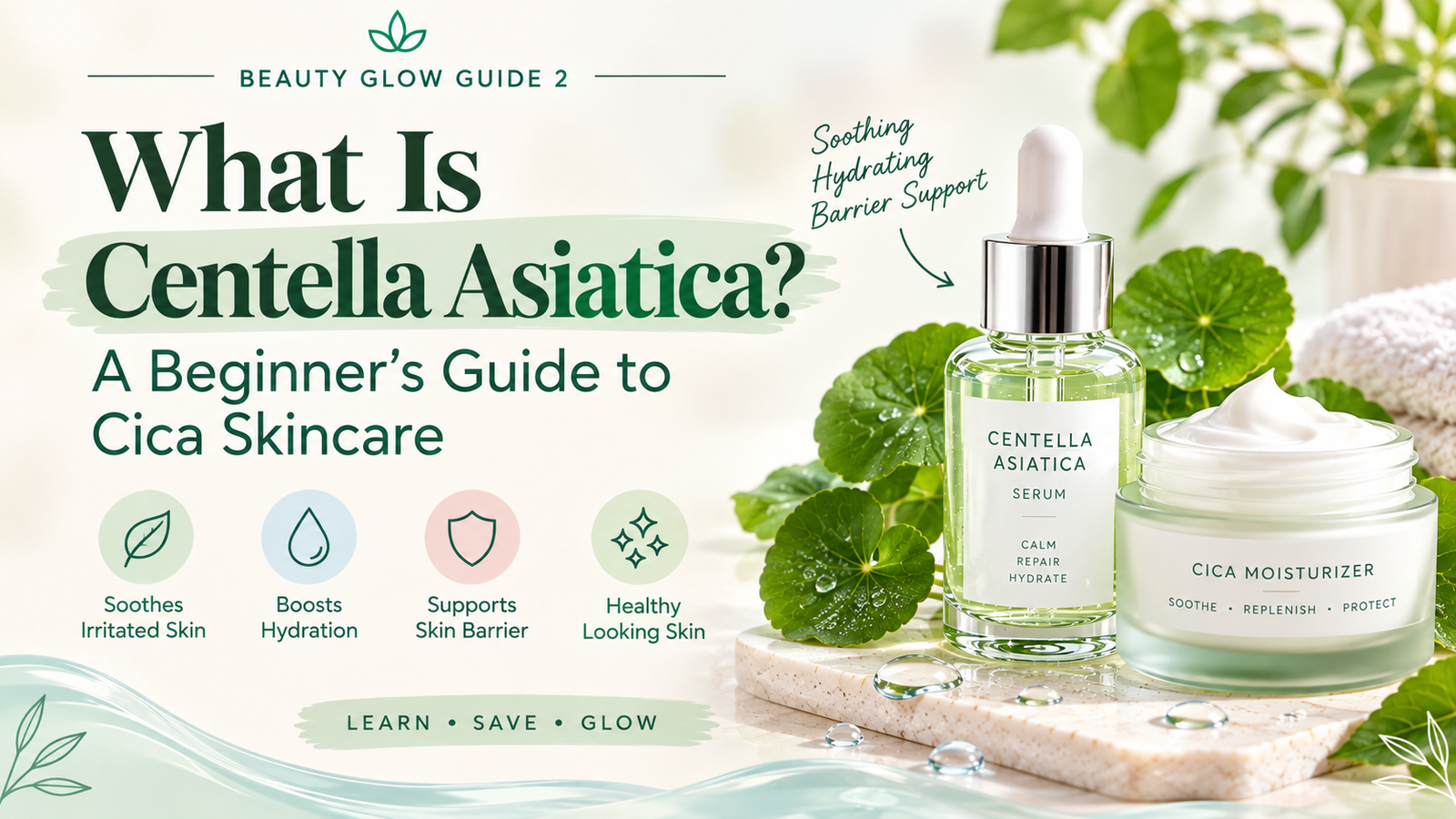
  • What Is Centella Asiatica? A Beginner’s Guide to Cica Skincare

    What Is Centella Asiatica? A Beginner’s Guide to Cica Skincare

    If you’ve spent time looking at Korean skincare products, you’ve probably seen the words Centella asiatica, Cica, or Gotu Kola on product labels.

    Centella asiatica is a plant-derived skincare ingredient that has been studied for its potential effects on skin health. Its best-known compounds include asiaticoside, madecassoside, asiatic acid, and madecassic acid.

    In modern skincare, Centella is commonly associated with soothing, hydration, skin conditioning, and barrier-focused routines.

    But it is important to look beyond marketing claims. Centella products can contain different extracts, concentrations, and combinations of ingredients, so one Cica product is not automatically equivalent to another.

    This beginner’s guide explains what Centella asiatica is, what Cica means, how it fits into skincare, and how to use it without making your routine unnecessarily complicated.


    Quick Take: What Is Centella Asiatica?

    Centella asiatica is a botanical ingredient used in skincare products for skin conditioning and other potential skin-supporting properties.

    It is also known as:

    • Centella
    • Centella asiatica
    • Cica
    • Gotu Kola
    • Tiger Grass

    Centella-derived ingredients are used in products such as:

    • Serums
    • Moisturizers
    • Creams
    • Toners
    • Cleansers
    • Masks
    • Barrier-focused skincare products

    Scientific reviews have examined Centella and its triterpenes for several dermatological applications, although the strength of evidence varies by preparation and use.


    What Is Centella Asiatica?

    Centella asiatica is a plant traditionally used in several Asian medical systems.

    For skincare purposes, the plant is interesting because it contains several compounds known as triterpenes.

    The most commonly discussed compounds include:

    • Asiaticoside
    • Madecassoside
    • Asiatic acid
    • Madecassic acid

    These compounds are among the components researchers have investigated when studying Centella’s effects on skin.

    However, a skincare product containing “Centella asiatica extract” does not necessarily contain identical amounts of every compound.

    The extraction method and formulation can influence the final product.


    What Does Cica Mean in Skincare?

    Cica is simply a commonly used skincare name for Centella asiatica.

    You may therefore see:

    Centella asiatica = Cica

    on different skincare products.

    The term “Cica” became particularly popular in modern Asian skincare and is now widely used internationally.

    A Cica serum and a Centella serum may therefore refer to products based on the same botanical ingredient.

    However, always check the ingredient list because the rest of the formula can be very different.


    What Are the Potential Benefits of Centella Asiatica?

    Centella has been studied for a variety of skin-related effects.

    In cosmetic skincare, it is commonly associated with:

    • Skin conditioning
    • Soothing-focused skincare
    • Supporting a healthy-looking skin barrier
    • Hydration-focused routines
    • Supporting comfortable-feeling skin
    • Antioxidant properties of some Centella compounds

    Scientific reviews have reported anti-inflammatory and antioxidant activity associated with Centella compounds, while also noting that more controlled clinical research is needed for many specific therapeutic claims.

    For everyday skincare, it is therefore more accurate to describe Cica as a supportive skincare ingredient rather than a cure for a particular skin condition.


    Centella Asiatica and the Skin Barrier

    The skin barrier is the outer protective layer of the skin.

    A healthy barrier helps the skin retain moisture and protects against external environmental exposure.

    This makes barrier care an important part of a simple skincare routine.

    Some research on Centella extracts and their components has investigated effects related to hydration, inflammation, and barrier function.

    This is one reason Cica is frequently included in products designed for dry-feeling, stressed-looking, or sensitive-feeling skin.

    For a deeper explanation of the barrier itself:

    [What Is the Skin Barrier? A Beginner’s Guide to Healthy-Looking Skin]


    Centella Asiatica for Sensitive Skin

    Centella is often used in skincare marketed toward sensitive skin.

    A 2025 prospective study examined a facial cream containing Centella asiatica leaf extract, ceramide NP, and panthenol in people with sensitive skin. The study reported improvements in several measures of sensitivity, hydration, and barrier function over four weeks, although it evaluated a specific multi-ingredient cream, not Centella alone.

    That distinction is important.

    If a product containing Cica works well for someone, the result cannot automatically be attributed entirely to Centella.

    The complete formula matters.

    For sensitive-feeling skin, a simple routine can be more useful than continuously adding new products.


    Does Centella Asiatica Hydrate Skin?

    Centella is not primarily a humectant in the same way as glycerin or hyaluronic acid.

    However, Centella-containing formulations have been studied for effects on skin hydration and barrier-related measures.

    If hydration is your main goal, ingredients such as:

    • Glycerin
    • Hyaluronic acid
    • Panthenol
    • Ceramides

    may also be relevant.

    Cica can complement these ingredients rather than replacing them.

    Learn more:

    [What Is Glycerin? A Beginner’s Guide to This Hydrating Skincare Ingredient]

    [What Is Hyaluronic Acid? A Beginner’s Guide to Hydrated-Looking Skin]

    [What Is Panthenol? A Beginner’s Guide to Pro-Vitamin B5 for Skin]


    Centella Asiatica and Panthenol

    Centella and panthenol are frequently used together in barrier-focused skincare.

    They have different roles.

    Centella is a botanical ingredient associated with skin conditioning and soothing-focused formulations.

    Panthenol is a pro-vitamin B5 ingredient with humectant and moisturizing properties.

    Combining them can make sense in a hydration- and barrier-focused formula.

    For more about panthenol:

    [What Is Panthenol? A Beginner’s Guide to Pro-Vitamin B5 for Skin]


    Centella Asiatica and Ceramides

    Ceramides and Centella are also commonly found together.

    Ceramides are lipids associated with the skin barrier.

    Centella is a botanical extract used for skin conditioning and other cosmetic purposes.

    A moisturizer could therefore contain both ingredients while serving multiple aspects of a barrier-focused routine.

    For a deeper explanation of ceramides:

    [What Are Ceramides? A Beginner’s Guide to Skin Barrier Care]


    Centella Asiatica and Niacinamide

    Niacinamide and Centella can also appear in the same skincare formula.

    Niacinamide is vitamin B3 and is used for several cosmetic purposes, including supporting the appearance of even-looking skin and a healthy skin barrier.

    Centella is often included in products focused on soothing and skin conditioning.

    Because they have different functions, they do not necessarily need to be treated as competing ingredients.

    Read:

    [What Is Niacinamide? A Beginner’s Guide to Vitamin B3 for Skin]


    Centella Asiatica and Hyaluronic Acid

    Hyaluronic acid is primarily associated with hydration.

    Centella is a botanical skincare ingredient with different properties.

    Using the two together can therefore create a routine that addresses both hydration and skin conditioning.

    For example:

    Hydrating serum → Cica serum → Moisturizer

    But if your Cica product already contains hyaluronic acid, you may not need two separate serums.

    Always check the complete ingredient list.


    Centella Asiatica and Peptides

    Centella can also be combined with peptide skincare.

    Peptides are short chains of amino acids used in cosmetic formulations for different purposes.

    Centella and peptides therefore represent two different categories of ingredients.

    If you’re interested in learning more about peptides:

    [What Are Peptides in Skincare? A Beginner’s Guide to Peptide Serums]


    Centella Asiatica vs. Cica: What’s the Difference?

    There is essentially no ingredient-category distinction between the two names.

    Centella asiatica is the botanical name.

    Cica is a common skincare name used for Centella-based ingredients and products.

    Gotu Kola is another common name for the plant.

    The more important question is what form of Centella is actually in the product.

    For example, an ingredient list may specify:

    • Centella asiatica leaf extract
    • Centella asiatica extract
    • Centella asiatica leaf water
    • Centella-derived compounds

    These are not necessarily identical formulations.


    What Are Madecassoside and Asiaticoside?

    If you’ve looked closely at Cica skincare labels, you may have noticed names such as madecassoside or asiaticoside.

    These are naturally occurring compounds associated with Centella asiatica.

    Other commonly discussed compounds include:

    • Asiatic acid
    • Madecassic acid

    Researchers have investigated these compounds individually and as components of Centella extracts.

    However, seeing one of these names on a label does not by itself tell you how effective the finished product will be.

    The complete formulation still matters.


    Can You Use Centella Every Day?

    Many Centella-containing cosmetic products are designed for regular use.

    However, the correct frequency depends on the individual product.

    If you’re using a Cica serum or moisturizer, follow the manufacturer’s instructions.

    You also don’t need to introduce a Centella product every time your skin feels uncomfortable.

    Sometimes the simplest approach is better:

    Gentle cleanser → Moisturizer → Sunscreen

    Then add a Cica product if it fits your routine.


    How to Use Centella Asiatica in Your Routine

    The position of Centella depends on the product type.

    If You Use a Cica Serum

    A simple routine could be:

    1. Cleanse
    2. Apply hydrating serum if needed
    3. Apply Cica serum
    4. Apply moisturizer
    5. Apply sunscreen in the morning

    If You Use a Cica Moisturizer

    Your routine may be:

    1. Cleanse
    2. Apply serum
    3. Apply Cica moisturizer
    4. Apply sunscreen in the morning

    If You Use a Cica Toner

    It can generally be used after cleansing and before thicker treatment or moisturizing steps, according to the product directions.


    Where Does Cica Go in Skincare Layering?

    A useful beginner rule is:

    Thin products first → thicker products later.

    For example:

    Cleanser → Toner → Serum → Moisturizer → Sunscreen

    If your Cica product is a serum, it generally belongs around the serum step.

    If it is a moisturizer, it belongs later in the routine.

    The exact order should always follow the texture and instructions of the individual products.


    Can Centella Replace a Moisturizer?

    No.

    A Cica serum and a moisturizer are not automatically interchangeable.

    A serum may provide targeted ingredients, while a moisturizer is formulated to hydrate and condition the skin more broadly.

    If your skin needs more moisture, don’t assume that adding another Cica serum will solve the problem.

    A moisturizer remains an important part of a basic routine.


    Can Centella Replace Sunscreen?

    No.

    Centella is not a substitute for sunscreen.

    If you’re using Cica in the morning, finish your routine with a broad-spectrum sunscreen.

    This is particularly important if your broader goal is maintaining healthy-looking skin and minimizing visible effects of environmental exposure.


    Is Centella Good for Dry Skin?

    Centella can fit comfortably into a routine for dry-feeling skin, particularly when it is combined with moisturizing ingredients.

    However, dry skin often benefits from a complete moisturizing system.

    Look for formulas that may combine:

    • Humectants
    • Emollients
    • Occlusives
    • Ceramides
    • Panthenol
    • Other conditioning ingredients

    Cica can then be one supportive component.


    Is Centella Good for Oily Skin?

    Centella can also fit into an oily-skin routine.

    The key is the product texture, rather than assuming that every Cica product will feel the same.

    For oily or combination skin, you might prefer:

    • Lightweight Cica serum
    • Gel moisturizer
    • Lightweight lotion
    • Non-heavy hydrating formula

    You don’t need to avoid hydration simply because your skin becomes oily.


    Centella Asiatica and Glass Skin

    Cica can fit into a glass-skin-inspired routine, particularly if your goal is a calm, hydrated, healthy-looking complexion.

    But Centella itself does not create glass skin.

    A more realistic routine focuses on:

    1. Gentle cleansing
    2. Hydration
    3. Moisturizing
    4. Barrier support
    5. Daily sunscreen

    Cica can be one ingredient within that routine.

    For the complete approach:

    [Best Glass Skin Routine: A Simple 4-Step Guide for Healthy, Hydrated Skin]


    Common Mistakes When Using Cica Skincare

    Mistake 1: Assuming Every Cica Product Is the Same

    Different products use different Centella extracts, concentrations, and supporting ingredients.

    Always look at the complete formula.

    Mistake 2: Treating Cica as a Cure

    Centella has been studied for several dermatological applications, but cosmetic skincare should not be presented as a treatment for a medical condition.

    Research reviews also note the need for additional well-controlled clinical studies for many applications.

    Mistake 3: Adding Too Many Soothing Products

    If your routine already contains several barrier-focused products, adding another serum may not provide much additional value.

    Mistake 4: Ignoring Irritation From the Whole Formula

    Centella itself may not be the source of irritation.

    Other ingredients in the product can also cause problems for individual users.

    Mistake 5: Expecting Overnight Results

    A consistent routine is more useful than constantly switching products.


    Is Centella Asiatica Safe in Skincare?

    A Cosmetic Ingredient Review assessment examined nine Centella asiatica-derived cosmetic ingredients and concluded that they were safe under the assessed conditions of use and concentration when formulated to be non-sensitizing.

    That does not mean every person will tolerate every Cica product.

    Individual sensitivity varies, and the complete formula matters.

    If a product causes persistent irritation, itching, swelling, or another concerning reaction, stop using it and seek appropriate medical advice.


    A Simple Cica Skincare Routine for Beginners

    You don’t need a complicated K-beauty routine to use Centella.

    Morning

    Step 1 — Cleanse

    Use a gentle cleanser.

    Step 2 — Hydrate

    Optional: use a hydrating serum containing ingredients such as glycerin or hyaluronic acid.

    Step 3 — Cica Serum

    Apply your Centella product according to its directions.

    Step 4 — Moisturize

    Use a moisturizer suited to your skin.

    Step 5 — Sunscreen

    Finish with broad-spectrum sunscreen.

    Evening

    Step 1 — Cleanse

    Step 2 — Cica Serum

    If you’re using one.

    Step 3 — Moisturizer

    Keep the routine comfortable and uncomplicated.


    Cica in a Barrier-First Routine

    Centella fits particularly well with the barrier-first approach used throughout Beauty Glow Guide.

    Think about your routine as a system:

    Cleanse → Hydrate → Condition → Moisturize → Protect

    Cica can sit within the conditioning or treatment portion of that routine.

    Other ingredients can handle different jobs:

    • Glycerin: hydration
    • Hyaluronic acid: hydration
    • Panthenol: hydration and conditioning
    • Ceramides: barrier-focused moisturizing
    • Niacinamide: multiple skincare functions
    • Peptides: targeted cosmetic skincare
    • Cica: botanical skin-conditioning support

    You don’t need all of them.

    Choose products based on what your routine actually needs.


    Frequently Asked Questions

    What is Centella asiatica in skincare?

    Centella asiatica is a botanical ingredient used in skincare products for skin conditioning and other potential skin-supporting properties.

    Is Cica the same as Centella asiatica?

    Yes. Cica is a common skincare name for Centella asiatica.

    Is Centella good for sensitive skin?

    Centella is commonly included in products formulated for sensitive-feeling skin, and some research has examined Centella-containing formulations in sensitive-skin participants. However, the complete formula matters.

    Can I use Centella every day?

    Many Centella products are designed for regular use. Follow the directions for the specific product.

    Can I use Centella with niacinamide?

    Yes. They can appear together in skincare formulations and can be part of the same routine.

    Can I use Centella with hyaluronic acid?

    Yes. They have different roles and can complement a hydration-focused routine.

    Can Centella repair the skin barrier?

    Centella and its compounds have been studied for effects related to skin-barrier function, hydration, inflammation, and wound healing. However, it is more accurate to say that Centella-containing skincare may support barrier function rather than promise that it will repair a damaged barrier.

    Is Centella a hydrating ingredient?

    Centella is not primarily a humectant like glycerin or hyaluronic acid, but Centella-containing formulations have been studied for effects on skin hydration and barrier-related measures.


    Related Beauty Glow Guide Articles

    Continue exploring the Beauty Glow Guide skincare ingredient series:

    • [What Is the Skin Barrier? A Beginner’s Guide to Healthy-Looking Skin]
    • [What Is Hyaluronic Acid? A Beginner’s Guide to Hydrated-Looking Skin]
    • [What Is Niacinamide? A Beginner’s Guide to Vitamin B3 for Skin]
    • [What Are Ceramides? A Beginner’s Guide to Skin Barrier Care]
    • [What Is Glycerin? A Beginner’s Guide to This Hydrating Skincare Ingredient]
    • [What Are Peptides in Skincare? A Beginner’s Guide to Peptide Serums]
    • [What Is Panthenol? A Beginner’s Guide to Pro-Vitamin B5 for Skin]
    • [Simple Morning Skincare Routine for Beginners: 5 Easy Steps]
    • [Best Glass Skin Routine: A Simple 4-Step Guide for Healthy, Hydrated Skin]

    Final Thoughts

    Centella asiatica, commonly called Cica, is a versatile botanical ingredient that fits naturally into hydration- and barrier-focused skincare routines.

    Research has explored Centella and its compounds for skin conditioning, antioxidant and anti-inflammatory activity, wound healing, and other dermatological applications, although evidence varies depending on the preparation and intended use.

    For everyday skincare, you don’t need to build an elaborate routine around Cica.

    A simple combination of gentle cleansing, hydration, moisturizing, barrier support, and daily sunscreen can provide the foundation, with Centella added as an optional supportive ingredient.

    The most important thing is to look at the whole product formula, not just the word “Cica” on the label.


    Save This for Later

    Centella, Cica, and Gotu Kola can look confusing on skincare labels. Save this guide so you can quickly check what this popular K-beauty ingredient actually does.


    Editorial Source Note

    This article is based on peer-reviewed reviews and safety literature concerning Centella asiatica and Centella-derived cosmetic ingredients. Evidence differs between whole-plant extracts, isolated compounds, cosmetic formulations, and therapeutic applications, so individual skincare products should not be assumed to reproduce results from clinical or laboratory research.


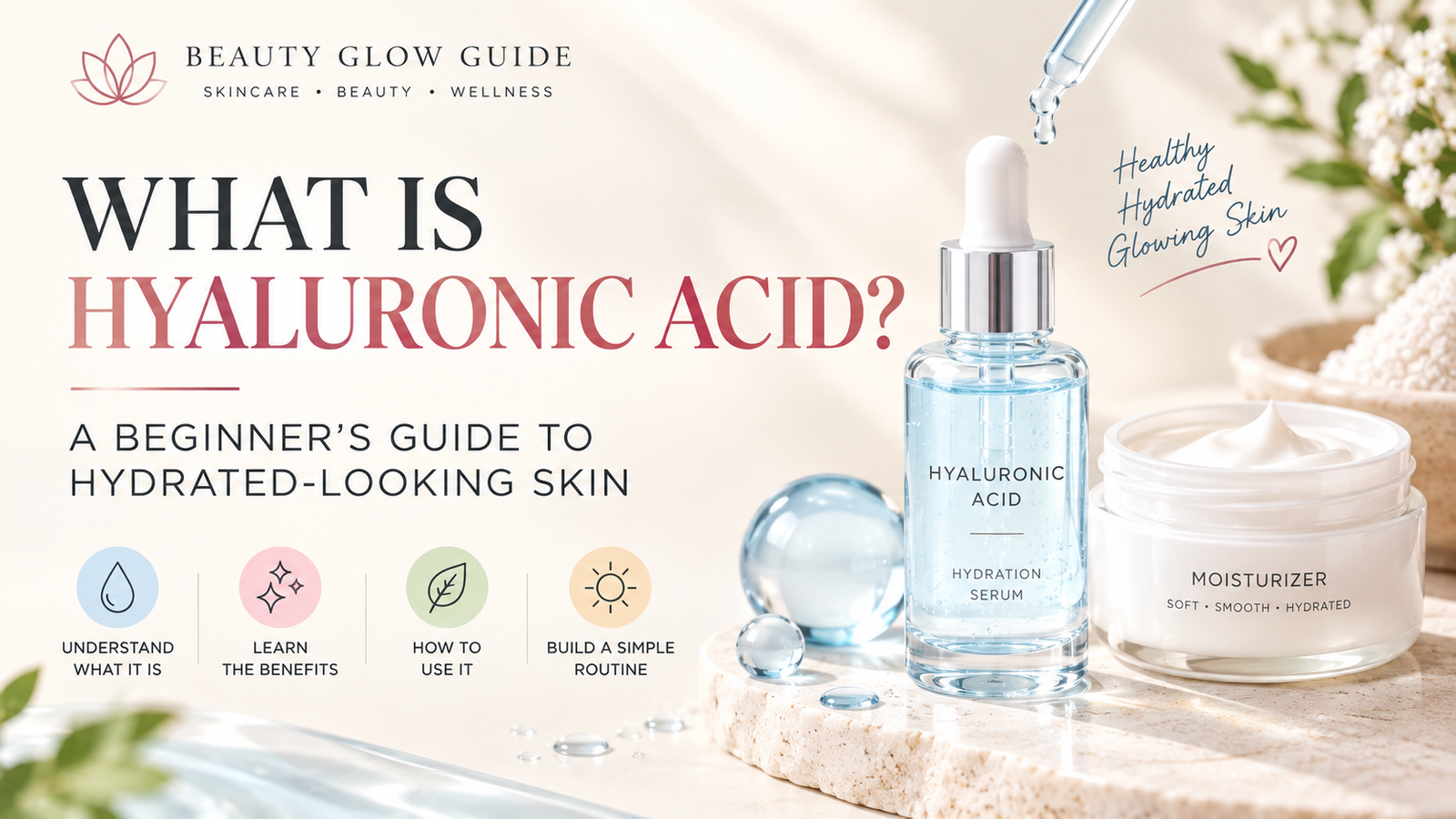
  • What Is Hyaluronic Acid? A Beginner’s Guide to Hydrated-Looking Skin

    What Is Hyaluronic Acid? A Beginner’s Guide to Hydrated-Looking Skin

    If you have looked at hydrating serums, moisturizers, or K-beauty skincare, you have probably seen hyaluronic acid on the ingredient list.

    Hyaluronic acid is a humectant, an ingredient that helps attract and hold water. It is commonly used in hydration-focused skincare products and moisturizers. Despite the word “acid,” it is not an exfoliating acid like glycolic acid or salicylic acid. (American Academy of Dermatology)

    In this beginner-friendly guide, you’ll learn what hyaluronic acid does, how to use it, where it fits into a skincare routine, and how it compares with moisturizer and other common skincare ingredients.

    What Is Hyaluronic Acid?

    Hyaluronic acid is a naturally occurring substance found in the body. In skincare, it is commonly used as a humectant to support skin hydration.

    You may find it in:

    • Serums
    • Moisturizers
    • Creams
    • Lotions
    • Masks
    • Other hydration-focused skincare products

    The goal is generally simple: help the skin hold onto water so it feels and looks more hydrated.

    The American Academy of Dermatology lists hyaluronic acid among ingredients commonly found in moisturizers for dry skin. (American Academy of Dermatology)

    Is Hyaluronic Acid an Exfoliating Acid?

    No.

    This is one of the most common beginner questions.

    Hyaluronic acid is not an exfoliating acid. It does not work like alpha hydroxy acids such as glycolic acid or beta hydroxy acids such as salicylic acid.

    Instead, hyaluronic acid is primarily used for hydration.

    So if you see “acid” in the name, don’t assume that the ingredient will exfoliate your skin.

    What Does Hyaluronic Acid Do for Skin?

    Hyaluronic acid is mainly used to support hydration.

    When skin is well hydrated, it can look:

    • Smoother
    • Softer
    • More comfortable
    • Less dry-looking
    • More supple

    It is important to keep expectations realistic. Hyaluronic acid is a hydration ingredient, not a treatment for every skin concern.

    If your main concern is very dry or irritated skin, a broader moisturizing routine may be more useful than relying on a single serum. Moisturizers can combine different types of ingredients to help hydrate skin and reduce water loss. (American Academy of Dermatology)

    Why Is Hyaluronic Acid Popular in Skincare?

    One reason is its versatility.

    Hyaluronic acid can be included in products designed for different skin types and routines. It is especially common in products marketed around hydration and dry-looking skin.

    You may also see different forms of hyaluronic acid listed in a product’s ingredient list. The exact formulation varies between products, so it is useful to look at the complete product formula rather than choosing a product based only on the presence of hyaluronic acid.

    Hyaluronic Acid vs. Moisturizer

    Hyaluronic acid and moisturizer are not necessarily the same thing.

    Hyaluronic AcidMoisturizer
    Usually an ingredient or hydration-focused serumA finished skincare product
    Commonly used as a humectantMay contain humectants, emollients, and other ingredients
    Focuses on hydration supportHelps hydrate skin and reduce moisture loss
    Can be part of a larger routineOften one of the main routine steps

    A moisturizer may contain hyaluronic acid along with other ingredients.

    For example, a moisturizer may combine humectants with emollient or occlusive ingredients that help keep skin comfortable and reduce water loss. (American Academy of Dermatology)

    That means you don’t always need a separate hyaluronic acid serum.

    Should You Use Hyaluronic Acid If Your Skin Is Dry?

    It can be a useful ingredient to consider if your routine is focused on hydration.

    However, very dry skin may need more than a single hydrating ingredient.

    The American Academy of Dermatology recommends considering moisturizers such as creams or ointments for very dry skin, along with ingredients such as hyaluronic acid and glycerin. (American Academy of Dermatology)

    For more guidance, see our article:

    How to Build a Simple Hydrating Skincare Routine

    How to Use Hyaluronic Acid in a Skincare Routine

    A simple routine can look like this:

    Morning

    1. Gentle cleanser
    2. Hyaluronic acid serum, if you use one
    3. Moisturizer
    4. Broad-spectrum sunscreen

    Evening

    1. Cleanser
    2. Hyaluronic acid serum, if appropriate for your product
    3. Moisturizer

    Your exact routine depends on the products you use and their directions.

    For a broader beginner routine, see:

    Simple Morning Skincare Routine for Beginners

    Should You Apply Hyaluronic Acid to Damp Skin?

    Many people use hydrating products on slightly damp skin, but the most important step is to follow the directions for your specific product.

    If you use a separate hyaluronic acid serum, moisturizer can be the next step in your routine.

    A simple approach is:

    Cleanse → Hydrate → Moisturize → Sunscreen in the morning

    Moisturizer is particularly important when your skin feels dry because it can help trap water and reduce moisture loss. (American Academy of Dermatology)

    What Should You Apply After Hyaluronic Acid?

    If hyaluronic acid is being used as a separate serum, a moisturizer is a common next step.

    You don’t need to add several different hydrating products simply because they contain different versions of the same type of ingredient.

    A simple routine that you can use consistently is often easier to manage than a routine with many overlapping products.

    If you’re comparing hydration-focused products, read:

    How to Choose the Best Hydrating Serum for Dry-Looking Skin

    Hyaluronic Acid and the Skin Barrier

    Hydration and skin-barrier care are closely related, but they are not exactly the same thing.

    Hyaluronic acid can support hydration, but it is not the same as repairing or replacing the skin barrier.

    A barrier-supportive routine may also include a moisturizer containing ingredients such as ceramides and other moisturizing components.

    For a deeper explanation, read:

    What Is the Skin Barrier? A Beginner’s Guide to Healthy-Looking Skin

    You can also learn about ceramides here:

    What Are Ceramides? A Beginner’s Guide to Skin Barrier Care

    Hyaluronic Acid vs. Glycerin

    Hyaluronic acid and glycerin are both commonly used in hydration-focused skincare.

    IngredientMain role
    Hyaluronic acidHumectant used to support hydration
    GlycerinHumectant used to attract and retain water

    They can appear together in the same skincare formula.

    Read more:

    What Is Glycerin? A Beginner’s Guide to This Hydrating Skincare Ingredient

    Hyaluronic Acid vs. Panthenol

    Panthenol is another ingredient commonly found in skincare products designed around hydration and skin comfort.

    It is different from hyaluronic acid, but the two ingredients can appear together in the same routine or product.

    Learn more:

    What Is Panthenol? A Beginner’s Guide

    Where Does Vichy Minéral 89 Fit?

    Some hydration-focused products contain hyaluronic acid as part of a broader formula rather than presenting the ingredient on its own.

    For example, Vichy Minéral 89 is a hydration-focused serum that contains hyaluronic acid as part of its formula.

    If you’re interested in the difference between a complete branded formula and a simple ingredient-focused approach, read:

    Vichy Minéral 89 vs. Hyaluronic Acid Serums: What’s the Difference?

    Can You Use Hyaluronic Acid Every Day?

    Many hyaluronic acid products are designed for regular use, but the correct frequency depends on the individual product.

    Always follow the product’s directions.

    If your skin becomes irritated after introducing a new product, stop and reassess the routine rather than adding more products.

    Introducing one new product at a time can also make it easier to identify what your skin tolerates.

    Can Hyaluronic Acid Be Used With Other Skincare Ingredients?

    Hyaluronic acid is commonly included in routines alongside many other skincare ingredients.

    For example, a routine may contain:

    • Hyaluronic acid
    • Glycerin
    • Panthenol
    • Ceramides
    • Niacinamide
    • Peptides
    • Vitamin C
    • Sunscreen

    The important point is that the complete routine matters.

    More products do not automatically mean better results.

    For help organizing products in the correct order, see:

    How to Layer Skincare Products

    Hyaluronic Acid for Different Skin Types

    Dry Skin

    Hyaluronic acid can be useful in a hydration-focused routine.

    If your skin is very dry, consider pairing hydration-focused products with an appropriate moisturizer rather than relying on a serum alone. (American Academy of Dermatology)

    Oily Skin

    Oily skin can still become dehydrated.

    If you have oily skin, you may prefer a lightweight serum or moisturizer rather than a heavy cream.

    Combination Skin

    Combination skin may need different textures on different areas of the face.

    A lightweight hydration product can be useful when you want hydration without a heavy-feeling routine.

    Sensitive Skin

    If your skin is sensitive, introduce new products gradually and pay attention to irritation.

    Look at the full ingredient list, not just the presence of hyaluronic acid.

    If a product causes persistent burning, itching, or irritation, stop using it and consider professional advice.

    Common Hyaluronic Acid Mistakes

    1. Assuming “acid” means exfoliation

    Hyaluronic acid is not an exfoliating acid.

    2. Using too many hydrating products

    More products aren’t automatically better.

    If several products perform similar functions, your routine may become unnecessarily complicated.

    3. Skipping moisturizer

    A separate hydrating serum does not necessarily replace moisturizer.

    Moisturizers can help hydrate the skin and reduce water loss. (American Academy of Dermatology)

    4. Ignoring the rest of the routine

    Hydration is only one part of skincare.

    Cleansing, moisturizing, sun protection, and choosing products appropriate for your skin type all matter.

    5. Changing too many products at once

    Introducing several new products simultaneously makes it difficult to know which product is responsible if your skin reacts.

    A Simple Hydration-Focused Routine

    If you’re just starting, you don’t need a complicated routine.

    Morning

    Cleanser → Hydrating serum → Moisturizer → Sunscreen

    Evening

    Cleanser → Hydrating serum → Moisturizer

    You can adjust this depending on your skin type, product instructions, and other treatments in your routine.

    For another beginner-friendly routine, read:

    Simple Nighttime Skincare Routine

    Quick Guide: Where Does Hyaluronic Acid Fit?

    Routine stepExample
    1Cleanser
    2Hydrating serum such as hyaluronic acid
    3Treatment products, depending on your routine
    4Moisturizer
    5Sunscreen in the morning

    The exact order can vary depending on the products you’re using, so check the instructions on each product.

    Hyaluronic Acid: Quick Checklist

    Before buying a hyaluronic acid product, ask:

    • Is my main goal hydration?
    • Do I actually need another serum?
    • Does the product suit my skin type?
    • Have I checked the complete ingredient list?
    • Will I use a moisturizer afterward if needed?
    • Am I introducing too many new products at once?
    • Does the product’s texture work with the rest of my routine?

    A simple routine that you can use consistently may be easier to maintain than a complicated routine with many overlapping products. (American Academy of Dermatology)

    Final Thoughts

    Hyaluronic acid is a popular skincare ingredient because it is commonly used to support hydration.

    It is a humectant, not an exfoliating acid, and it can be found in everything from serums to moisturizers.

    For beginners, the main takeaway is simple:

    Hyaluronic acid can support hydration, but it works as part of a complete skincare routine rather than replacing every other skincare step.

    If your routine is focused on dry-looking or dehydrated skin, consider combining appropriate hydration with a moisturizer and daytime sun protection. (American Academy of Dermatology)

    Save This for Later

    Learning skincare ingredients one at a time can make it easier to understand what your products are actually doing.

    Save this guide to your Pinterest board so you can come back to it when comparing hydrating skincare products.

    You can also continue exploring Beauty Glow Guide:

    Affiliate Disclosure

    #ad Affiliate link — I may earn a commission from qualifying purchases. As an Amazon Associate I earn from qualifying purchases. Product availability, price and details may change on Amazon. Product sizes, ingredients, packaging, availability, sellers, and delivery information can change. Check current Amazon listing before purchasing.
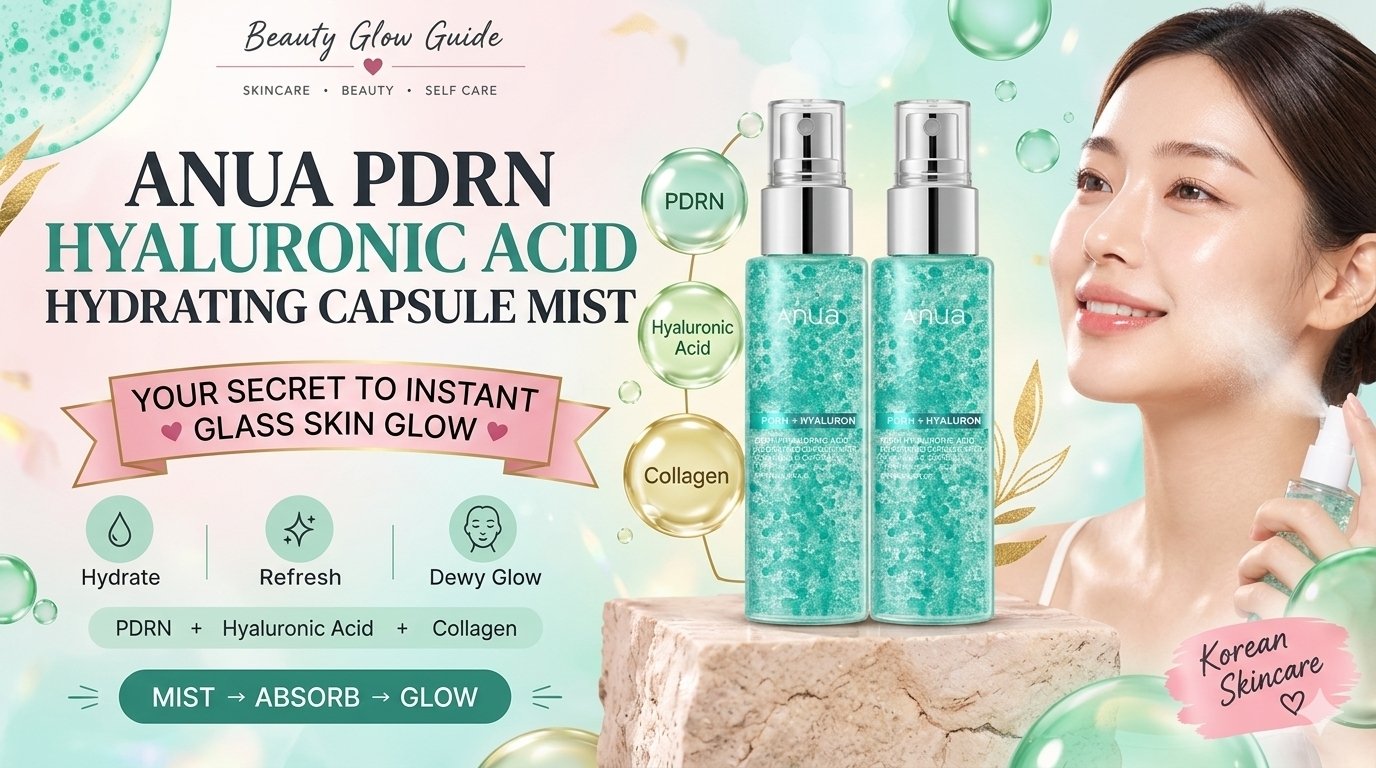
  • Anua PDRN Collagen Glow Facial Serum Spray: Benefits, How to Use & What to Know

    Anua PDRN Collagen Glow Facial Serum Spray: Benefits, How to Use & What to Know


    If your skin often feels dry, tight, or dull during the day, a lightweight facial serum spray can be a convenient way to add hydration to your skincare routine.

    The Anua PDRN Collagen Glow Facial Serum Spray combines a fine mist format with ingredients such as PDRN, hyaluronic acid, collagen, panthenol, glycerin, and ceramide NP. The formula is designed around hydration and a fresh, dewy-looking finish, while the spray format makes it easy to use at different points in your routine.

    Unlike a traditional cream or jar-based moisturizer, a facial serum spray can be applied quickly without using your hands. It can also be convenient before makeup, after makeup, or when your skin needs a quick refresh.

    Beauty Glow Guide tip: Think of a facial serum mist as a convenient hydration step—not a replacement for your moisturizer, sunscreen, or complete skincare routine.


    What Is the Anua PDRN Collagen Glow Facial Serum Spray?

    The Anua PDRN Collagen Glow Facial Serum Spray is a Korean skincare facial mist designed to combine lightweight hydration with a convenient spray application.

    The formula features PDRN, hyaluronic acid, and collagen, along with moisturizing and skin-conditioning ingredients. The product is designed to leave the complexion looking fresh and dewy without the heavier feel associated with some creams.

    Its spray format makes it especially convenient for:

    • Morning skincare
    • Pre-makeup hydration
    • Refreshing skin during the day
    • A dewy-looking finish
    • Makeup refreshes
    • Travel and on-the-go skincare

    The Amazon listing we’re discussing is the 3.38 fl oz Pack of 2 version.


    Key Ingredients in the Anua PDRN Facial Serum Spray

    Understanding the main ingredients can help you decide whether this type of product fits your skincare routine.

    PDRN

    PDRN stands for polydeoxyribonucleotide. In cosmetic skincare, PDRN is commonly featured in products marketed around hydration, skin conditioning, and a healthy-looking complexion.

    Anua lists PDRN among the featured ingredients in this facial spray.

    It’s important to keep expectations realistic, however. A topical cosmetic facial spray should not be considered equivalent to injectable or medical PDRN procedures.

    For this product, PDRN is best viewed as one component of a cosmetic skincare formula designed to support a hydrated, fresh-looking complexion.

    Hyaluronic Acid

    The formula contains multiple forms of hyaluronic-acid-related ingredients, including sodium hyaluronate, hydrolyzed hyaluronic acid, and hyaluronic acid.

    Hyaluronic acid is widely used in skincare because it helps attract and hold water at the skin’s surface, making it a popular ingredient in hydrating products.

    This makes it particularly relevant if your routine focuses on maintaining a comfortable, moisturized skin feel.

    Hydrolyzed Collagen

    The formula also contains hydrolyzed collagen.

    In topical skincare, collagen is primarily used as a conditioning and moisturizing ingredient. It should not be interpreted as meaning that applying the spray directly replaces the collagen naturally present in your skin.

    For this product, collagen contributes to the formula’s overall hydration and skin-conditioning approach.

    Panthenol

    Panthenol, also known as provitamin B5, is commonly used in skincare formulations for its moisturizing and conditioning properties.

    It can be a useful ingredient in routines focused on keeping skin feeling comfortable and hydrated.

    Glycerin

    Glycerin is a well-known humectant used in many moisturizers and hydrating skincare products.

    It helps attract moisture and can contribute to a softer, more comfortable skin feel.

    Ceramide NP

    Ceramide NP is another notable ingredient in the formula.

    Ceramides are naturally occurring lipids associated with the skin barrier, and they are commonly included in skincare products designed to support moisture retention and a comfortable skin feel.


    What Are the Benefits of This Facial Serum Spray?

    The product’s main appeal is its combination of a lightweight formula and convenient spray format.

    1. Lightweight Hydration

    The combination of humectants and moisturizing ingredients is designed to provide a hydrated skin feel without requiring a heavy cream texture.

    This can make the spray particularly convenient during the daytime.

    2. Dewy-Looking Finish

    If you prefer a fresh, luminous complexion rather than a completely matte finish, the spray can be incorporated into a routine focused on a dewy-looking appearance.

    The finish can vary depending on how much product you use and what other skincare or makeup products you have underneath it.

    3. Convenient Application

    One of the biggest practical advantages is the spray format.

    You don’t need to scoop product from a jar or use your fingers to distribute it across your face.

    Simply mist it over the skin and continue with your routine.

    4. Easy to Use Throughout the Day

    A facial spray can be convenient when your skin starts feeling dry during the day.

    It can also be useful when you’re traveling, working in a dry environment, or simply want to refresh your complexion.

    5. Makeup-Friendly Format

    The product can be incorporated around makeup, making it more versatile than a traditional cream-based product.

    A light mist can provide a refreshed appearance without requiring you to completely redo your skincare routine.


    How to Use the Anua PDRN Collagen Glow Facial Serum Spray

    The spray is relatively simple to add to an existing skincare routine.

    Step 1: Start With Clean Skin

    Begin with your normal cleanser.

    If you’re using toner or another lightweight skincare product, apply it according to your normal routine.

    Step 2: Mist the Face

    Close your eyes and spray a light, even layer across your face.

    Avoid spraying directly into your eyes.

    Step 3: Let the Product Settle

    Allow the mist to settle naturally onto your skin.

    If your routine calls for additional skincare products, continue with your serum, moisturizer, or other appropriate steps.

    Step 4: Finish With Sunscreen in the Morning

    If you’re using the spray during the daytime, sunscreen should remain an important part of your morning skincare routine.

    A facial mist does not replace sunscreen.

    Step 5: Refresh When Needed

    The spray can also be used later in the day when your skin feels dry or when you want to refresh its appearance.


    Where Does It Fit Into a Skincare Routine?

    A simple morning routine could look like:

    Cleanser → Anua PDRN Serum Spray → Serum → Moisturizer → Sunscreen

    If you prefer fewer steps:

    Cleanser → Anua PDRN Serum Spray → Moisturizer → Sunscreen

    For an evening routine:

    Cleanser → Anua PDRN Serum Spray → Serum → Moisturizer

    The exact order can vary depending on the other products in your routine.

    The important point is that the mist should complement your routine rather than replace essential steps such as moisturizing or sun protection.


    Can You Use the Anua Spray Before Makeup?

    Yes. A hydrating mist can be a convenient addition to a makeup-prep routine.

    Try:

    Skincare → Anua PDRN Serum Spray → Allow to settle → Makeup

    A light layer can help give the skin a more hydrated-looking starting point for makeup.

    Avoid applying excessive amounts immediately before foundation, especially if your makeup tends to move easily.


    Can You Use It Over Makeup?

    A facial mist can also be used after makeup.

    For a more controlled application:

    1. Close your eyes.
    2. Hold the spray at a comfortable distance.
    3. Apply a light mist.
    4. Let it settle naturally.

    You don’t need to saturate your face.

    If you have very oily skin or makeup that becomes slippery easily, start with a small amount and see how your skin and makeup respond.


    Who Might Like This Type of Product?

    The Anua PDRN Collagen Glow Facial Serum Spray may appeal to people who:

    • Prefer lightweight skincare
    • Like a dewy-looking finish
    • Experience a dry or tight feeling during the day
    • Enjoy Korean skincare products
    • Want a quick hydration step
    • Wear makeup regularly
    • Like convenient spray-format products
    • Want something easy to carry and use throughout the day

    It’s especially useful for people who enjoy flexible skincare products rather than routines that require many separate steps.


    What If You Have Oily Skin?

    A dewy finish isn’t necessarily the same thing as an oily finish.

    However, everyone’s skin responds differently to hydrating products.

    If your skin is naturally oily, start with a light mist rather than applying several layers.

    You can also use it primarily in areas that feel dry instead of repeatedly spraying the entire face.

    This lets you adjust the amount according to your skin’s needs.


    What If You Have Sensitive Skin?

    If your skin is sensitive or easily irritated, introduce any new skincare product gradually.

    Before applying a new product generously across your face, consider performing a patch test according to your normal skincare-testing routine.

    Review the current ingredient list on the product packaging or current product listing before use, particularly if you have known allergies or ingredient sensitivities.

    Stop using the product if significant irritation occurs.


    PDRN Skincare: What You Should Know

    PDRN has become a popular ingredient in modern Korean skincare, but it’s important to understand what you’re actually buying.

    A topical PDRN facial spray is a cosmetic skincare product.

    It should not be confused with injectable PDRN treatments used in professional aesthetic settings.

    The presence of PDRN on a skincare ingredient list also doesn’t mean that the product will produce medical or guaranteed anti-aging results.

    For this Anua spray, a more realistic way to approach the product is as a hydrating facial mist featuring PDRN as one of its highlighted ingredients.

    That keeps expectations aligned with what a cosmetic skincare product can reasonably provide.


    How to Build a Simple Hydration Routine With It

    You don’t need a complicated 10-step routine to use a facial mist effectively.

    Try this simple approach:

    Morning

    Cleanser → Anua PDRN Spray → Moisturizer → SPF

    Before Makeup

    Skincare → Anua PDRN Spray → Makeup

    During the Day

    Light mist → Let settle → Continue with your day

    Evening

    Cleanser → Anua PDRN Spray → Serum → Moisturizer

    This keeps the product in a supporting role within your routine.


    Product Details

    Size: 3.38 fl oz
    Quantity: Pack of 2
    Brand: ANUA
    Product type: Facial serum spray / mist
    Featured ingredients: PDRN, hyaluronic acid, collagen
    Skincare focus: Hydration and a dewy-looking complexion

    Product Pick

    #ad Anua PDRN Collagen Glow Facial Serum Spray, 3.38 fl oz, Pack of 2

    Product information, including product sizes, ingredients, packaging, sellers, pricing, availability, and delivery options, may change. Please check the current Amazon listing for the most up-to-date information before purchasing.

    Affiliate Disclosure

    #ad Affiliate link — I may earn a commission from qualifying purchases. As an Amazon Associate I earn from qualifying purchases. Product availability, price, and details may change on Amazon.


    Frequently Asked Questions

    What is the Anua PDRN Collagen Glow Facial Serum Spray?

    It’s a lightweight facial serum spray designed to provide hydration and a fresh, dewy-looking finish. Its formula features ingredients including PDRN, hyaluronic acid, collagen, panthenol, glycerin, and ceramide NP.

    How often can I use the spray?

    Usage can depend on your skincare routine and how your skin responds. It can be incorporated into a morning or evening routine and used as an occasional daytime refresh.

    Can I use it over makeup?

    Yes. A light mist can be used to refresh the complexion over makeup. Avoid saturating the skin.

    Does it replace moisturizer?

    No. If your skin needs additional moisture, continue using an appropriate moisturizer after your hydrating steps.

    Does it replace sunscreen?

    No. A facial serum spray does not replace broad-spectrum sunscreen in a daytime skincare routine.

    Is PDRN the same as injectable PDRN?

    No. This is a topical cosmetic skincare product. It should not be treated as equivalent to professional injectable PDRN procedures.

    Can I use it with other skincare products?

    Generally, a hydrating mist can be incorporated alongside other routine products. When introducing several new products at once, however, it can be harder to identify which product is responsible if irritation occurs.

    Is it suitable for every skin type?

    Individual skin responses vary. People with sensitive skin or known ingredient allergies should review the current ingredient list and consider patch testing before regular use.


    Final Thoughts

    The Anua PDRN Collagen Glow Facial Serum Spray is a convenient option for anyone who enjoys lightweight hydration in a spray format.

    Its formula combines PDRN, hyaluronic acid, hydrolyzed collagen, panthenol, glycerin, and ceramide NP, while the mist format makes it easy to incorporate into a morning routine, makeup-prep routine, or daytime refresh.

    The most practical way to use it is as a supporting hydration step rather than as a replacement for moisturizer, sunscreen, or other essential skincare products.

    If you enjoy Korean skincare and prefer a fresh, dewy-looking finish, a facial serum spray can be an easy way to add another layer of hydration without making your routine feel heavy.


  • Medicube PDRN Pink Collagen Volume Multi Balm: How to Use This Korean Skincare Stick

    Medicube PDRN Pink Collagen Volume Multi Balm: How to Use This Korean Skincare Stick

    If you’re looking for a convenient way to add targeted hydration and a dewy finish to your skincare routine, a balm stick can be an interesting option.

    The medicube PDRN Pink Collagen Volume Multi Balm is a multi-use face and body balm designed for areas such as the under-eyes, cheeks, lips, smile lines, forehead, and neck. Medicube describes the formula as a smooth, non-sticky balm that glides onto the skin and is designed for convenient touch-ups.

    Unlike a traditional jar moisturizer, the stick format makes it easy to apply the balm directly where you want it without using your fingers.

    Beauty Glow Guide tip: Think of a multi balm as a targeted addition to your skincare routine—not a replacement for cleansing, moisturizing, or daily sunscreen.


    ✨ What Is the Medicube PDRN Pink Collagen Volume Multi Balm?

    Medicube PDRN Pink Collagen Volume Multi Balm is a Korean skincare balm in a portable stick format.

    Medicube positions the product for line care, hydration, radiance, and the appearance of plumper-looking skin. The brand lists key ingredients including Volufiline, PDRN, NAD, and caffeine.

    The product is intended for multiple areas rather than just one part of the face.

    Areas Medicube highlights include:

    • Under-eyes
    • Cheeks
    • Lips
    • Smile lines
    • Forehead
    • Neck
    • Other dry areas

    This makes it particularly interesting for people who prefer a targeted, on-the-go skincare product.


    💗 What Makes a Balm Stick Different?

    A balm stick has a different texture and application method from a serum or cream.

    Instead of dispensing a liquid or cream into your hands, you can glide the stick directly across the desired area.

    That can make it convenient for:

    • Quick hydration touch-ups
    • Dry-looking areas
    • Adding a dewy finish
    • Targeted skincare application
    • Keeping in a handbag or travel pouch

    Medicube describes this particular formula as a melting, non-sticky balm designed for quick application and reapplication.


    🌸 Key Ingredients in the Formula

    Medicube lists several notable ingredients in this product.

    PDRN

    PDRN, or sodium DNA, is included in the formula and is one of the ingredients emphasized in medicube’s PDRN skincare line.

    For Beauty Glow Guide content, it’s better to describe PDRN as a featured skincare ingredient rather than promising that it will repair wrinkles, reverse aging, or produce a particular clinical result.

    Volufiline

    Volufiline is another ingredient highlighted by medicube.

    The brand positions it around the appearance of fuller, plumper-looking skin in areas such as the under-eyes, cheeks, and smile lines.

    Caffeine

    Caffeine is included in the formula and is associated with the product’s positioning around the appearance of puffiness and dark circles.

    Collagen and Peptides

    The formula also contains collagen and several peptides.

    These ingredients contribute to the product’s overall skincare positioning around hydration, elasticity, and a smoother-looking complexion.

    Retinol

    The ingredient list provided by medicube also includes retinol.

    Because retinol can be an active skincare ingredient, introduce this product gradually if you’re new to retinol-containing products.

    If you are pregnant, trying to become pregnant, or breastfeeding, consider asking your healthcare professional whether a retinol-containing skincare product is appropriate for you.


    👀 Where Can You Use the Multi Balm?

    One of the product’s distinguishing features is its multi-area application.

    Under-Eyes

    Medicube positions the balm for the appearance of dark circles, puffiness, and under-eye hollowness.

    Use a light touch around the orbital area and avoid getting the product directly into your eyes.

    Cheeks

    The product can be used on areas where skin looks dry or where you want a more moisturized, dewy appearance.

    Lips

    The balm can also be applied to the lips and lip-line area according to the product’s intended uses.

    Smile Lines

    Medicube specifically lists smile lines among the areas targeted by the product.

    Forehead

    The stick can also be applied to the forehead where the product’s line-care positioning is relevant.

    Neck

    The neck is another area highlighted by the brand.

    This can make the product useful for people who want to extend their skincare routine beyond the face.


    🧴 How to Use Medicube PDRN Pink Collagen Volume Multi Balm

    Medicube’s instructions are straightforward:

    Step 1 — Twist Up

    Twist the bottom of the stick to raise a small amount of product.

    Step 2 — Glide

    Gently glide the balm across clean, dry areas where you want to apply it.

    Step 3 — Blend if Needed

    Use clean fingertips to lightly spread the product if you want a more even finish.

    Step 4 — Reapply as Needed

    Medicube describes the product as suitable for quick touch-ups throughout the day.

    Simple application:

    Twist → Glide → Blend → Reapply

    You don’t need to apply a thick layer. Start with a small amount and see how your skin feels.


    ☀️ How to Add It to Your Morning Routine

    The balm can fit into a simple morning skincare routine.

    A practical order is:

    Cleanse → Hydrate → Moisturize → Multi Balm → Sunscreen

    If you’re wearing makeup, you may prefer using a small amount of balm before makeup or using it only on selected areas where you want additional hydration.

    Because skincare preferences and formulas vary, test the layering combination on your skin before using it with a full makeup routine.


    🌙 How to Add It to Your Night Routine

    At night, the balm can be used as a targeted step after cleansing and other lightweight skincare products.

    A simple routine could be:

    Cleanse → Hydrate → Moisturize → Targeted Multi Balm

    If you’re using multiple active ingredients in your routine, introduce products gradually rather than adding everything at once.


    💡 Who Might Like a Multi Balm?

    This type of product may be interesting if you prefer:

    • Portable skincare
    • Stick-format products
    • Targeted application
    • Dewy-looking skin
    • Hydration touch-ups
    • Multi-use skincare
    • Korean beauty products
    • Minimal-mess application

    It may be less appealing if you prefer very lightweight watery serums or dislike balm textures.


    🔍 What to Know Before Buying

    A few things are worth considering before adding it to your routine.

    1. It’s a targeted product

    You don’t need to replace your entire skincare routine with a balm stick.

    Think of it as an additional targeted step.

    2. Start with a small amount

    A little product can be enough for targeted areas.

    3. Introduce active ingredients gradually

    The formula includes retinol, so people who are new to retinol may want to introduce the product cautiously.

    4. Skin can respond differently

    Skincare results and tolerability vary between individuals. Patch testing a new product can be a sensible precaution.

    5. Check the current listing

    Product ingredients, packaging, pricing, sellers, availability, and delivery information can change.


    🛍️ Quick Product Box

    Medicube PDRN Pink Collagen Volume Multi Balm — Face & Body Balm

    Product information, ingredients, packaging, price, availability, sellers, and delivery information may change. Check the current Amazon listing for the most up-to-date information before purchasing.


    Affiliate Disclosure

    #ad Affiliate link — I may earn a commission from qualifying purchases. As an Amazon Associate I earn from qualifying purchases.

    Product availability, price, details, sizes, ingredients, packaging, sellers, and delivery information may change. Check the current Amazon listing for the most up-to-date information before purchasing.


    ✨ Final Thoughts

    The Medicube PDRN Pink Collagen Volume Multi Balm is designed as a convenient, targeted skincare stick for areas such as the under-eyes, cheeks, lips, smile lines, forehead, and neck.

    Its combination of a portable balm format and ingredients such as PDRN, Volufiline, caffeine, collagen, peptides, and retinol makes it an interesting addition to a targeted Korean skincare routine.

    The best way to approach it is to keep your overall routine simple:

    Cleanse → Hydrate → Moisturize → Target → Protect

    Start with a small amount, introduce it gradually, and pay attention to how your skin responds.


    💗 Save This Guide

    Interested in Korean skincare and easy targeted beauty routines?

    Save this guide to Pinterest so you can come back to the application steps and product information later.


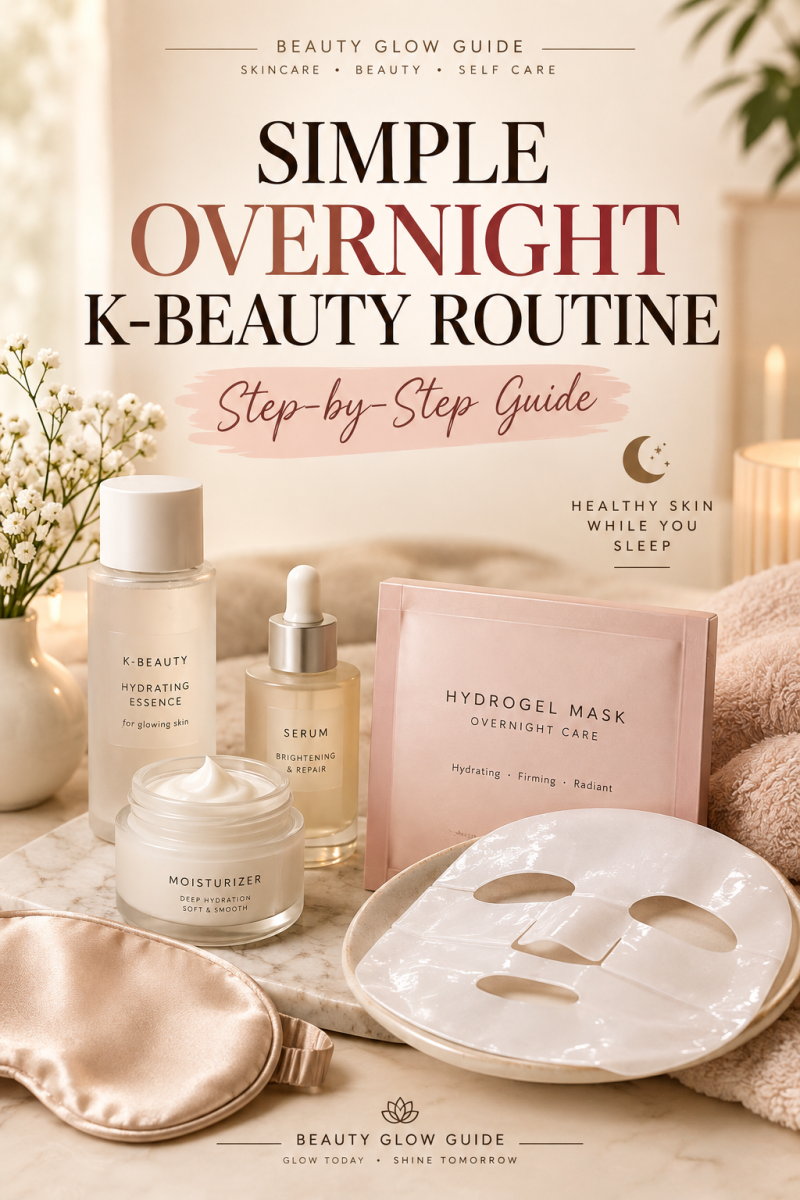
  • Simple Overnight K-Beauty Routine: Step-by-Step Guide

    Simple Overnight K-Beauty Routine: Step-by-Step Guide

    An overnight skincare routine can be simple, calming, and easy to follow. You don’t need a long list of products to create a consistent nighttime routine.

    One popular option in K-Beauty routines is an overnight hydrogel mask, which can be used as the final skincare step after your regular products. In this guide, we’ll walk through a simple overnight routine and explain where an overnight hydrogel mask fits.

    What You’ll Learn

    • The basic steps of an overnight K-Beauty routine
    • Where an overnight hydrogel mask fits
    • How to apply it
    • Common mistakes to avoid

    What Is an Overnight Hydrogel Mask?

    An overnight hydrogel mask is a skincare mask designed to stay on the skin for an extended period, often while you sleep. Unlike a traditional sheet mask that is usually removed after a short period, an overnight mask is designed to remain in place longer.

    Hydrogel masks are typically made from a gel-like material that sits closely against the skin. Depending on the product, the formula may contain ingredients commonly used in hydrating skincare, such as hyaluronic acid, peptides, or other skin-conditioning ingredients.

    An overnight mask should be treated as one part of your skincare routine, rather than something you need to use every night. To understand how nighttime hydration fits into your overall skincare framework, see our guide on How to Layer Skincare Products

    .

    Where Does It Fit in Your Routine?

    For a simple nighttime routine, the general order can be:

    1. Cleanser
    2. Toner or essence(optional)
    3. Serum or treatment(optional)
    4. Moisturizer(depending on the mask and your routine)
    5. Overnight hydrogel mask(if product instructions recommend using it as the final step)

    Always follow the specific instructions on your mask, because application and removal can vary between products.

    Simple Overnight K-Beauty Routine

    You can keep your nighttime routine simple by focusing on a few consistent steps.

    1. Cleanse Your Skin

    Start by gently cleansing your face to remove makeup, sunscreen, oil, and everyday buildup. Use a cleanser that suits your skin type and avoid scrubbing too aggressively.

    2. Apply Your Hydrating Steps

    If you use a toner, essence, or hydrating serum, apply it after cleansing. You don’t need to use every type of product; choose the steps that work comfortably with your existing routine.

    3. Apply Your Treatment or Serum

    If you use a treatment or serum, apply it according to the product’s instructions. When introducing a new product, adding one product at a time can make it easier to see how your skin responds.

    4. Apply Your Overnight Hydrogel Mask

    If your mask is designed for overnight use, apply it according to the manufacturer’s instructions. Make sure the mask sits comfortably and avoid getting the product directly into your eyes.

    5. Remove It in the Morning

    When you wake up, remove the mask according to the product instructions. Then continue with your normal morning skincare routine—for step-by-step guidance, explore our Simple Morning Skincare Routine for Beginners

    . Always remember to apply a broad-spectrum sunscreen during the daytime.

    Featured Product Spotlight: BIODANCE Bio-Collagen Real Deep Mask

    If you want to try an overnight hydrogel mask, one product you may come across is the BIODANCE Bio-Collagen Real Deep Mask.

    It is designed as an overnight mask and is used as part of a nighttime skincare routine. The mask is intended to sit on the skin for an extended period, following the product’s directions.

    Before using any new skincare product, check the ingredient list and product instructions. If your skin is sensitive or you are trying a new ingredient, consider testing a small area first.

    How to Use It

    1. Complete your usual nighttime skincare routine.
    2. Apply the mask according to the package instructions.
    3. Leave it on for the recommended amount of time.
    4. Remove it as directed.
    5. Continue with your normal morning routine.

    Common Overnight Skincare Mistakes to Avoid

    An overnight mask can be easy to add to your routine, but a few simple habits can make the experience less comfortable.

    • Using Too Many Products: A longer routine isn’t automatically better. If you’re already using several skincare products, keep the routine simple and introduce new products gradually.
    • Ignoring Product Instructions: Different overnight masks can have different application and removal instructions. Always check the packaging before using the product.
    • Applying Too Much Product: More product doesn’t necessarily mean better results. Follow the amount recommended by the manufacturer.
    • Trying Too Many New Products at Once: Introducing several new skincare products at the same time can make it difficult to identify which product is responsible if your skin doesn’t react well.
    • Forgetting Daytime Sunscreen: An overnight routine doesn’t replace daytime sun protection. If you’re going outside during the day, use a broad-spectrum sunscreen as part of your morning routine.

    Who Might Enjoy an Overnight Hydrogel Mask?

    An overnight hydrogel mask may be appealing if you enjoy adding a hydrating step to your nighttime skincare routine. It can be especially convenient for people who prefer a simple routine and like skincare products that can be used while sleeping.

    However, everyone’s skin is different. A product that works comfortably for one person may not work the same way for another. Before trying a new mask:

    • Check the ingredient list.
    • Follow the manufacturer’s instructions.
    • Patch test when appropriate.
    • Stop using the product if you experience irritation or discomfort.

    Related Beauty Glow Guide Articles

    Final Thoughts

    A good nighttime routine doesn’t have to be complicated. Start with the basics, keep your routine consistent, and add an overnight mask if it fits your skincare preferences.

    An overnight hydrogel mask can be one optional step in a simple K-Beauty-inspired routine. Save this guide for your next skincare night, and check the product instructions before use.

    Product Recommendation & Affiliate Information

    #ad Affiliate Disclosure: As an Amazon Associate I earn from qualifying purchases. This article may contain affiliate links, which means Beauty Glow Guide may earn a commission from qualifying purchases at no additional cost to you. Product availability, ingredients, prices, and details may change on Amazon. Check the current retailer listing before purchasing.

    Quick Product Box

    BIODANCE Bio-Collagen Real Deep Mask

    An overnight hydrogel mask option to consider as part of a simple nighttime skincare routine.View on Amazon