Tag: Healthy-looking Skin

  • What Are Ceramides? A Beginner’s Guide to Skin Barrier Care

    What Are Ceramides? A Beginner’s Guide to Skin Barrier Care

    If you have been looking into moisturizers, dry skin, or skin barrier care, you have probably seen the word ceramides on skincare labels.

    Ceramides are naturally occurring lipids found in the outer layer of your skin. They are an important part of the skin barrier and are commonly included in moisturizers designed to support hydration and barrier function.

    The good news is that you do not need a complicated routine to understand where ceramides fit.

    This beginner-friendly guide explains what ceramides are, what they do, how they differ from hyaluronic acid, and how you can include them in a simple skincare routine.

    Quick Take

    Ceramides are lipids that naturally occur in the skin and help form part of the skin barrier. They help support the barrier’s structure and its ability to retain moisture. Ceramides are therefore commonly found in moisturizers and other barrier-focused skincare products.

    For a simple routine, a ceramide-containing moisturizer can fit naturally after cleansing and before sunscreen in the morning, or as the moisturizing step at night.


    What Are Ceramides?

    Ceramides are a type of lipid, or fat, naturally found in the outer layers of your skin.

    The outermost part of the epidermis has a structure often described as a brick-and-mortar model. Skin cells act like the bricks, while lipids between those cells help form the mortar. Ceramides are one of the important lipids involved in this structure.

    Your skin naturally produces ceramides, but their levels can change with factors such as age and environmental exposure. This is one reason ceramides are commonly added to skincare products such as moisturizers.


    Why Are Ceramides Important for the Skin Barrier?

    Your skin barrier helps separate the inside of your body from the outside environment.

    One of its important functions is helping limit water loss while providing a protective barrier against external factors.

    Ceramides are part of the lipid structure involved in this barrier.

    Think of it this way:

    Healthy-looking skin → skin barrier → lipids → ceramides

    This does not mean a ceramide product can instantly “repair” every skin concern. Instead, ceramides are one useful ingredient to understand when building a simple, barrier-conscious skincare routine.

    If you are new to the skin barrier itself, start with our guide:

    What Is the Skin Barrier? A Beginner’s Guide to Healthy-Looking Skin — Read the Skin Barrier Guide


    What Do Ceramides Do for Skin?

    Ceramides are mainly associated with supporting the skin barrier and helping the skin retain moisture.

    1. They Support the Skin Barrier

    Ceramides are naturally part of the lipid matrix in the outer layer of skin.

    Using skincare containing ceramides can complement a routine focused on maintaining the skin barrier.

    2. They Help Support Moisture Retention

    A functioning skin barrier helps reduce excessive water loss from the skin.

    Ceramides are one component involved in that barrier, which is why they are frequently included in moisturizers designed for dry or dehydrated-feeling skin.

    3. They Can Be Useful in Barrier-Focused Routines

    If your routine contains exfoliating acids, retinoids, or other potentially drying products, keeping your basic routine simple and moisturizing can be helpful.

    A ceramide-containing moisturizer is one option for the moisturizing step.

    4. They Pair Well With Other Hydrating Ingredients

    Ceramides do not need to be used alone.

    Skincare products may combine ceramides with ingredients such as humectants and other moisturizing ingredients. Cleveland Clinic specifically lists ingredients such as glycerin and hyaluronic acid among ingredients that can work well alongside ceramides.


    Ceramides and the Skin Barrier

    The connection between ceramides and the skin barrier is one of the most important things to understand.

    The outermost layer of the epidermis, called the stratum corneum, contains skin cells surrounded by a lipid matrix. Ceramides, cholesterol and fatty acids are important components of this lipid structure.

    This is why the ingredient appears so frequently in barrier-focused moisturizers.

    Rather than thinking about ceramides as a miracle ingredient, it is more useful to think of them as one piece of a healthy-looking skin barrier routine.


    Who May Like Ceramide Skincare?

    Ceramide-containing products may be worth considering if your skin often feels:

    • Dry
    • Tight after cleansing
    • Rough or uncomfortable
    • Dehydrated
    • Easily irritated by an overly complicated routine

    Ceramides are not limited to one skin type, either.

    People with oily or combination skin can also use ceramide products. The key is choosing a moisturizer with a texture that feels comfortable for your skin.


    Ceramides for Different Skin Types

    Skin typeHow ceramides may fit
    Dry skinCan complement a moisture-focused routine
    Normal skinCan be part of everyday barrier care
    Oily skinCan be used in a lightweight moisturizer
    Combination skinCan help support drier areas
    Sensitive-feeling skinMay fit well into a simple, gentle routine

    Your ideal moisturizer depends on more than one ingredient, so consider the entire formula and how your skin responds.


    Ceramides vs. Hyaluronic Acid

    Ceramides and hyaluronic acid are often mentioned together, but they play different roles.

    Hyaluronic acid is a humectant associated with attracting and holding water.

    Ceramides are lipids that form part of the skin barrier.

    A simple way to remember the difference:

    Hyaluronic acid → hydration support

    Ceramides → barrier and lipid support

    They can also appear together in the same skincare product.

    For a deeper explanation of hyaluronic acid, read:

    What Is Hyaluronic Acid? A Beginner’s Guide to Hydrated-Looking Skin — Read the Hyaluronic Acid Guide


    Ceramides and Niacinamide

    Ceramides and niacinamide are another popular skincare combination.

    Niacinamide is a form of vitamin B3 that is commonly used in skincare, while ceramides are lipids naturally found in the skin barrier.

    DermNet notes that vitamin B3 is involved in the synthesis of proteins and ceramides important for skin barrier function.

    This makes the two ingredients easy to understand as part of a broader barrier-conscious routine.

    Learn more about niacinamide here:

    What Is Niacinamide? A Beginner’s Guide to Vitamin B3 for Skin — Read the Niacinamide Guide


    Can You Use Ceramides With Hyaluronic Acid?

    Yes, these ingredients can be used together.

    In fact, many moisturizing products combine multiple ingredients that support hydration and the skin barrier.

    A simple routine might look like:

    Cleanser → Hyaluronic acid serum → Ceramide moisturizer → Sunscreen

    However, you do not need to buy separate products for every ingredient.

    A moisturizer that already contains ceramides and a hydrating ingredient may be enough for a simple routine.


    Can You Use Ceramides With Vitamin C?

    Ceramides can fit into a routine that also contains vitamin C.

    For example:

    Morning:

    Cleanser → Vitamin C → Ceramide moisturizer → Sunscreen

    The important point is to introduce new products gradually rather than changing your entire routine at once.

    You can learn more about vitamin C in:

    The Ultimate Beauty Glow Guide: A Simple Vitamin C Routine for a Radiant-Looking Complexion — Read the Vitamin C Routine Guide


    Can You Use Ceramides With Retinoids?

    Ceramides can also be used as part of a routine containing retinoids.

    Retinoids can sometimes be drying or irritating, particularly when someone is new to them. A simple moisturizer can therefore be an important part of a routine that includes a retinoid.

    The exact routine depends on the products you use and how your skin responds.

    If a product causes persistent burning, significant irritation, or another concerning reaction, stop using it and consider speaking with a dermatologist or other qualified healthcare professional.


    How to Use Ceramides in Your Skincare Routine

    Ceramides are especially easy to incorporate because they are commonly found in moisturizers.

    Morning Routine

    Step 1: Gentle cleanser

    Step 2: Hydrating or treatment serum, if desired

    Step 3: Ceramide-containing moisturizer

    Step 4: Sunscreen

    Evening Routine

    Step 1: Cleanser

    Step 2: Treatment or hydrating serum, if desired

    Step 3: Ceramide moisturizer

    You do not need every possible step.

    For beginners, a consistent basic routine is often easier to maintain than a complicated routine containing many active ingredients.

    For another simple routine example, see:

    Simple Morning Skincare Routine for Beginners: 5 Easy Steps — Read the Morning Skincare Routine


    Should You Apply Ceramide Moisturizer to Damp Skin?

    Moisturizers are commonly recommended after cleansing while the skin is still slightly damp.

    Cleveland Clinic notes that moisturizing products are best applied to damp skin and suggests applying moisturizer soon after washing.

    You do not need soaking-wet skin.

    After cleansing, gently pat your face so it is no longer dripping, then apply your moisturizer.


    How Often Can You Use Ceramides?

    Ceramides are commonly included in everyday moisturizing products, so they can fit naturally into both morning and evening routines.

    Unlike exfoliating acids or retinoids, ceramides are not generally treated as a strong active that needs to be introduced slowly.

    Still, your complete product formula matters.

    If a particular product causes irritation, discontinue it and check the ingredient list for other components that may be responsible.


    Common Ceramide Skincare Mistakes

    Mistake 1: Thinking Ceramides Are a Miracle Ingredient

    Ceramides can support a healthy-looking skin barrier, but they cannot solve every skincare concern by themselves.

    Mistake 2: Building a Routine Around Too Many Ingredients

    More products do not automatically mean better skincare.

    A simple cleanser, moisturizer and sunscreen routine can provide a strong foundation.

    Mistake 3: Ignoring Irritation From Other Products

    If your skin is becoming increasingly irritated, adding another product may not be the answer.

    Consider simplifying your routine instead.

    Mistake 4: Choosing a Product Only Because It Says “Ceramide”

    The complete formula matters.

    Texture, fragrance, other ingredients and how the product feels on your skin can all influence whether you enjoy using it.

    Mistake 5: Expecting Instant Results

    Skincare routines generally require consistency.

    Ceramides are best viewed as part of ongoing barrier and moisture care rather than an overnight transformation.


    Ceramides and Glass Skin

    If your goal is healthy-looking, hydrated and glowing skin, barrier care is an important foundation.

    A glass-skin routine does not have to mean using a large number of products.

    A simpler approach can be:

    Gentle cleansing → hydration → moisturizer → sunscreen

    Ceramides can fit into the moisturizing portion of that routine.

    For more on building a hydration-focused glow routine, read:

    Best Glass Skin Routine: A Simple 4-Step Guide for Healthy, Hydrated Skin — Read the Glass Skin Routine Guide


    A Simple Ceramide Routine for Beginners

    If you are completely new to barrier-focused skincare, keep it simple.

    Morning

    1. Cleanse
    Use a gentle cleanser appropriate for your skin.

    2. Hydrate
    Optional: use a hydrating serum.

    3. Moisturize
    Apply a moisturizer containing ceramides if you like the formula.

    4. Protect
    Finish with sunscreen.

    Evening

    1. Cleanse

    2. Apply your chosen serum or treatment

    3. Moisturize with a ceramide-containing product

    That’s enough.

    You do not need a ten-step routine to build a thoughtful skincare routine.


    Ceramides vs. Other Skincare Ingredients

    IngredientMain role in a routine
    CeramidesSupport the skin barrier and lipid structure
    Hyaluronic acidHydration support
    NiacinamideMultifunctional vitamin B3 skincare ingredient
    Vitamin CAntioxidant-focused skincare ingredient
    RetinoidsSkin-renewal and anti-aging focused ingredient
    SunscreenHelps protect skin from UV radiation

    These ingredients can have different purposes, and they do not necessarily need to compete with one another.

    A well-designed routine is about choosing products that fit your needs rather than collecting every trending ingredient.


    Frequently Asked Questions

    What are ceramides?

    Ceramides are lipids naturally found in the outer layer of skin. They are important components of the skin barrier and are commonly used in moisturizers and other skincare products.

    Are ceramides good for dry skin?

    Ceramides can be useful in a moisturizer-focused routine for dry-feeling skin because they support the skin barrier and moisture retention.

    Can I use ceramides every day?

    Ceramides are commonly found in daily moisturizers and can generally fit into both morning and evening skincare routines.

    Can I use ceramides with hyaluronic acid?

    Yes. Ceramides and hyaluronic acid have different roles and can be used together in a hydration-focused routine.

    Can I use ceramides with niacinamide?

    Yes. These ingredients can appear together in skincare products and can both fit into a barrier-conscious routine.

    Do ceramides replace sunscreen?

    No. A ceramide moisturizer and sunscreen serve different purposes. Ceramides support the skin barrier, while sunscreen helps protect against UV radiation.


    Related Beauty Glow Guide 2 Articles

    If you are building your skincare routine step by step, these guides are useful next reads:


    Final Thoughts

    Ceramides may sound like a complicated skincare ingredient, but the basic idea is simple.

    They are naturally occurring lipids that form an important part of the skin barrier. That is why they are so commonly found in moisturizers designed to support hydration and barrier care.

    You do not need a complicated routine to make use of them.

    A gentle cleanser, a suitable moisturizer, and daily sunscreen can provide a simple foundation, while ingredients such as ceramides, hyaluronic acid and niacinamide can be selected according to your individual skincare needs.

    The goal is not to use every ingredient.

    The goal is to build a routine that is simple enough to follow and suitable for your skin.


    Save This for Later

    Learning skincare ingredients one at a time can make your routine much easier to understand.

    Save this guide for later and come back when you are comparing moisturizers or building a barrier-focused skincare routine.
  • What Is Hyaluronic Acid? A Beginner’s Guide to Hydrated-Looking Skin

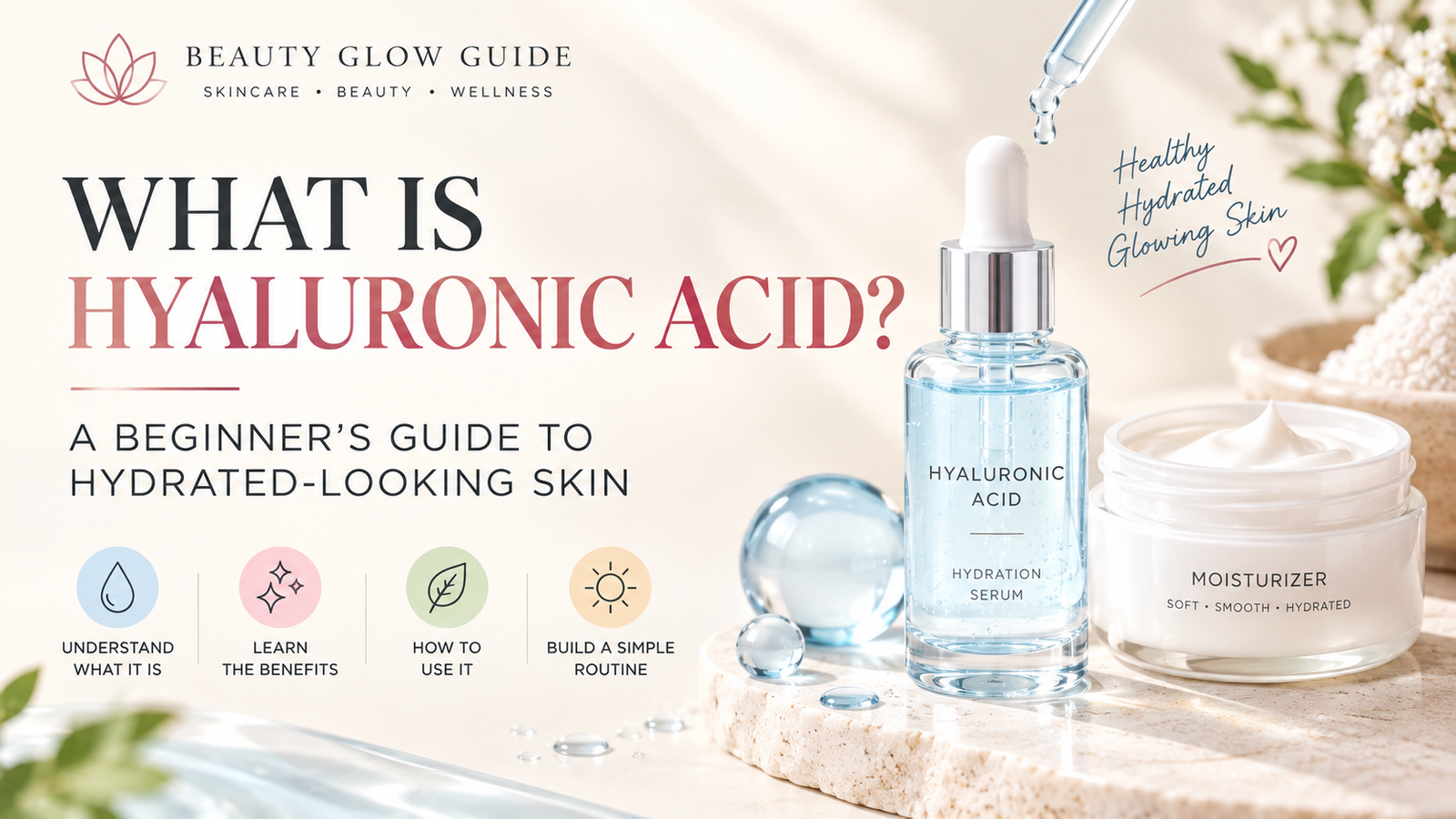
    What Is Hyaluronic Acid? A Beginner’s Guide to Hydrated-Looking Skin

    If you have looked at hydrating serums, moisturizers, or K-beauty skincare, you have probably seen hyaluronic acid on the ingredient list.

    Hyaluronic acid is a humectant, an ingredient that helps attract and hold water. It is commonly used in hydration-focused skincare products and moisturizers. Despite the word “acid,” it is not an exfoliating acid like glycolic acid or salicylic acid. (American Academy of Dermatology)

    In this beginner-friendly guide, you’ll learn what hyaluronic acid does, how to use it, where it fits into a skincare routine, and how it compares with moisturizer and other common skincare ingredients.

    What Is Hyaluronic Acid?

    Hyaluronic acid is a naturally occurring substance found in the body. In skincare, it is commonly used as a humectant to support skin hydration.

    You may find it in:

    • Serums
    • Moisturizers
    • Creams
    • Lotions
    • Masks
    • Other hydration-focused skincare products

    The goal is generally simple: help the skin hold onto water so it feels and looks more hydrated.

    The American Academy of Dermatology lists hyaluronic acid among ingredients commonly found in moisturizers for dry skin. (American Academy of Dermatology)

    Is Hyaluronic Acid an Exfoliating Acid?

    No.

    This is one of the most common beginner questions.

    Hyaluronic acid is not an exfoliating acid. It does not work like alpha hydroxy acids such as glycolic acid or beta hydroxy acids such as salicylic acid.

    Instead, hyaluronic acid is primarily used for hydration.

    So if you see “acid” in the name, don’t assume that the ingredient will exfoliate your skin.

    What Does Hyaluronic Acid Do for Skin?

    Hyaluronic acid is mainly used to support hydration.

    When skin is well hydrated, it can look:

    • Smoother
    • Softer
    • More comfortable
    • Less dry-looking
    • More supple

    It is important to keep expectations realistic. Hyaluronic acid is a hydration ingredient, not a treatment for every skin concern.

    If your main concern is very dry or irritated skin, a broader moisturizing routine may be more useful than relying on a single serum. Moisturizers can combine different types of ingredients to help hydrate skin and reduce water loss. (American Academy of Dermatology)

    Why Is Hyaluronic Acid Popular in Skincare?

    One reason is its versatility.

    Hyaluronic acid can be included in products designed for different skin types and routines. It is especially common in products marketed around hydration and dry-looking skin.

    You may also see different forms of hyaluronic acid listed in a product’s ingredient list. The exact formulation varies between products, so it is useful to look at the complete product formula rather than choosing a product based only on the presence of hyaluronic acid.

    Hyaluronic Acid vs. Moisturizer

    Hyaluronic acid and moisturizer are not necessarily the same thing.

    Hyaluronic AcidMoisturizer
    Usually an ingredient or hydration-focused serumA finished skincare product
    Commonly used as a humectantMay contain humectants, emollients, and other ingredients
    Focuses on hydration supportHelps hydrate skin and reduce moisture loss
    Can be part of a larger routineOften one of the main routine steps

    A moisturizer may contain hyaluronic acid along with other ingredients.

    For example, a moisturizer may combine humectants with emollient or occlusive ingredients that help keep skin comfortable and reduce water loss. (American Academy of Dermatology)

    That means you don’t always need a separate hyaluronic acid serum.

    Should You Use Hyaluronic Acid If Your Skin Is Dry?

    It can be a useful ingredient to consider if your routine is focused on hydration.

    However, very dry skin may need more than a single hydrating ingredient.

    The American Academy of Dermatology recommends considering moisturizers such as creams or ointments for very dry skin, along with ingredients such as hyaluronic acid and glycerin. (American Academy of Dermatology)

    For more guidance, see our article:

    How to Build a Simple Hydrating Skincare Routine

    How to Use Hyaluronic Acid in a Skincare Routine

    A simple routine can look like this:

    Morning

    1. Gentle cleanser
    2. Hyaluronic acid serum, if you use one
    3. Moisturizer
    4. Broad-spectrum sunscreen

    Evening

    1. Cleanser
    2. Hyaluronic acid serum, if appropriate for your product
    3. Moisturizer

    Your exact routine depends on the products you use and their directions.

    For a broader beginner routine, see:

    Simple Morning Skincare Routine for Beginners

    Should You Apply Hyaluronic Acid to Damp Skin?

    Many people use hydrating products on slightly damp skin, but the most important step is to follow the directions for your specific product.

    If you use a separate hyaluronic acid serum, moisturizer can be the next step in your routine.

    A simple approach is:

    Cleanse → Hydrate → Moisturize → Sunscreen in the morning

    Moisturizer is particularly important when your skin feels dry because it can help trap water and reduce moisture loss. (American Academy of Dermatology)

    What Should You Apply After Hyaluronic Acid?

    If hyaluronic acid is being used as a separate serum, a moisturizer is a common next step.

    You don’t need to add several different hydrating products simply because they contain different versions of the same type of ingredient.

    A simple routine that you can use consistently is often easier to manage than a routine with many overlapping products.

    If you’re comparing hydration-focused products, read:

    How to Choose the Best Hydrating Serum for Dry-Looking Skin

    Hyaluronic Acid and the Skin Barrier

    Hydration and skin-barrier care are closely related, but they are not exactly the same thing.

    Hyaluronic acid can support hydration, but it is not the same as repairing or replacing the skin barrier.

    A barrier-supportive routine may also include a moisturizer containing ingredients such as ceramides and other moisturizing components.

    For a deeper explanation, read:

    What Is the Skin Barrier? A Beginner’s Guide to Healthy-Looking Skin

    You can also learn about ceramides here:

    What Are Ceramides? A Beginner’s Guide to Skin Barrier Care

    Hyaluronic Acid vs. Glycerin

    Hyaluronic acid and glycerin are both commonly used in hydration-focused skincare.

    IngredientMain role
    Hyaluronic acidHumectant used to support hydration
    GlycerinHumectant used to attract and retain water

    They can appear together in the same skincare formula.

    Read more:

    What Is Glycerin? A Beginner’s Guide to This Hydrating Skincare Ingredient

    Hyaluronic Acid vs. Panthenol

    Panthenol is another ingredient commonly found in skincare products designed around hydration and skin comfort.

    It is different from hyaluronic acid, but the two ingredients can appear together in the same routine or product.

    Learn more:

    What Is Panthenol? A Beginner’s Guide

    Where Does Vichy Minéral 89 Fit?

    Some hydration-focused products contain hyaluronic acid as part of a broader formula rather than presenting the ingredient on its own.

    For example, Vichy Minéral 89 is a hydration-focused serum that contains hyaluronic acid as part of its formula.

    If you’re interested in the difference between a complete branded formula and a simple ingredient-focused approach, read:

    Vichy Minéral 89 vs. Hyaluronic Acid Serums: What’s the Difference?

    Can You Use Hyaluronic Acid Every Day?

    Many hyaluronic acid products are designed for regular use, but the correct frequency depends on the individual product.

    Always follow the product’s directions.

    If your skin becomes irritated after introducing a new product, stop and reassess the routine rather than adding more products.

    Introducing one new product at a time can also make it easier to identify what your skin tolerates.

    Can Hyaluronic Acid Be Used With Other Skincare Ingredients?

    Hyaluronic acid is commonly included in routines alongside many other skincare ingredients.

    For example, a routine may contain:

    • Hyaluronic acid
    • Glycerin
    • Panthenol
    • Ceramides
    • Niacinamide
    • Peptides
    • Vitamin C
    • Sunscreen

    The important point is that the complete routine matters.

    More products do not automatically mean better results.

    For help organizing products in the correct order, see:

    How to Layer Skincare Products

    Hyaluronic Acid for Different Skin Types

    Dry Skin

    Hyaluronic acid can be useful in a hydration-focused routine.

    If your skin is very dry, consider pairing hydration-focused products with an appropriate moisturizer rather than relying on a serum alone. (American Academy of Dermatology)

    Oily Skin

    Oily skin can still become dehydrated.

    If you have oily skin, you may prefer a lightweight serum or moisturizer rather than a heavy cream.

    Combination Skin

    Combination skin may need different textures on different areas of the face.

    A lightweight hydration product can be useful when you want hydration without a heavy-feeling routine.

    Sensitive Skin

    If your skin is sensitive, introduce new products gradually and pay attention to irritation.

    Look at the full ingredient list, not just the presence of hyaluronic acid.

    If a product causes persistent burning, itching, or irritation, stop using it and consider professional advice.

    Common Hyaluronic Acid Mistakes

    1. Assuming “acid” means exfoliation

    Hyaluronic acid is not an exfoliating acid.

    2. Using too many hydrating products

    More products aren’t automatically better.

    If several products perform similar functions, your routine may become unnecessarily complicated.

    3. Skipping moisturizer

    A separate hydrating serum does not necessarily replace moisturizer.

    Moisturizers can help hydrate the skin and reduce water loss. (American Academy of Dermatology)

    4. Ignoring the rest of the routine

    Hydration is only one part of skincare.

    Cleansing, moisturizing, sun protection, and choosing products appropriate for your skin type all matter.

    5. Changing too many products at once

    Introducing several new products simultaneously makes it difficult to know which product is responsible if your skin reacts.

    A Simple Hydration-Focused Routine

    If you’re just starting, you don’t need a complicated routine.

    Morning

    Cleanser → Hydrating serum → Moisturizer → Sunscreen

    Evening

    Cleanser → Hydrating serum → Moisturizer

    You can adjust this depending on your skin type, product instructions, and other treatments in your routine.

    For another beginner-friendly routine, read:

    Simple Nighttime Skincare Routine

    Quick Guide: Where Does Hyaluronic Acid Fit?

    Routine stepExample
    1Cleanser
    2Hydrating serum such as hyaluronic acid
    3Treatment products, depending on your routine
    4Moisturizer
    5Sunscreen in the morning

    The exact order can vary depending on the products you’re using, so check the instructions on each product.

    Hyaluronic Acid: Quick Checklist

    Before buying a hyaluronic acid product, ask:

    • Is my main goal hydration?
    • Do I actually need another serum?
    • Does the product suit my skin type?
    • Have I checked the complete ingredient list?
    • Will I use a moisturizer afterward if needed?
    • Am I introducing too many new products at once?
    • Does the product’s texture work with the rest of my routine?

    A simple routine that you can use consistently may be easier to maintain than a complicated routine with many overlapping products. (American Academy of Dermatology)

    Final Thoughts

    Hyaluronic acid is a popular skincare ingredient because it is commonly used to support hydration.

    It is a humectant, not an exfoliating acid, and it can be found in everything from serums to moisturizers.

    For beginners, the main takeaway is simple:

    Hyaluronic acid can support hydration, but it works as part of a complete skincare routine rather than replacing every other skincare step.

    If your routine is focused on dry-looking or dehydrated skin, consider combining appropriate hydration with a moisturizer and daytime sun protection. (American Academy of Dermatology)

    Save This for Later

    Learning skincare ingredients one at a time can make it easier to understand what your products are actually doing.

    Save this guide to your Pinterest board so you can come back to it when comparing hydrating skincare products.

    You can also continue exploring Beauty Glow Guide:

    Affiliate Disclosure

    #ad Affiliate link — I may earn a commission from qualifying purchases. As an Amazon Associate I earn from qualifying purchases. Product availability, price and details may change on Amazon. Product sizes, ingredients, packaging, availability, sellers, and delivery information can change. Check current Amazon listing before purchasing.

  • Simple Morning Skincare Routine for Beginners: 5 Easy Steps

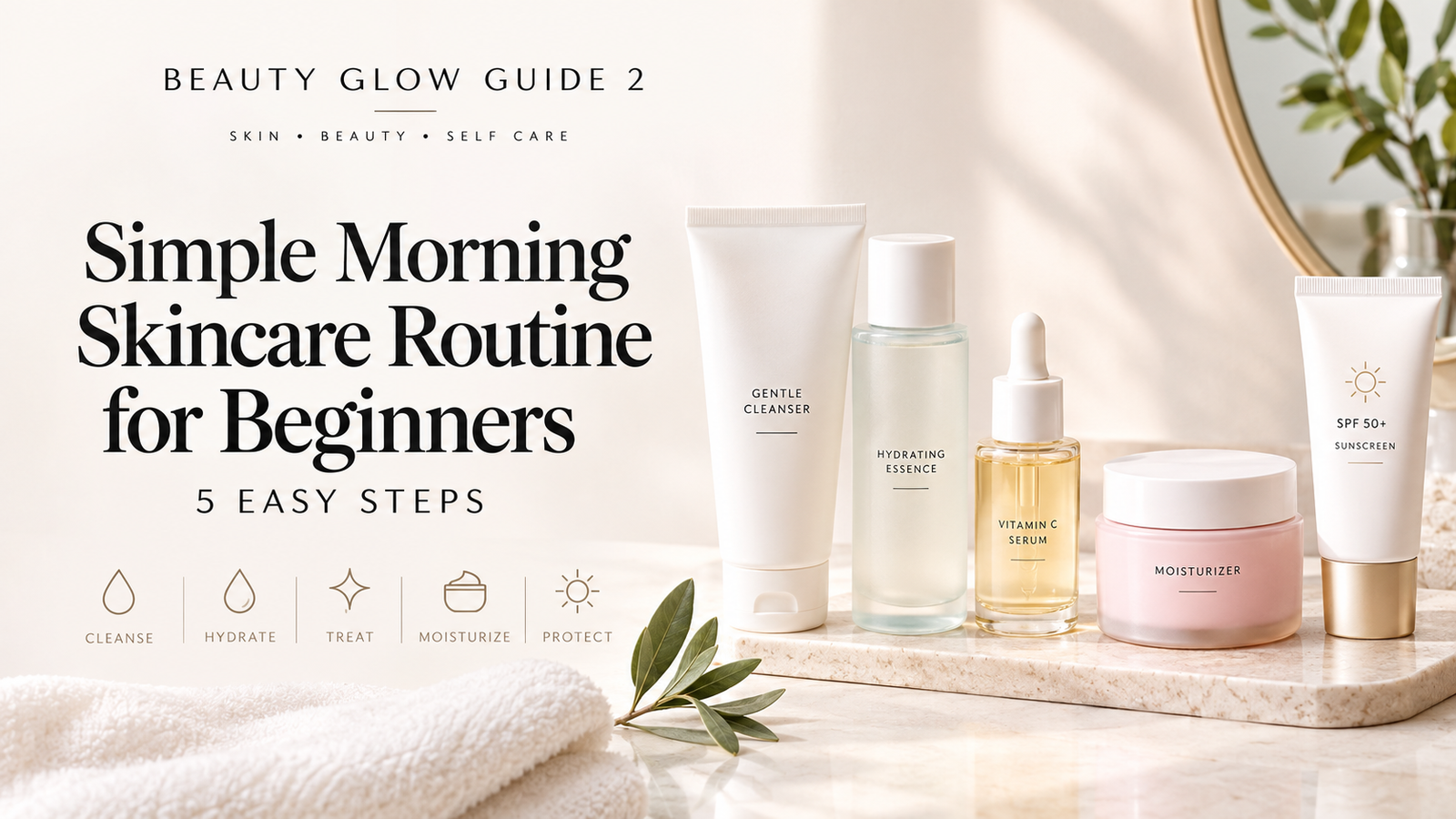
    Simple Morning Skincare Routine for Beginners: 5 Easy Steps

    A good morning skincare routine does not need to include a long list of products. For most beginners, a simple routine built around cleansing, hydration, moisturizing, and daytime sun protection is easier to follow consistently.

    The key is understanding what goes first, what you actually need, and where optional treatments fit into the routine.

    Quick Take

    A simple morning skincare routine can follow this order:

    1. Cleanser
    2. Hydrating product
    3. Treatment serum, if needed
    4. Moisturizer
    5. Sunscreen

    You do not necessarily need all five steps every morning. Your routine can be adjusted depending on your skin type, products, and personal skincare goals.

    1. Start With a Gentle Cleanser

    Cleansing is usually the first step of a morning skincare routine.

    A gentle cleanser can help remove overnight oil, sweat, and leftover skincare products without making the routine unnecessarily complicated.

    If your skin feels dry or tight after cleansing, you may want to consider a gentler cleanser or a less frequent morning cleanse, depending on what works for your skin.

    What to look for

    For a beginner-friendly routine, look for a cleanser that:

    • Feels comfortable after rinsing
    • Does not leave your skin feeling excessively tight
    • Fits your skin type
    • Works well with the rest of your routine

    The goal is simply to prepare your skin for the products that follow.

    2. Add Hydration

    After cleansing, you can add a hydrating product if your skin needs extra moisture or feels dehydrated.

    This could be a hydrating essence, toner, serum, or another lightweight product designed for your routine.

    Hydration is especially useful when your skin feels uncomfortable, tight, or lacking softness.

    However, more layers are not automatically better. If your moisturizer already provides enough hydration, you may not need an additional hydrating step.

    3. Use a Treatment Serum If You Need One

    A treatment serum is an optional step rather than something every beginner must use.

    Depending on your skincare goals, this step might include an ingredient such as vitamin C or another targeted skincare product.

    The important part is to introduce treatments thoughtfully rather than adding several active products at once.

    If you are new to skincare, starting with a simple routine can make it easier to understand how your skin responds to individual products.

    4. Apply Moisturizer

    Moisturizer helps support the skin’s moisture level and can make your routine feel more comfortable.

    Choose a moisturizer based on your skin’s needs and the other products you are using.

    A lightweight moisturizer may feel more comfortable for some people during the day, while a richer formula may be preferred by people with drier skin.

    You do not need to use a complicated moisturizer routine. The goal is to find a product that fits comfortably into your everyday skincare habits.

    5. Finish With Sunscreen

    Sunscreen is the final step of a typical morning skincare routine.

    It is important to follow the directions on your sunscreen and apply it as recommended on the product packaging.

    If you are spending time outdoors, sunscreen becomes particularly important as part of your daytime routine.

    Think of sunscreen as the finishing step rather than something to mix into the rest of your skincare products.

    What Order Should Your Morning Skincare Routine Follow?

    A simple order is:

    Cleanser → Hydrating product → Treatment → Moisturizer → Sunscreen

    This order keeps the routine easy to understand.

    If you do not use a treatment serum or separate hydrating product, simply skip those steps.

    For example:

    Cleanser → Moisturizer → Sunscreen

    can be a perfectly simple starting point.

    Simple Morning Routine for Beginners

    If you are completely new to skincare, start with the basics.

    Step 1: Cleanse

    Use a gentle cleanser suitable for your skin.

    Step 2: Moisturize

    Apply a moisturizer that feels comfortable and suits your skin’s needs.

    Step 3: Protect

    Finish with sunscreen according to the product’s directions.

    Once this routine feels comfortable and consistent, you can consider adding a hydrating serum or treatment product if you have a specific reason to do so.

    Where Does Vitamin C Fit?

    If vitamin C is part of your routine, it is commonly placed after cleansing and before moisturizer and sunscreen.

    A simple example is:

    Cleanser → Vitamin C serum → Moisturizer → Sunscreen

    However, not every person needs a vitamin C product. If you are introducing one, follow the product’s directions and avoid changing several parts of your routine at the same time.

    This makes it easier to identify how your skin responds to a new product.

    Where Does a Hydrating Serum Fit?

    A hydrating serum generally goes after cleansing and before moisturizer.

    A basic routine could look like:

    Cleanser → Hydrating serum → Moisturizer → Sunscreen

    If you use both a hydrating serum and a treatment serum, follow the directions for your specific products and keep the overall routine manageable.

    What Can You Combine in a Morning Routine?

    Many skincare routines can remain simple while still including more than the basic three steps.

    For example:

    Cleanser → Hydrating serum → Moisturizer → Sunscreen

    Or, when a treatment is appropriate:

    Cleanser → Treatment serum → Moisturizer → Sunscreen

    The best approach is to avoid adding products simply because they are popular.

    Instead, ask what each product is supposed to do and whether it has a clear place in your routine.

    What Should You Be Careful About?

    A beginner routine can become complicated quickly when too many products are introduced at once.

    Keep these points in mind:

    • Do not assume that more products will produce better results.
    • Introduce new products thoughtfully.
    • Follow product-specific directions.
    • Be cautious when combining multiple active ingredients.
    • Patch testing can be useful when introducing a new product.
    • Stop using a product if it causes a concerning reaction and seek appropriate professional advice when needed.
    • Give your routine time to become a consistent habit.

    Skincare is personal, so a routine that works for one person may not be the right routine for someone else.

    Who May Like This Routine?

    This simple morning skincare structure may be useful for:

    • Skincare beginners
    • People who want a shorter morning routine
    • Anyone trying to understand skincare order
    • People who prefer practical, uncomplicated routines
    • Anyone rebuilding a basic skincare routine

    If your skin has specific concerns or you are using prescription skincare, your routine may need to be adjusted accordingly.

    A Minimal 3-Step Version

    If five steps feel like too much, start with three.

    1. Cleanser

    Cleanse according to your skin’s needs.

    2. Moisturizer

    Apply a suitable moisturizer.

    3. Sunscreen

    Finish with sunscreen during the daytime.

    Once these basics become consistent, you can decide whether an additional hydrating or treatment product is actually useful for you.

    Common Morning Skincare Mistakes

    Using Too Many Products

    A crowded routine can make it difficult to understand which products are actually useful.

    Changing Everything at Once

    Introducing several new products simultaneously makes it harder to identify which product may be responsible for irritation or other changes.

    Ignoring Product Directions

    Different products can have different instructions. Always check the label or manufacturer’s guidance.

    Forgetting Sunscreen

    If sunscreen is part of your daytime routine, make it the final skincare step and follow the product’s application directions.

    Copying Someone Else’s Routine Exactly

    Your skin, environment, preferences, and product choices may differ from someone else’s.

    Use other routines as ideas rather than assuming they need to be copied exactly.

    Frequently Asked Questions

    What is the correct morning skincare routine order?

    A simple order is cleanser, hydrating product, treatment serum if needed, moisturizer, and sunscreen.

    Do beginners need five skincare steps?

    No. A beginner can start with a much simpler routine, such as cleanser, moisturizer, and sunscreen.

    Should moisturizer go before sunscreen?

    Yes. In a typical morning skincare routine, moisturizer comes before sunscreen.

    Can I skip a serum?

    Yes. Serums are optional and should have a clear purpose in your routine.

    How many skincare products should I use in the morning?

    There is no single number that works for everyone. Start with the products you actually need and add other steps only when they serve a specific purpose.

    Related Beauty Glow Guide 2 Articles

    Continue exploring practical skincare guides from Beauty Glow Guide 2:

    Final Thoughts

    A morning skincare routine does not need to be complicated to be useful.

    Start with the basics: cleanse when appropriate, moisturize, and protect your skin during the day with sunscreen. If you need additional hydration or a treatment product, add it with a clear purpose rather than simply adding more steps.

    The most useful routine is one that you understand, can maintain consistently, and can adjust according to your skin’s needs.

    Save This for Later

    Save this guide as a simple reference whenever you need to reset your morning skincare routine.

    Cleanse → Hydrate → Treat → Moisturize → Protect

    Keep the routine simple, introduce products thoughtfully, and focus on consistency.


  • “The Ultimate Beauty Glow Guide: A Simple Vitamin C Routine for a Radiant-Looking Complexion”

    “The Ultimate Beauty Glow Guide: A Simple Vitamin C Routine for a Radiant-Looking Complexion”

    Skincare Disclaimer: This article is for general educational purposes and is not medical advice. Skincare products can affect people differently. If you have persistent irritation, allergies, or a diagnosed skin condition, consult a qualified healthcare professional or dermatologist.

    A radiant-looking complexion does not require a complicated skincare routine.

    The foundation is simple: gentle cleansing, hydration, targeted skincare, moisturizer, and daily sun protection.

    One ingredient often featured in brightening routines is vitamin C. When combined with hydrating ingredients such as hyaluronic acid and barrier-supportive ingredients such as ceramides, it can fit naturally into a simple morning skincare routine.

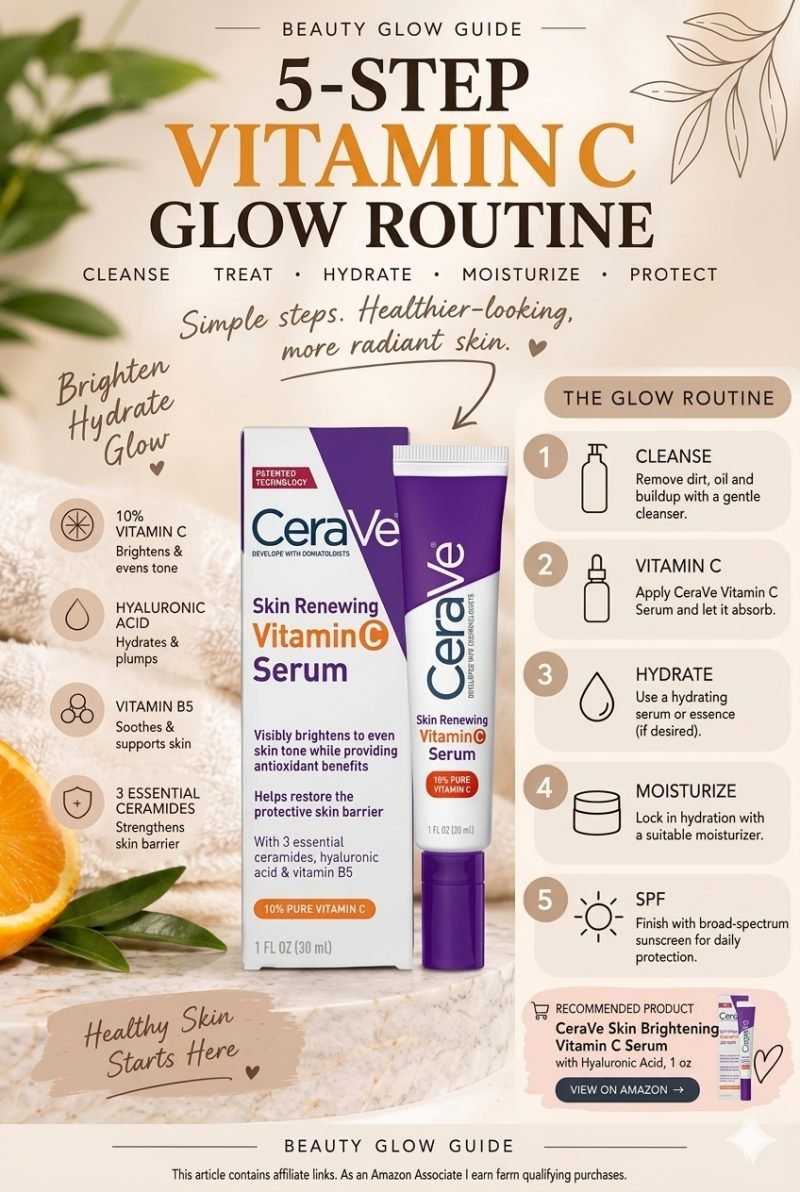
    In this Beauty Glow Guide, we’ll walk through a practical routine and take a closer look at CeraVe Skin Brightening Vitamin C Serum with Hyaluronic Acid.


    Step 1: Start With a Gentle Cleanse

    A glow-focused routine begins with clean skin.

    The goal is to remove excess oil, dirt, makeup, and other buildup without making your skin feel unnecessarily dry or uncomfortable.

    Use lukewarm water and a gentle facial cleanser. Avoid aggressive scrubbing, especially if your skin is sensitive.

    Why Cleansing Matters

    Your skincare products are easier to incorporate into a routine when your skin has been properly cleansed.

    However, “squeaky clean” is not the goal.

    A simple approach is:

    1. Wet your face with lukewarm water.
    2. Apply a gentle cleanser.
    3. Massage gently with your fingertips.
    4. Rinse thoroughly.
    5. Pat your skin dry.

    After cleansing, move on to your treatment step.


    Step 2: Add a Vitamin C Serum

    This is where the CeraVe Skin Brightening Vitamin C Serum fits into our routine.

    The product information you provided describes it as a facial serum formulated with 10% L-ascorbic acid, hyaluronic acid, vitamin B5, and three essential ceramides.

    It also has a lightweight gel texture.

    Why Vitamin C Is Popular in Glow Routines

    Vitamin C is widely used in skincare routines focused on a brighter, more even-looking complexion.

    CeraVe’s product information states that its formula uses 10% pure vitamin C (L-ascorbic acid) and is designed to help brighten and even the appearance of skin tone.

    Vitamin C is also an antioxidant ingredient, making it a popular choice for morning skincare routines.


    Recommended Product: CeraVe Skin Brightening Vitamin C Serum

    CeraVe Skin Brightening Vitamin C Serum for Face with Hyaluronic Acid, 1 oz

    Why We Chose It

    This serum fits naturally into a glow-focused routine because the formula combines several ingredients already relevant to our skincare guide.

    Key Ingredients

    • 10% L-ascorbic acid (Vitamin C)
    • Hyaluronic acid
    • Vitamin B5
    • Three essential ceramides

    According to the product information, the formula is also fragrance-free, paraben-free, non-comedogenic, and allergy tested.

    Product Texture

    The product is described as having a lightweight gel texture with a non-greasy feel.

    CeraVe’s product directions indicate applying a thin layer and allowing the serum to absorb before applying additional skincare products.

    View CeraVe Vitamin C Serum on Amazon

    As an Amazon Associate I earn from qualifying purchases.


    Step 3: Follow With Hydration

    Vitamin C does not have to be the only focus of a glow routine.

    Hydration is another important part of creating a comfortable, healthy-looking complexion.

    The CeraVe serum contains hyaluronic acid, which is commonly used in skincare formulas designed to support hydration.

    Why Hyaluronic Acid Is Popular

    Hyaluronic acid is a humectant commonly found in hydrating skincare products.

    It is often paired with other ingredients in serums and moisturizers to create a hydration-focused routine.

    If your skin feels dry or tight, a suitable moisturizer can help complete this part of your routine.


    Step 4: Support the Skin Barrier

    A good glow routine should not focus only on brightening.

    Your skin barrier matters too.

    The CeraVe serum contains three essential ceramides: 1, 3, and 6-II, according to the product information you provided.

    Ceramides are naturally occurring lipids found in the skin and are commonly used in skincare products designed to support the skin barrier.

    Keep Your Routine Simple

    You don’t need to use multiple strong treatments at the same time.

    A straightforward routine can be:

    Cleanse → Vitamin C Serum → Moisturizer → Sunscreen

    This keeps the routine easy to understand and easier to maintain.


    Step 5: Moisturize

    After your serum has absorbed, apply a moisturizer suitable for your skin type.

    Moisturizer can help provide hydration and make the skin feel more comfortable.

    Look for formulas that complement the rest of your routine rather than adding unnecessary complexity.

    Ingredients You May See in Hydrating Moisturizers

    Depending on the formula, you may come across:

    • Ceramides
    • Hyaluronic acid
    • Glycerin
    • Dimethicone

    Your ideal moisturizer depends on your skin type, texture preference, and how your skin responds to the formula.


    Step 6: Finish With Sunscreen

    For a morning routine, sunscreen is the final step.

    Use a broad-spectrum sunscreen appropriate for your skin and follow the product’s application instructions.

    This is particularly important when your routine includes products designed around brightening and improving the appearance of uneven tone.

    A simple morning sequence is:

    1. Cleanse
    2. Vitamin C serum
    3. Moisturizer
    4. Sunscreen

    That’s it.

    You don’t need ten different products to create a useful morning routine.


    How to Use the CeraVe Vitamin C Serum

    If you’re adding the product to your routine, keep the process simple.

    Morning Routine

    Step 1: Cleanse your face.

    Step 2: Apply a thin layer of CeraVe Vitamin C Serum.

    Step 3: Allow the serum to absorb.

    Step 4: Apply your facial moisturizer.

    Step 5: Finish with sunscreen.

    Always follow the current instructions on the product packaging.


    Who Might Like a Vitamin C Serum?

    Vitamin C products are commonly chosen by people who want to build a routine around:

    • A brighter-looking complexion
    • More even-looking skin tone
    • Antioxidant skincare
    • Lightweight hydration
    • A simple morning routine

    However, skincare is personal.

    A product that works comfortably for one person may not feel the same for someone else.

    If you’re introducing a new product, consider introducing it gradually and paying attention to how your skin responds.


    Vitamin C + Hyaluronic Acid: Why This Combination Makes Sense

    Vitamin C and hyaluronic acid serve different purposes in a skincare formula.

    Vitamin C is commonly used in routines focused on antioxidant care and a brighter-looking complexion.

    Hyaluronic acid is commonly used for hydration.

    That makes the combination appealing for someone looking for a hydrating glow routine without adding several separate products.

    The CeraVe formula combines both in one serum.


    Don’t Overcomplicate Your Glow Routine

    A common skincare mistake is adding too many products too quickly.

    If you introduce several new serums, exfoliants, masks, and treatments simultaneously, it becomes difficult to know which product is responsible if your skin becomes irritated.

    Instead, build your routine gradually.

    Start with the basics:

    Cleanser + Serum + Moisturizer + Sunscreen

    Then adjust according to your skin’s needs.


    Simple Morning Glow Checklist

    Save this five-step routine:

    1. Cleanse

    Start with a gentle cleanser.

    2. Apply Vitamin C

    Use your CeraVe Vitamin C Serum according to the product directions.

    3. Hydrate

    Allow the serum to absorb before continuing.

    4. Moisturize

    Apply a moisturizer suited to your skin.

    5. Protect

    Finish with broad-spectrum sunscreen.

    Simple routine. Consistent routine. Beauty Glow Guide.


    What About a Glass Skin Routine?

    The term glass skin is often used to describe a smooth, hydrated, luminous-looking complexion.

    You don’t need to follow an extremely complicated routine to create a similar beauty aesthetic.

    Instead, focus on the fundamentals:

    • Gentle cleansing
    • Hydration
    • A suitable treatment
    • Moisturizer
    • Sunscreen
    • Consistency

    The goal should be healthy-looking, comfortable skin—not perfection.


    Common Glow Routine Mistakes

    Using Too Many Actives

    Adding multiple active ingredients at once can make a routine difficult to manage.

    Introduce products gradually.

    Skipping Moisturizer

    Even when you’re focused on brightening, hydration still matters.

    Choose a moisturizer appropriate for your skin type.

    Forgetting Sunscreen

    A brightening-focused morning routine should include sun protection.

    Applying Too Many Layers

    More layers don’t automatically create better results.

    Keep your routine practical.

    Ignoring Your Skin’s Response

    If a product causes persistent irritation or discomfort, stop using it and seek appropriate professional advice when needed.


    Final Thoughts: Keep Your Glow Routine Simple

    A beautiful skincare routine doesn’t have to be complicated.

    For a straightforward morning glow routine, start with:

    Cleanse → CeraVe Vitamin C Serum → Moisturizer → Sunscreen

    The CeraVe Skin Brightening Vitamin C Serum we featured contains 10% L-ascorbic acid, hyaluronic acid, vitamin B5, and three essential ceramides, making it a natural product to feature in this vitamin C and hydration-focused guide.

    Check the CeraVe Vitamin C Serum on Amazon

    As an Amazon Associate I earn from qualifying purchases.

    Product information, availability, packaging, and ingredients can change. Always check the current Amazon product page and product packaging before purchasing or using a product.